Draught beer is supposed to stay cold from the keg to the glass. The Brewers Association Draught Beer Quality Manual, fourth edition, says beer traveling from keg to glass should be maintained between 34 and 38 degrees Fahrenheit. Brewers Association is the copy of that manual used for these sentences. The same troubleshooting notes say a keg box should be 38 degrees Fahrenheit when warm beer at the faucet is the complaint. 38 and 38 are the same number because the manual uses 38 degrees Fahrenheit both as the top of the travel range and as the keg-box target in that note. 34 is the bottom of the travel range. This is a dispense temperature. It is not a medical claim about cold drinks.
The range is narrow on purpose. 34 to 38 is four degrees if you subtract, and this article does not need a derived fact to say the manual printed both ends. Beer warmer than 38 at the faucet is the fault the manual points at the cooler. Beer so cold that it freezes in the line is the other fault the same page mentions. The published window is 34 through 38 degrees Fahrenheit for beer traveling from keg to glass. A glass that sat in a warm room can make the first sip warmer than the beer in the line. The manual's figure is about the beer on the way to the glass, not about the room.

Set the keg box with 38 in mind. The troubleshooting line says the keg box should be 38 degrees Fahrenheit when the faucet pours warm, foamy beer. That does not mean every cooler display in a shop is a keg box. It means the refrigerated enclosure holding the keg, in the manual's example, is checked against 38. If your thermometer reads warmer than 38 on the beer itself, you are outside the travel range even if the box setpoint looks right. Measure the beer, not only the dial, when you are checking this claim.
What the range does not cover
It does not set a serving temperature for a bottled beer in a fridge at home. It does not say 34 degrees Fahrenheit is a style requirement for an Irish stout or a weissbier. Style serving temperatures live on their own scale: the serving temperature chart puts a German-style hefeweizen at 40–45 °F (4–7 °C) and an Irish-style dry stout at 50–55 °F (10–13 °C), neither of which is the 34 to 38 degrees Fahrenheit this page quotes. Those styles have their own vital statistics, and those statistics are gravity, bitterness, color, and alcohol, not a faucet temperature. It does not say a warmer pint is unsafe to drink. It says the draught system is built to hold beer between 34 and 38 degrees Fahrenheit so the pour matches the way the system was balanced. Foam, carbonation, and the glass temperature all move when the beer arrives warm. The manual treats that as a quality fault, not as a health outcome.
Get the beer data notes
Brewers Association and TTB figures as they are published, with the source for every number. Free, unsubscribe from any email.
No fixed schedule. Unsubscribe from any email. 21+ only.
How to check without adding numbers
Read the cooler. If you can measure beer temperature at the faucet, compare it with 34 and 38. Inside the window, this particular fault is not the one the manual is describing. Above 38, the keg-box note points you at 38 degrees Fahrenheit. Below 34, you are outside the window on the cold side, which the manual associates with freezing in the line when the system is too cold. Do not invent a third target between them and attribute it to the association. The printed ends are 34 and 38. The keg-box example is 38.
The chart shows those ends. The tool shows the same rows. Multiplying 38 by a number of faucets does not create a new specification. Temperature does not add across faucets. The figure stays 38 degrees Fahrenheit at each faucet you check. The cleaning schedule is a different article, with day counts and minute counts. Do not mix 34 degrees Fahrenheit into a cleaning log as if it were the cleaning-solution temperature. The cleaning questionnaire uses a warmer solution range. This page is the beer.
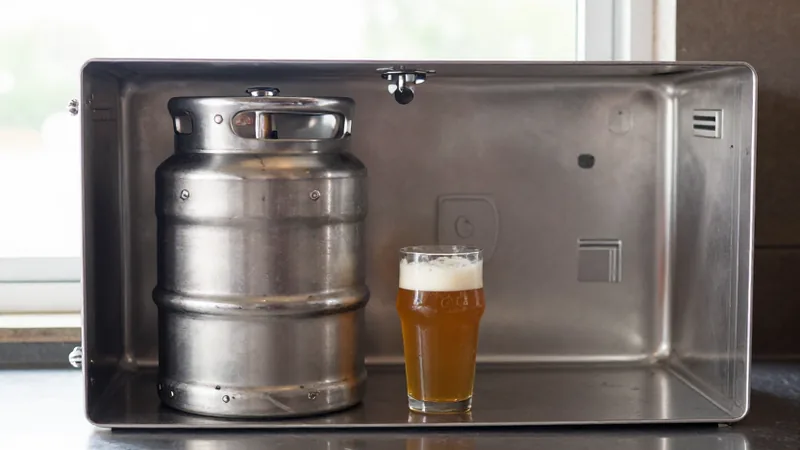
Line length and insulation show up in the manual because a long draw can warm the beer even when the keg is cold. This article does not assign a maximum line length. It assigns the temperature the beer should still have when it arrives: between 34 and 38 degrees Fahrenheit. If a long system cannot hold that window, the fix is in the system design the manual discusses, not in a new number created here. Glycol, air-cooled trunks, and trunk slope are in the manual. They are not given new figures on this page.
A dirty line can also pour badly at the right temperature. Temperature and cleaning are both quality controls and they are not substitutes. A system at 38 degrees Fahrenheit that has not been cleaned on the association's interval can still taste wrong. A freshly cleaned system pouring at warmer than 38 can still pour foamy. Check both. Cite each from its own source. The temperature source for this article is Brewers Association. The cleaning source is the association's line-cleaning questionnaire, linked from the cleaning article.
A faucet check you can write down
Pour, or take the temperature of beer that just left the faucet, and write the number next to 34 and 38. If it sits between them, the travel range is met for that pour. If it is warmer than 38, look at the keg box against 38 before you change the gas pressure. Pressure changes to fight warm foam can mask a cooler fault and create a new one. The manual's order of diagnosis for warm foamy beer starts with temperature. This article follows that order by giving you the temperatures and not a pressure table.
If several faucets share one trunk, one warm faucet does not prove the keg is warm, and one cold faucet does not prove the trunk is cold all the way to the last tap. Check the faucet that is actually complaining. The specification does not change with which faucet you pick. It remains 34 to 38 degrees Fahrenheit. A tower that sits in a warm dining room is a common place for the beer to leave the window even when the walk-in is correct. The beer has to be in the window at the glass, not only in the cooler.
Glass temperature is the last surface. A warm glass can pull the first ounces above 38 even when the line is right. The manual discusses glassware. This page does not add a glass-temperature number the manual's travel sentence does not state. It tells you the beer traveling from keg to glass is the thing held between 34 and 38. Chill the glass if the pour demands it, and still verify the beer itself. Do not declare the system inside the window because the glass felt cold.
Repeat the check when the cooler is working hard, such as a busy service, not only when the building is quiet. A system that holds 38 degrees Fahrenheit at dawn can drift by the time the taps are busy. The figure does not get a busy-night exception in the sentences quoted here. 38 is still the warm end. 34 is still the cold end. 38 is still the keg-box example.
Checked on 2026-10-27. The fact sheet quotes are the travel-range sentence and the keg-box sentence. Both use Fahrenheit. Do not convert them to Celsius in a citation and still call the result the manual's number. If you convert for a reader who works in Celsius, label the conversion as yours. The manual's numbers are 34, 38, and 38 degrees Fahrenheit. A thermometer that reads Celsius has to be translated before you decide the system passed. This page will not hide that translation inside the chart.
Nothing here is a reason to chase a colder pour for its own sake, and nothing here is about driving or about how many pints to have. The window is a draught-system specification. Beer inside it is at the temperature the manual names. Beer outside it is a system fault to diagnose, starting with the keg box at 38 degrees Fahrenheit when the symptom is warm beer at the faucet.
How to use each figure
34 degrees Fahrenheit is the cold end of beer traveling from keg to glass. A reading below it is outside the manual's window. The manual connects an overly cold system with beer freezing in the line. Do not treat 34 as a style serve-temp or as a health target.
38 degrees Fahrenheit is the warm end of that same travel range. Beer warmer than this at the faucet is the fault the troubleshooting note addresses. 38 is the keg-box figure in that note, and it matches 38. Check the beer, not only the setpoint.
Frequently Asked Questions
How cold should draught beer be between keg and glass?
The Draught Beer Quality Manual says between 34 and 38 degrees Fahrenheit. Source: Brewers Association.
What does the manual say about the keg box?
When beer is warm at the faucet, the troubleshooting note says the keg box should be 38 degrees Fahrenheit.
Is this a health recommendation?
No. It is a dispense specification so the pour matches a balanced system.
Does this set the cleaning-solution temperature?
No. Cleaning solution uses a different, warmer range on the association cleaning sheet. This page is the beer.
Sources
- Draught Beer Quality Manual, fourth edition. Brewers Association.