Irish stout BJCP style range and brewing characteristics. See weissbier-bjcp-numbers
Irish stout, in the 2021 BJCP Style Guidelines, style 15B, is a set of ranges a judge uses. The vital statistics on the style page are IBU 25 to 45, SRM 25 to 40, original gravity 1.036 to 1.044, final gravity 1.007 to 1.011, and alcohol 3.8 to 5 percent by volume. Beer Judge Certification Program is that page. The chart draws only the color pair, 25 and 40 SRM, because those two share a unit and they are what makes the style look black or near-black beside a pale beer. The other ranges are in the tool and in the sentences below. They are guidelines for sorting a competition entry. They are not a prescription to drink, and they are not a health claim about dark beer. The 25–40 SRM band is the dark box the quiz’s Roast and Dark Devotee result treats as a preference rather than a style, listing Irish stout beside oatmeal stout, American porter and imperial stout.
The spans are short, which is the point of a style. Bitterness runs 20 IBU from 25 to 45. Color runs 15 SRM from 25 to 40. Alcohol runs 1.2 percentage points from 3.8 to 5. A beer at the low end and a beer at the high end can both be inside 15B. A beer outside the range is not "wrong" in a glass at home. It is outside this style's box for a judge using these guidelines. The page lists commercial examples, including Guinness Draught and Beamish Irish Stout. Those names are the guide's examples of the style in the market. They are not a ranking and not an instruction to buy.
Gravity is not Balling
Original gravity 1.036 to 1.044 and final gravity 1.007 to 1.011 are specific-gravity ranges. Balling, in federal regulations, is percent by weight of dissolved solids at a stated temperature. The Balling article keeps that definition. This page does not convert 1.036 into Balling or into Plato. If a score sheet prints degrees Plato, that is the score sheet's unit. The BJCP line quoted here prints OG and FG as the figures above. Cite the line you used. Do not average 1.036 and 1.044 and call the average the style. The style is the range. The two gravity ranges also pair end to end, and the ABV calculator returns 3.81% for 1.036 OG with 1.007 FG and 4.33% for 1.044 OG with 1.011 FG. Both sit inside the 3.8 to 5 percent alcohol box above, so the gravity ends and the alcohol ends describe the same beer.
Get beer science and style notes
How beer gets its bitterness, color and aroma, explained with numbers and sources. Free, unsubscribe from any email.
No fixed schedule. Unsubscribe from any email. 21+ only.
Alcohol on this page is a style box
3.8 to 5 percent is the vital-statistics alcohol range. It is not a recommended intake and not a statement that a stout in that band is moderate, safe, or useful. Federal label rules for stating alcohol are a different topic, on TTB's malt-beverage pages. A judge's range and a label tolerance answer different questions. An entry can be inside 3.8 to 5 and still have a label question, or the reverse. This site's label articles stay on the label sentences. This page stays on 15B.
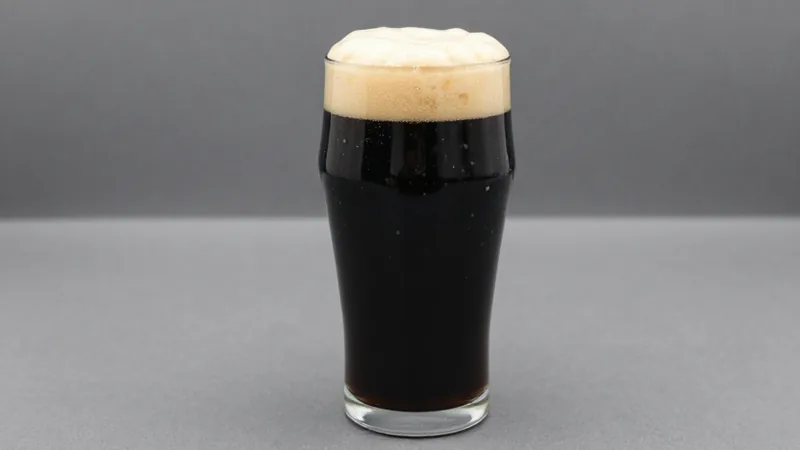
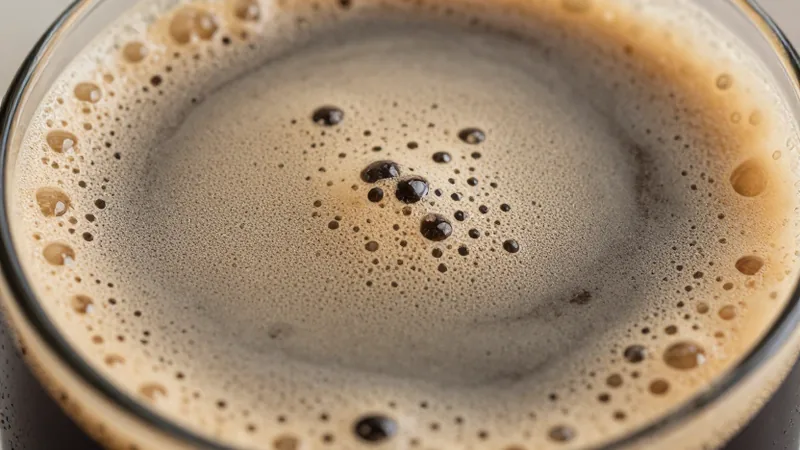
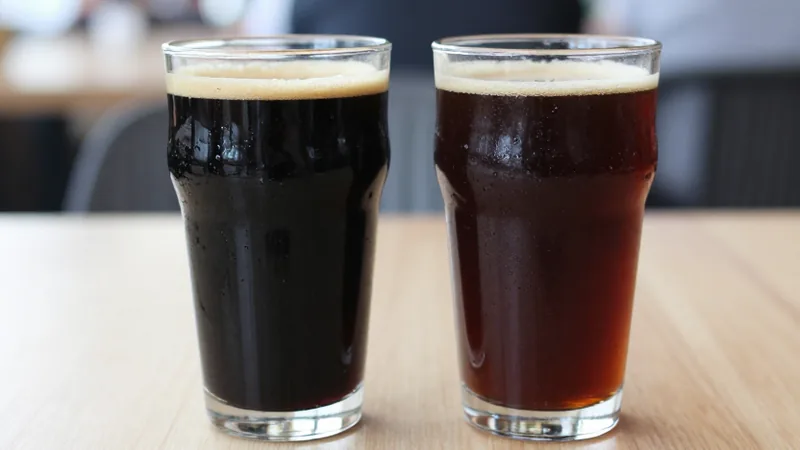
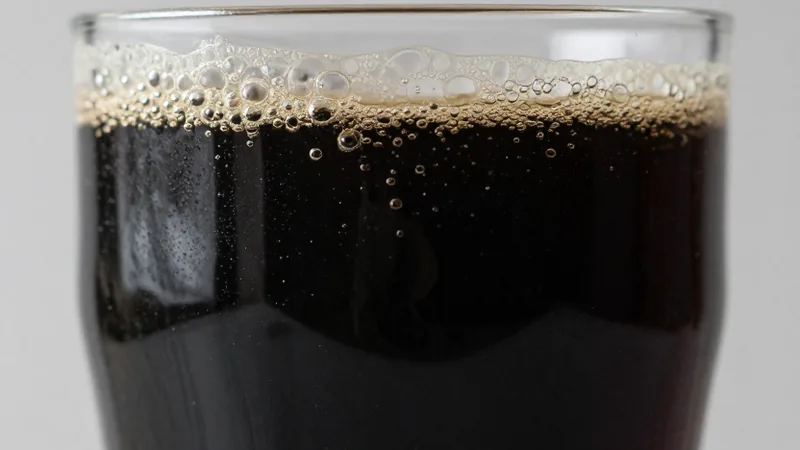
Color is the number most people can see. 25 SRM is already dark. 40 SRM is the top of the printed box. The photograph of a black beer with tan foam is an illustration of that look, not a measurement of a particular pint. Do not read an SRM off a picture. Read it off the guideline, then measure a beer with a method you can name if you need a number for a score sheet.
How a judge uses the pair of ends
Take one statistic at a time. Bitterness below 25 IBU or above 45 IBU is outside the printed IBU box. Color below 25 or above 40 is outside the color box. Gravity and alcohol work the same way with their own ends: 1.036, 1.044, 1.007, 1.011, 3.8, 5. Missing one box does not tell you how many points to deduct. The guidelines have impression and scoring text this article does not reprint. The numbers are the part that can be checked against an instrument. The impression is the judge's, on the day, from the glass in front of them.
The tool lets you select a row and multiply it. Multiplying 40 by a number of beers does not create a house SRM. Color does not add across pints. The same is true of IBU. Leave the quantity at one. The row values are already the published ends. 20, 15, and 1.2 are the widths of three boxes, derived by subtracting the low end from the high end. They are not targets in the middle. The middle of a range is not printed as a preferred value on the vital-statistics line.
Irish stout is style 15B in the 2021 guidelines, which is a different document from a brewery's own brand guidelines and from a festival medal list. A GABF medal in a stout category is a competition result under that festival's category names. It is not proof the beer sits between 25 and 40 SRM, because the category names are not guaranteed to be the BJCP's. If you need both, cite both. The GABF category article is about entry counts, not about 15B.
Checking one entry against the boxes
Write the five measurements in a column and put the printed ends beside them. Color against 25 and 40. Bitterness against 25 and 45. Original gravity against 1.036 and 1.044. Final gravity against 1.007 and 1.011. Alcohol against 3.8 and 5. A measurement inside every pair is inside the vital-statistics boxes. A measurement outside one pair is outside that box only. Do not average the five results into a single pass-fail. The guideline does not tell you to. 15, 20, and 1.2 are the widths, useful when you want to say how much room the box gives, useless when you want a target in the center. The center is not printed.
Appearance still has to be judged from the glass. 25 SRM tells you the style is dark. It does not tell you the foam is tan, even though the style is famous for tan foam and the photograph shows that look. Foam color is not an SRM in this fact sheet. If the vital statistics do not number it, this article does not number it. Roast, dryness, and bitterness balance are impression words on the style page's descriptive text. This article deliberately stays on the statistics line so every number has a quote. The descriptive text is worth reading on Beer Judge Certification Program. It is not reprinted here, both because the numbers are the checkable part and because copying the guide's flavor essay is not the job.
Read the widths when the question is "how much room," and the ends when the question is "is this beer inside." 15 SRM of room is not the same statement as "the beer is 25 SRM." 20 IBU of room is not a hopping rate. 1.2 percentage points of room is not an amount in the glass. People mix those up because all three are numbers on one style. They answer different questions. A brewery can hit the middle of every box and still brew a dull stout, and it can sit on an end and brew a memorable one. The vital statistics do not score memorability. They fence the style. Anything you want to say about flavor has to come from the glass or from the guide's descriptive paragraphs, which stay on the source page.
Two commercial examples, Guinness Draught and Beamish Irish Stout, are named so a reader who has never seen the style has a market reference the guide itself chose. They can drift from batch to batch. A bottle in your hand is not guaranteed to read 40 SRM or 3.8 percent just because the guide lists the brand. Measure the beer if the number matters. The brand mention is not a sponsorship and not a suggestion to drink either of them, or to drink any stout, in any quantity.
Checked on 2026-10-27 against Beer Judge Certification Program. The commercial examples named here are the ones the style page lists, and only two of them are repeated so this article does not become a copy of the page. Other examples are on the source. Past revisions of the style are a different year's numbers. These figures are the 2021 vital statistics: IBU 25 to 45, SRM 25 to 40, OG 1.036 to 1.044, FG 1.007 to 1.011, ABV 3.8 to 5 percent.
How to use each figure
25 to 40 SRM is the color box, 15 SRM wide. The chart shows those two ends and no other unit, so bitterness is not drawn on a color axis. The all-styles beer styles chart puts the other four numbers in the same row: Irish Stout prints 25 to 45 IBU, 1.036 to 1.044 OG, 1.007 to 1.011 FG and 3.8 to 5 percent next to the 25 to 40 SRM pair.
25 to 45 IBU is 20 IBU wide. 3.8 to 5 percent is 1.2 percentage points wide. Gravity ends are 1.036, 1.044, 1.007, and 1.011. None of these is a drinking target.
Frequently Asked Questions
What SRM range does BJCP 2021 give Irish stout?
25 to 40 SRM. Source: Beer Judge Certification Program.
What is the bitterness range?
25 to 45 IBU. The width of that box is 20 IBU.
What alcohol range is on the vital statistics line?
3.8 to 5 percent by volume. That is a style box for judges, not a recommended intake.
Are the commercial examples a ranking?
No. The page lists examples such as Guinness Draught and Beamish Irish Stout so judges can see the style in the market. It does not rank them.
Sources
- 2021 BJCP Style Guidelines, 15B Irish Stout. Beer Judge Certification Program.