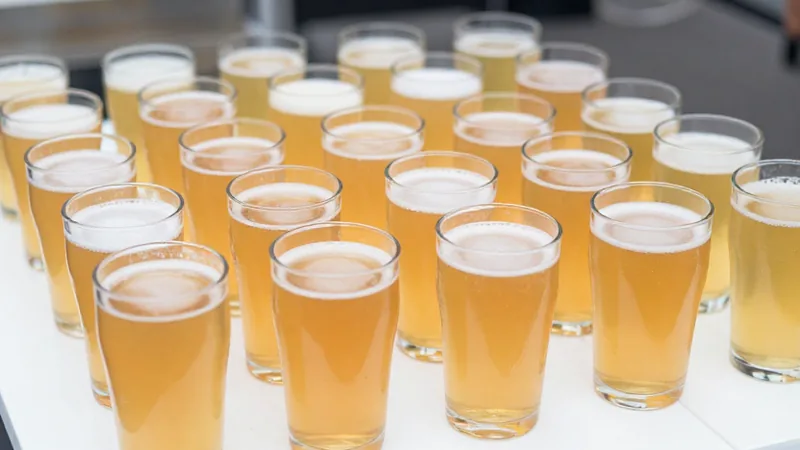
The Brewers Association published the 2025 Great American Beer Festival competition counts on its winners page. Brewers Association calls it the 39th edition. Judges evaluated 8315 beers. The statistics list says 8315 beers judged. The field was 1555 breweries and cideries, from all 50 states plus Washington, D.C. 250 judges did the evaluation. Those four figures are the size of the competition. They are not a quality ranking of any one state, and they are not a claim that a medal makes a beer better for you.
Medals are the second block of numbers. The page reports 347 total medals awarded and 273 medal-winning breweries and cideries. 347 is larger than 273, which is what you would expect when some companies take more than one medal. This article does not list those companies. The winners page does. A medal count is not a production volume and it is not a sales rank. It is the number of awards the association says it handed out in that edition. Our 18-listing Chicago guide records Old Irving awards from other editions, so its medals should not be added to this 2025 event total. Our ten-listing Bend guide includes UPP Liquids in the former Immersion space and identifies its 2025 GABF medals, a brewery-level detail rather than the competition denominator.
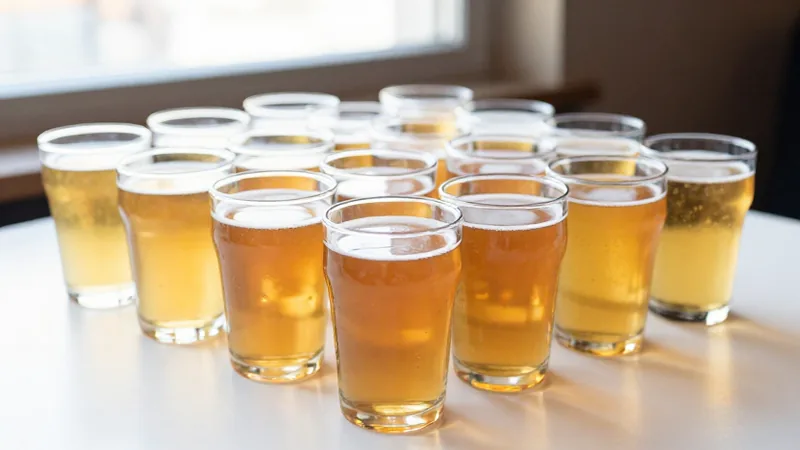
First-time participation is its own pair. The statistics list 180 first-time GABF competition entrants and 12 first-time GABF competition winners. 180 is a slice of the 1555 breweries and cideries, not a replacement for that total. 12 is a slice of the 273 medal-winning companies, not a replacement for the medal total of 347. Read the noun on each row. Entrants, winners, medals, and beers judged are four different units.
What the chart is doing
The chart shows entries judged, breweries and cideries, medals, and medal-winning companies. 8315 is much larger than 1555, because companies enter more than one beer. 347 is smaller than 273 only if you misread the labels. It is not smaller. 347 medals went to 273 companies. The tool lets you select one of those rows and multiply it. Multiplying 8315 by a number of years does not predict a future festival. The page is about the 39th edition. It does not publish a growth rate.

The release also mentions collaboration entries and pro-am entries, and it names the category with the most entries. Those figures are in the companion article on the busiest categories, so this page does not repeat them as if they were the whole competition. If you only needed the size of the event, the figures are 8315 beers judged, 1555 breweries and cideries, 250 judges, 347 medals, and 273 winning companies, in the 39th edition, with 180 first-time entrants and 12 first-time winners.
Checked on 2026-10-27 against Brewers Association. The fact-sheet quotes are the statistic lines, including the ampersand in the breweries-and-cideries line. Cider is inside several of these totals. The page is a beer and cider competition report. Do not subtract a cider share that the statistic line does not split out. Where the line says breweries and cideries, keep both. Where the line says beers judged, use the association's own wording rather than a cleaned-up noun this article invents.
Get the beer data notes
Brewers Association and TTB figures as they are published, with the source for every number. Free, unsubscribe from any email.
No fixed schedule. Unsubscribe from any email. 21+ only.
How to cite the page without inflating it
Say the edition, then the unit, then the count. The 39th edition judged 8315 beers. It listed 1555 breweries and cideries. It used 250 judges. It awarded 347 medals to 273 companies. It recorded 180 first-time entrants and 12 first-time winners. That is the whole numeric picture this article takes from the winners page. If a later story adds a state-by-state medal table, that table is a different document. Do not back-solve a state's medals from these national totals. The national totals do not contain a state split.
When you compare 8315 with 347, you are comparing products judged with awards given. When you compare 1555 with 273, you are comparing companies that entered with companies that medaled. When you compare 347 with 273, you are comparing awards with companies. Those three comparisons answer three questions. Mixing the nouns is how a recap turns 273 companies into 273 medals, which is a smaller award count than the page reported. The chart labels the units so the bars are not read as one scale of importance. A bar for 8315 is longer because more beers were judged than medals were awarded. Length is not prestige.
What the edition number is for
39 names which competition the other counts belong to. It is not a count of festivals held in a city and it is not a count of public tasting sessions. The public festival and the competition are related and they are not the same tally. This article uses the competition statistics on the winners page. It does not estimate attendance, ticket sales, or pints poured. Those figures are not in the lines quoted in the fact sheet. If you need them, you need a different source, and you should not borrow 8315 as a stand-in for crowd size.
First-time status is also easy to over-read. 180 entrants had not entered this competition before, on the page's wording. 12 companies won for the first time. A company can be a first-time winner without being a first-time entrant, and the two rows exist so you do not have to guess which. Leave them as separate sentences.
A closed set
If a sentence you are about to publish uses a GABF number that is not 8315, 1555, 250, 347, 273, 39, 180, or 12, it is not a sentence from this article's fact sheet. The busiest-category counts live on the other GABF page on this site, with their own quotes. Do not add them here and describe them as part of this chart. The chart is the four bars: entries, companies entered, medals, and winning companies. If you are briefing someone who will only remember two figures, give them 8315 beers judged and 347 medals, and say the edition is the 39th. If they need the company counts, add 1555 entrants and 273 winners. If they need the first-time pair, add 180 and 12. If they need the panel size, add 250. Stop there. A further unofficial number is how a correct page becomes a wrong recap. The reader who wants the category with the most entries should open the busiest-category article, which quotes that line on its own, instead of asking this page to absorb it. Keeping the pages split keeps 8315 meaning the whole judged field, not one style. Cite the winners page, name the edition, and stop when the fact sheet runs out. The 39th edition is the only edition these rows describe. Later editions need their own page. The fact sheet is the closed list, and the winners page is the place to send a reader who wants a brewery name. The tool carries the same rows plus the edition and the first-time counts if you included them in the tool. Either way, the fact sheet is the list. The prose does not get an extra unofficial total.
A medal is not a medical endorsement and it is not a reason to drink more of the winning beer. The count 347 is an award tally. The count 8315 is how many products the judges evaluated. The gap between them is the point of a judged competition: most entries do not receive a medal. That gap is not a verdict on the entries that did not medal, and this article will not invent one. Use the numbers as the size of the 2025 competition. Use the winners page if you need a name.
How to use each figure
8315 is the judged-entry count for the 39th edition. It is the widest number on the page. Compare it with 1555 only to see that entrants submitted more than one product each. Do not divide in public and call the quotient an official average entries-per-brewery unless you label it as your division. This article does not publish that quotient as a Brewers Association statistic.
347 and 273 move together and they are not equal. More medals than winning companies means some companies won more than one. The page states both counts. Cite the one you mean. Citing 273 as if it were the medal count understates the awards. Citing 347 as if it were the number of companies overstates the winner list.
180 and 12 are first-time counts. They are not the share of the competition that is new, unless you do the division yourself and say so. 250 is the judge count in the statistics list. It is not a count of volunteers. The release mentions volunteers separately, and this article does not treat that mention as the judge total.
Frequently Asked Questions
How many entries did the 2025 GABF judge?
Brewers Association says 8315 beers were judged at the 39th edition.
How many breweries entered?
The statistics list 1555 breweries and cideries, from all 50 states plus Washington, D.C.
How many medals were awarded?
347 medals, to 273 breweries and cideries.
How many judges were there?
The statistics list 250 judges.
Does a medal mean the beer is better for you?
No. 347 is an award count. It is not a health claim.
Sources
- 2025 GABF Winners. Brewers Association.