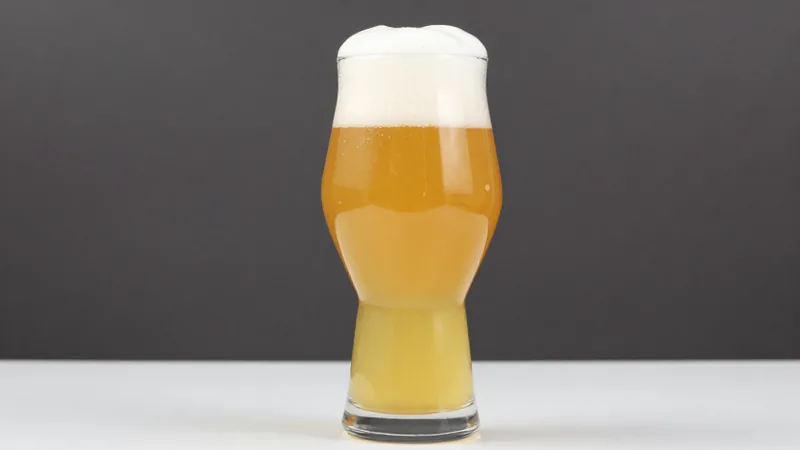
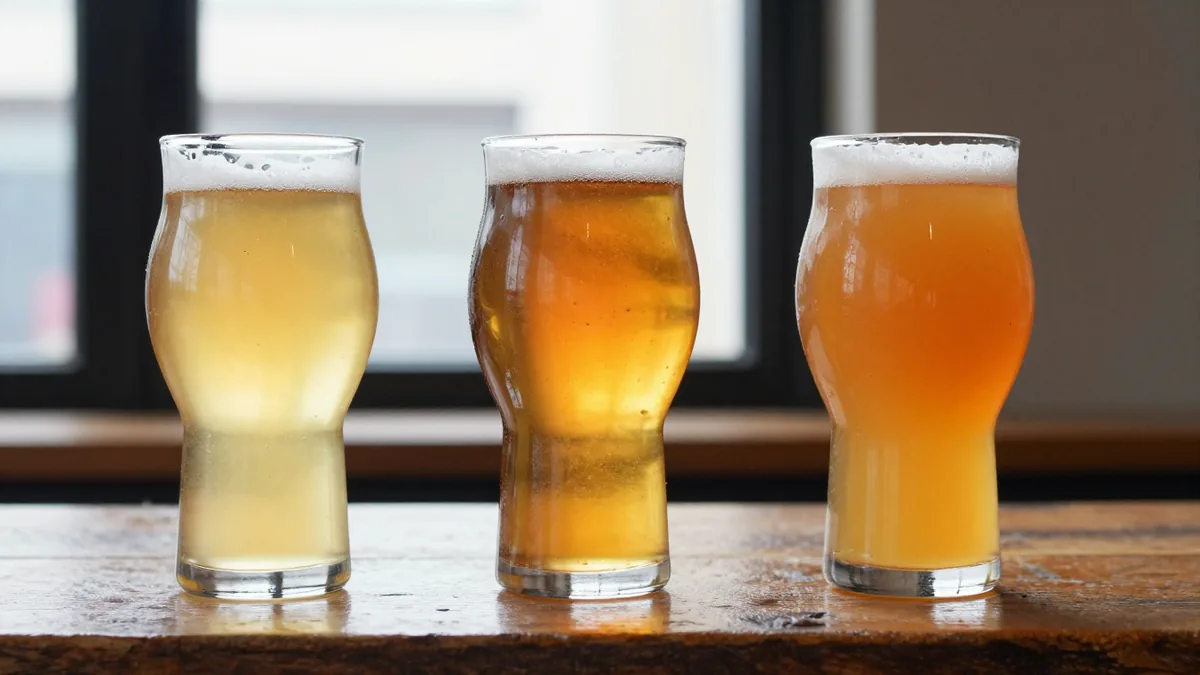
German pilsner BJCP style range and vital statistics. See weissbier-bjcp-numbers
German pils, BJCP 2021 style 5D, is a pale lager with a printed bitterness box that is wider than its color box. The vital statistics are IBU 22 to 40, SRM 2 to 4, original gravity 1.044 to 1.05, final gravity 1.008 to 1.013, and alcohol 4.4 to 5.2 percent by volume. Beer Judge Certification Program is the style page. The chart uses the IBU pair because 18 IBU of room, from 22 to 40, is the wide number, while color only runs 2 SRM from 2 to 4. Plotting SRM on the same axis as IBU would hide the color. Color stays in the sentence, where 2 and 4 can be read as SRM. German pils is also the first of the four lagers the quiz’s Lager Loyalist result names, ahead of Czech premium pale lager, Munich helles and Vienna lager.
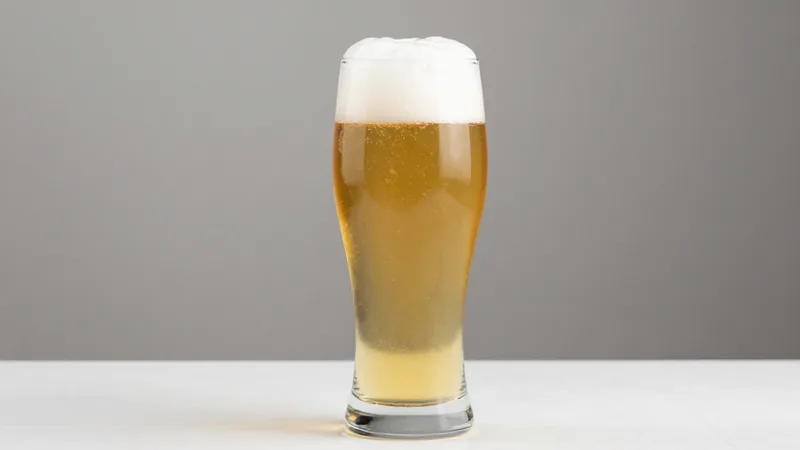
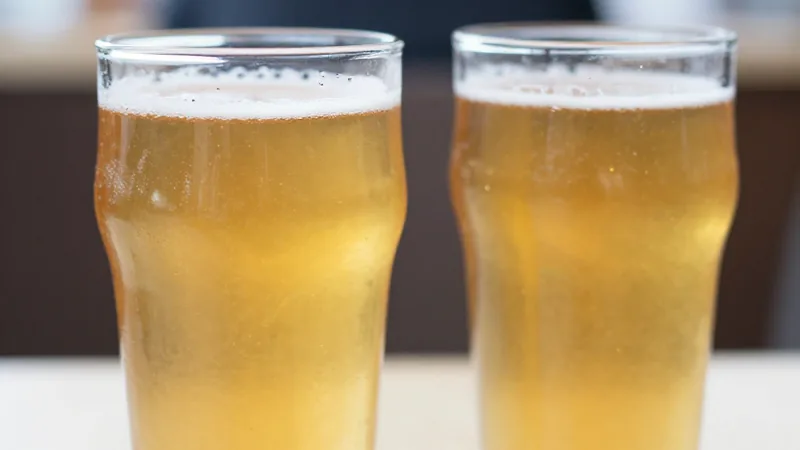
That narrow color box is the look: pale gold, not amber. 2 SRM is very light. 4 SRM is still pale. A beer that pours deep gold or amber may be a fine lager and still sit outside 5D's color line. Bitterness is allowed to move more. 22 IBU is the floor and 40 IBU is the ceiling in the vital statistics. The alcohol box is 0.8 percentage points wide, 4.4 to 5.2 percent. None of these ends is a preferred recipe. The page does not mark a midpoint. Commercial examples on the page include Jever Pilsener and Trumer Pils. Those are examples the guide names, not a purchase list and not a quality ranking. Our 13-listing Albuquerque guide includes Starr Brothers' Starrphire German Pilsner as a locally named example, not a lab analysis against these ranges. The 12 listings in our Bellingham guide also include Aslan's Coastal Pils, though the guide does not assign it to BJCP style 5D.
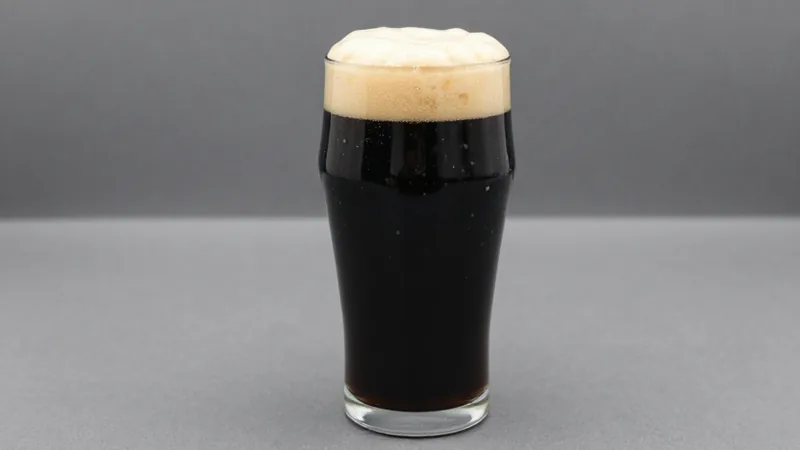
Do not borrow the Irish stout box
Irish stout, style 15B, is dark and lower in alcohol at the bottom of its own range. Its numbers are on the Irish stout page. German pils does not use that SRM pair. If a score sheet says stout and the beer is 2 SRM, you are in the wrong style, not at the edge of 5D. The reverse mistake is calling a black beer a pils because the IBU happens to fall between 22 and 40. Bitterness overlap is not identity. Cite the style whose whole vital-statistics line you are using. Gravity for 5D is OG 1.044 to 1.05 and FG 1.008 to 1.013. Those are specific gravity figures. They are not Balling. The regulatory definition of Balling is a different page on this site and a different unit.
Get beer science and style notes
How beer gets its bitterness, color and aroma, explained with numbers and sources. Free, unsubscribe from any email.
No fixed schedule. Unsubscribe from any email. 21+ only.
What the range does not say about drinking
4.4 to 5.2 percent is where the guideline places the style's strength. It does not say a pils is a session beer, a moderate beer, or a beer anyone should have a certain number of. Strength words that are not on the vital-statistics line stay off this page. A pale color is not a claim about calories. 2 SRM describes appearance. It does not describe nutrition. Judges use the ranges to place an entry. A drinker who likes a beer outside the box has not violated the guideline, because the guideline is not a rule about what may be sold or consumed. Sale and label rules are TTB's, and they are not style 5D.
The 2025 GABF winners archive, discussed on the busiest categories page, recorded German-style pilsener as one of the most-entered festival categories. That festival category is not automatically style 5D. Festival names and BJCP names can be close and still differ at the edges. Use the festival count when the question is how many entries a festival category drew. Use 22 to 40 IBU and 2 to 4 SRM when the question is the BJCP box. Do not paste one into the other.
The tool multiplies one selected end by a quantity. 40 times a number of batches is not a hopping schedule. This page has no gram weights and no boil times. A recipe that needs those has to come from somewhere that measured them. Multiplying a style end pretends the guideline is an ingredient list. It is not. Leave the multiplier at one and read the end: 22, 40, 2, 4, 1.044, 1.05, 1.008, 1.013, 4.4, 5.2.
Why bitterness is the chart and color is not
A bar chart needs one unit. German pils gives you a wide bitterness range and a very narrow color range. 22 to 40 is 18 IBU. 2 to 4 is 2 SRM. If both pairs were bars, the SRM bars would shrink to stubs beside the IBU bars and a reader could think the style has almost no color specification. It has a tight one. Tight is the information. Pale means 2 to 4, not "about the same as an IPA." The sentence carries color. The chart carries bitterness, which is where 5D gives the judge more room. Alcohol is neither of those units. 4.4 to 5.2 percent, 0.8 percentage points wide, stays in the text for the same reason. Gravity stays in the text because 1.044 and 1.008 are on a scale near one, and a bar next to 40 would hide them completely. Where both still have to line up in one view, the all-styles beer styles chart prints German Pils as 22 to 40 IBU and 2 to 4 SRM in separate columns, with 1.044 to 1.050 OG, 1.008 to 1.013 FG and 4.4 to 5.2 percent beside them.
Use the ends as gates, not as a recipe. Below 22 IBU, the vital statistics say the beer is less bitter than this style's box. Above 40, more bitter than the box. Between them, bitterness is not a reason to throw the entry out of 5D. Color still has to pass 2 to 4, and gravity still has to pass 1.044 to 1.05 and 1.008 to 1.013, and alcohol still has to pass 4.4 to 5.2. Passing bitterness alone is not passing the style. The commercial examples, Jever Pilsener and Trumer Pils, show beers the guide points at. They are not hopping formulas. This page has no gram per liter and will not derive one from 40. IBU is not a weight. Anyone selling a conversion from these IBU ends into a hop bill is adding data the style page does not contain.
A second trap is treating 2 as too small to matter. Two SRM points is the entire color box. That is a tight gate, which is why it is written in the sentence instead of being drawn as a pair of tiny bars. Hold the beer to a light. If it is not pale in the way 2 to 4 describes, bitterness between 22 and 40 will not rescue the classification. Gravity has its own gate, 1.044 to 1.05 into the fermenter side of the numbers and 1.008 to 1.013 after fermentation. Alcohol 4.4 to 5.2 percent is the last gate on the vital-statistics line. Five gates, one style. Skipping a gate is how a pale ale gets entered as a pils because the IBU looked familiar. Write all five ends on the sheet even when the beer fails the first one, so the brewer can see the other gates instead of guessing which number you used. The ends to write are 22, 40, 2, 4, 1.044, 1.05, 1.008, 1.013, 4.4, and 5.2. Widths, if you need them on the same sheet, are 18 IBU, 2 SRM, and 0.8 percentage points, each labeled as high minus low. Do not add those widths to the ends and call the sum a new ceiling. The ceiling is already 40, 4, or 5.2, depending on the row.
The same restraint applies to the festival. A busy German-style pilsener category at GABF means many entries, which the category article quantifies from the winners archive. It does not mean those entries measured 22 to 40 IBU. Different organizers draw boxes in different places. When you write, name the box. "BJCP 2021 style 5D" is this box. "GABF German-style pilsener" is the festival's category. Both can be true of the world at once and still not be the same sentence.
Checked on 2026-10-27 against Beer Judge Certification Program. Derived widths are 18 IBU, 2 SRM, and 0.8 percentage points. They are high minus low, nothing else. The 2015 revision of the style, which the page links as a past revision, is not copied here. If you are scoring under an older printed handbook, use that handbook's line and do not assume it matches 22 to 40. These sentences are the 2021 vital statistics for style 5D only.
How to use each figure
22 to 40 IBU is the bitterness box, 18 IBU wide, and it is what the chart draws. Color is 2 to 4 SRM, only 2 SRM wide, so it stays in the text.
Alcohol is 4.4 to 5.2 percent, a width of 0.8 percentage points. Original gravity is 1.044 to 1.05. Final gravity is 1.008 to 1.013. The midpoint of any of these is not a published target.
Frequently Asked Questions
What IBU range does BJCP 2021 give German pils?
22 to 40 IBU, a span of 18. Source: Beer Judge Certification Program.
How pale is the color box?
2 to 4 SRM. That is only 2 SRM wide.
What is the alcohol range?
4.4 to 5.2 percent by volume. It is a style statistic, not a serving recommendation.
Is a GABF pilsener category the same as style 5D?
Not automatically. Use the festival category when you are talking about that festival, and these ranges when you are talking about BJCP 5D.
Sources
- 2021 BJCP Style Guidelines, 5D German Pils. Beer Judge Certification Program.