Draught beer lines have a published cleaning interval. Brewers Association says the Brewers Association recommends a 14-day line cleaning frequency. That interval is a maximum gap in the recommendation, not a suggestion to wait longer when the beer already tastes wrong. The same questionnaire states the chemical strength and the contact time that go with the interval. This article reports those published figures. It does not tell you how to mix a cleaner. Follow the chemical manufacturer's sheet and the safety section of the Draught Beer Quality Manual. Caustic solutions burn skin and eyes. This page is not a mixing recipe.
The strength on the questionnaire is a 2 to 3 percent caustic solution. The temperature band is 80 to 110 degrees Fahrenheit. Recirculation is listed at 15 minutes. A static soak is listed at 20 minutes. Those are four separate instructions. A short soak at the wrong strength is not the same job as a 15 minute recirculation. A cold solution is not the solution the temperature line describes. Read the row you are actually doing. Do not average 15 and 20 into one unofficial minute count.
The 14-day figure is the one to put on a calendar. If the last complete clean was recorded, the next one is due 14 days later under this recommendation. The tool multiplies 14 only as arithmetic. It does not mean a bar should skip a cycle because a multiplier looks convenient. One cycle is 14 days. The association's line is a 14-day frequency. Faucets, couplers, and jumpers have their own service lines in the broader manual. This article does not fold those into the 14-day beer-line number.
What this page will not do
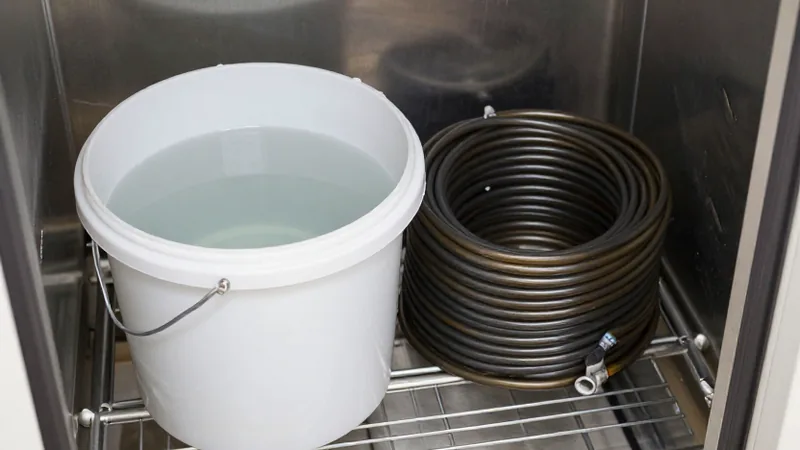
It will not give grams per gallon, pump settings, or a step order for pouring chemical into a bucket. The questionnaire names a 2 to 3 percent caustic solution and a temperature of 80 to 110 degrees Fahrenheit. Your cleaner label tells you how to reach that strength. The manual's safety section tells you what to wear and how to confirm the chemical is rinsed out. Mixing caustic with acid is a separate hazard the industry sheets warn about. Do not combine cleaners because two percentages appeared in one paragraph. They are the low and high ends of one caustic range, 2 and 3, not two products to blend.
Get the beer data notes
Brewers Association and TTB figures as they are published, with the source for every number. Free, unsubscribe from any email.
No fixed schedule. Unsubscribe from any email. 21+ only.
Why the minutes differ
Recirculation moves the solution. The questionnaire assigns that method 15 minutes. A static soak does not have that movement, and the questionnaire assigns it 20 minutes. The longer figure is not a prize for being more careful. It is the published contact time for the method that lacks mechanical action. Using the shorter time on a soak is not what the sheet says. Using the longer time on a recirculation is more contact than the minimum, which the sheet does not forbid, but the minimum it prints for recirculation is 15 minutes. Record which method you used so the minute count matches the method.
Couplers and faucets are not this number
The 14-day line is the beer-line frequency on the questionnaire. Faucets are discussed as hardware that is taken apart on a cleaning visit. Couplers and foam-on-beer detectors sit on a longer service note in the broader manual. Do not tell a cleaner that the coupler interval is 14 days unless the sentence you are quoting actually says that. This article quotes the line frequency, the caustic range, the temperature, and the two contact times. If a task is not one of those, it is outside the chart. The chart is days and minutes for the line itself.
A direct-draw box and a long-draw system can share the 14-day recommendation and still differ in how hard the clean is. The questionnaire does not publish a different day count for a longer run. It publishes 14 days, then the contact time that matches the method. A longer line is not a reason this page invents a new interval. It is a reason to follow the manual's notes on that hardware while keeping the same published frequency.
The chart shows days, recirculation minutes, and soak minutes, because those three are the schedule a cellar log can hold. The percent and the temperature stay in the tool and the prose so a bar chart does not pretend that 3 percent and 14 days share a meaning. Select the row you mean. 14 is days. 15 and 20 are minutes. 2 and 3 are the percent range. 80 and 110 are degrees Fahrenheit. Six figures, four units. The fact sheet keeps them apart.
A log that matches the sheet
Write the date of the last complete clean. Add 14 days. That date is the next clean under this recommendation. Write the method, recirculation or soak. If it was recirculation, the sheet's minimum contact is 15 minutes. If it was a soak, the sheet's minimum contact is 20 minutes. Write the solution temperature and confirm it was between 80 and 110 degrees Fahrenheit. Write that the solution was in the 2 to 3 percent caustic range, using the manufacturer's directions to get there. Write that the line was rinsed and that the rinse was checked. A log that only says "cleaned" does not show that any of those figures were met.
Do not turn the range into a single midpoint. The questionnaire prints 2 to 3 percent, not one number in between. The temperature line prints 80 to 110 degrees Fahrenheit, not one cozy number in the middle. Staying inside the range is the instruction. Picking an unstated average and calling it the association's number is not.
The 14-day rhythm is also not a promise that beer quality is unchanged on day 14 and ruined the next morning. It is the frequency the association recommends so biofilm does not get a longer window. Bars with older lines or a history of dirty lines may need a tighter schedule. The sheet's figure is the recommended maximum gap for the ordinary case, expressed as a 14-day frequency. It is not a waiver for a system that is already in trouble.
Staff who handle the solution need the safety steps from the manual and from the product label: gloves, eye protection, and a rinse check. This article names the published times and strengths so a log can be audited against them. It does not replace that safety reading. If the only copy of the numbers in the building is this page, print the questionnaire too. Brewers Association is the source. The figures to audit are 14 days, 15 minutes, 20 minutes, 2 to 3 percent, and 80 to 110 degrees Fahrenheit.
Checked on 2026-10-27 against the Brewers Association beer line cleaning questionnaire at Brewers Association. The quotes are the frequency line, the caustic range, the temperature line, and the two contact times. A bar that cleans less often than 14 days is off this recommendation even if the beer still seems fine. A bar that cleans on the interval with a cold, weak solution is also off the sheet, because the interval is not the only line. The temperature and the strength are part of the same published practice. None of this is advice to drink beer that has had cleaner left in the line. Rinse until the chemical is gone, using the test the manual and the chemical sheet require.
How to use each figure
Put 14 on the cleaning log as the recommended gap, not as a target to stretch. The next clean is due at the end of that interval. If the beer is already showing line-related off flavors sooner, the recommendation is a maximum gap, and waiting out the rest of the 14 days is not supported by the sentence. The sentence is a 14-day frequency.
2 percent and 3 percent bracket one caustic solution on the questionnaire. They are not a license to use a stronger unlabeled chemical, and they are not a home recipe. The manufacturer calculates how much product makes that range. This page stops at the published percent.
Contact time depends on the method. Recirculation is 15 minutes on the sheet. A soak is 20 minutes. Write the method next to the minutes in the log so a later reader does not treat them as interchangeable. The temperature window for the solution is 80 to 110 degrees Fahrenheit. A cold bucket is outside that window.
Frequently Asked Questions
How often does the Brewers Association say to clean beer lines?
Every 14 days. Source: Brewers Association.
What solution strength does that sheet name?
A 2 to 3 percent caustic solution, at 80 to 110 degrees Fahrenheit. Follow the chemical maker for how to reach that strength. This article is not a mixing recipe.
How long should the solution stay in the line?
The questionnaire lists 15 minutes for recirculation and 20 minutes for a static soak.
Is this a reason to taste the cleaner?
No. The figures are a cleaning schedule. Rinse the chemical out using the safety steps in the manual and on the product sheet.
Sources
- Beer Line Cleaning Questionnaire. Brewers Association.