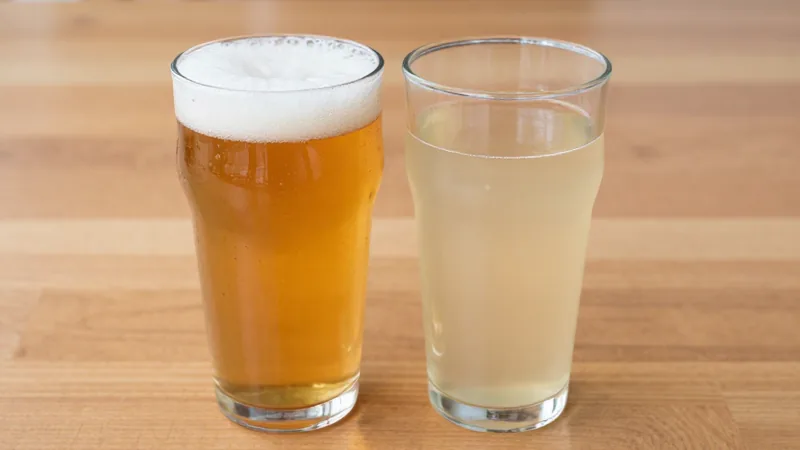
When a brewery says "barrel," the tax and production unit is fixed. eCFR says a barrel, when used as a unit of measure, is the quantity equal to 31 U.S. gallons. The same sentence distinguishes that unit from a barrel used as a container, which can be a consumer package or a keg of a size listed in 27 CFR 25.156 or another size TTB allows. This article is about the unit of measure. Package sizes are a different list. If a report says a brewery made a number of barrels, and the report is using the federal unit, each of those barrels is 31 gallons.
The gallon under that definition is also fixed. eCFR says a gallon is the liquid measure containing 231 cubic inches. Multiply the two definitions. A barrel is 31 times 231 cubic inches, which is 7161 cubic inches. That product is derived. It is not a third definition TTB printed. It is the product of the two sentences in the same section. Use it when a tank drawing is in cubic inches and the report you are comparing it with is in barrels. Divide cubic inches by 7161 to get barrels, or by 231 to get gallons.
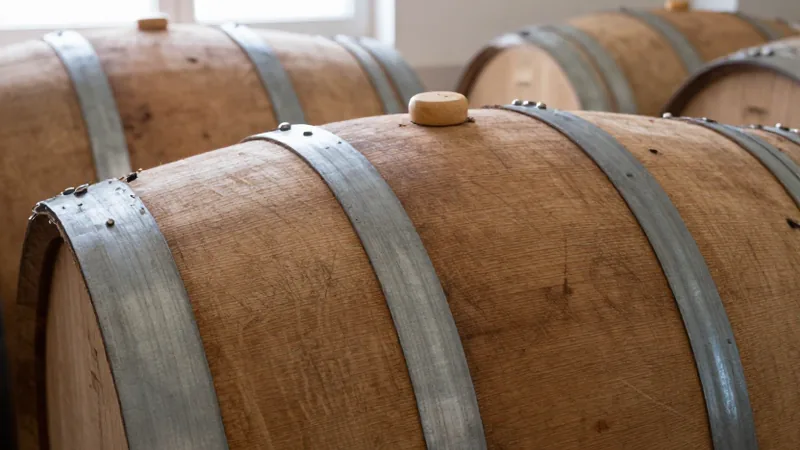
NIST Handbook 44 (2023), Appendix C, states the gallon in milliliters. National Institute of Standards and Technology gives 1 gallon as 3785.411784 milliliters. A 31 gallon barrel is therefore 117347.765 milliliters, from 31 times 3785.411784, rounded to three decimals. The fact sheet keeps the formula. The chart shows gallons, cubic inches per gallon, and cubic inches per barrel, because those three sit on scales you can still read together if the axis is "the unit named on the row." The milliliter figure is in the tool, where a single selected row does not have to share an axis with 31.
What a barrel is not
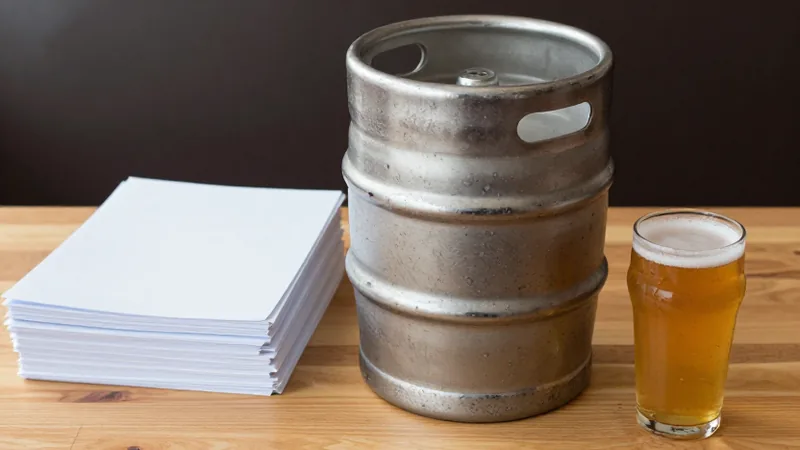
A half-barrel keg is not one barrel. It is half of 31 gallons if the keg is the usual 15.5 gallon U.S. half-barrel, and 15.5 is half of 31. I am not introducing a new legal size here. Half of the defined barrel is the ordinary reading of "half-barrel." A sixth-barrel is one sixth of that same 31 gallon unit in trade talk. Confirm the keg you actually have in the keg size guide before you convert a stack of kegs into tax barrels. Counting kegs and calling the count "barrels" overstates production by several times.
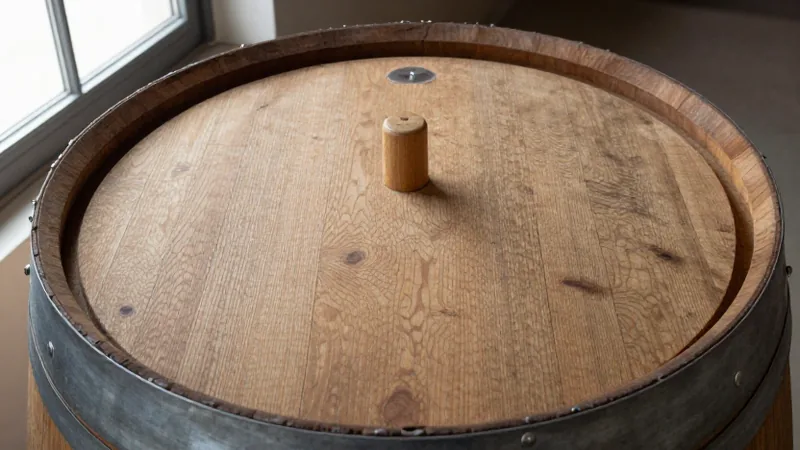
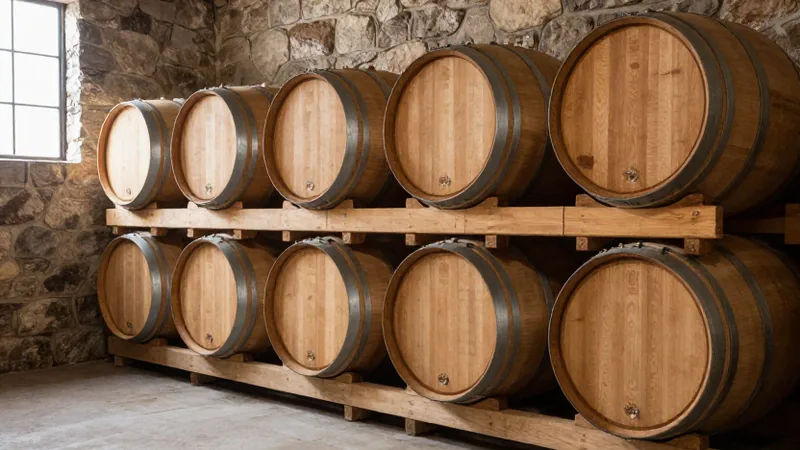
A wooden barrel in a cellar is a container. It might hold about 31 gallons and it might not. Bourbon barrels are a different trade size. This article does not assign them a gallon figure, because eCFR does not. If you need the tax unit, use 31 gallons. If you need the wood vessel in front of you, measure that vessel or read its own specification. Do not paste the tax definition onto the wood.
Get the beer data notes
Brewers Association and TTB figures as they are published, with the source for every number. Free, unsubscribe from any email.
No fixed schedule. Unsubscribe from any email. 21+ only.
Checks you can do with only these figures
One barrel is 31 gallons and 7161 cubic inches and 117347.765 milliliters. Two barrels are twice that: 31 gallons becomes twice 31, and the cubic-inch and milliliter figures double the same way. Ten barrels are 31 gallons times that count. The tool multiplies the selected row by the quantity you type. If you select gallons and type a barrel count, the product is gallons. If you select milliliters, the product is milliliters. The control does not convert kegs. It does not know which physical package you have.
The household production caps in 27 CFR 25.205 are in gallons, not barrels. Divide those caps by 31 if you want them in this unit. That division is in the home production cap article, which also says the caps are ceilings, not goals. Federal excise tax rates are dollars per this same barrel. See the federal excise tax article. The rate article uses 31 as the divisor when it turns a per-barrel rate into a per-gallon rate.
Why the cubic-inch line is worth keeping
People remember 31 and forget 231. The gallon sentence is how you leave customary volume without inventing a conversion. 231 cubic inches times 31 is 7161 cubic inches, an integer, because both inputs are integers. The milliliter path is not an integer. 3785.411784 already has six decimals in the NIST table as printed here (3785.411784), and times 31 it is 117347.765 after rounding to three decimals. If you need more precision, multiply 3785.411784 by 31 yourself from the fact sheet and do not round early.
Handbook 44 is a weights-and-measures document. It is not a beer regulation. It is the right citation for the metric length of the U.S. gallon the beer regulation already defined in cubic inches. The two sources agree on the gallon. They do not both define the beer barrel. Only eCFR does that, at 31 gallons. NIST supplies the milliliters per gallon. The barrel in milliliters is our multiplication, labeled as derived.
Using the figure in a sentence that already has a rate or a cap
The federal excise rates are dollars per this barrel. Dividing a per-barrel rate by 31 is how you get dollars per gallon. That division lives in the federal excise tax article, which cites the same 31 gallon definition. If the two articles ever disagreed on the gallon count, the regulation would still say 31. Both pages were checked on the same day against eCFR.
The home production caps are gallons per household per calendar year. Dividing a cap by 31 expresses the cap in tax barrels. That quotient is in the home production cap article. It is a conversion, not a suggestion to produce the cap. A barrel count that large is still the cap, just relabeled. Do not add gallons to barrels. Do not multiply the cap by 31 a second time.
A tank whose volume you know in cubic inches divides by 7161 to give barrels, or by 231 to give gallons. A tank whose volume you know in milliliters divides by 117347.765 to give barrels, or by 3785.411784 to give gallons. Round only at the end. The integer path, cubic inches, does not need rounding: 31 times 231 is exactly 7161. The milliliter path starts from a NIST value that is already a decimal, 3785.411784, so 117347.765 carries the rounding stated in the fact sheet.
If a spreadsheet shows a barrel as something other than 31 gallons, the spreadsheet is not using this definition. Wine gallons, oil barrels, and dry barrels are other units. Beer in 27 CFR 25.11 is this one. NIST Handbook 44 even notes that more than one barrel exists in commerce. This article does not import those other barrels. It stays with the beer unit and the gallon that unit is built from.
If you only keep one check, keep this one. The barrel does not change size because a keg is nearby. 31 times 231 equals 7161. 31 times 3785.411784 rounds to 117347.765. Both start from the same barrel. One path is cubic inches from eCFR. The other path is milliliters from National Institute of Standards and Technology. Neither path is a keg count.
Use the word carefully in a sentence that will be quoted. "We produced N barrels" should mean N times 31 gallons if you are speaking the federal unit. "We filled N barrels" might mean N wooden containers. The regulation itself splits those meanings in one definition. Read the "unit of measure" clause and the "container" clause as different. This article follows the unit of measure. The container clause points to 27 CFR 25.156 for listed package sizes. That section is not copied here.
Nothing on this page is a health statement, a serving recommendation, or a tax return. A barrel of beer is a volume. How much of it anyone drinks is a different subject, and this article does not go there. The figures to keep are 31 gallons, 231 cubic inches per gallon, 7161 cubic inches per barrel, 3785.411784 milliliters per gallon, and 117347.765 milliliters per barrel.
Frequently Asked Questions
How many gallons are in a beer barrel?
eCFR defines a barrel, as a unit of measure, as 31 U.S. gallons.
How many cubic inches is that?
A gallon is 231 cubic inches in the same section. A barrel is 31 times 231, or 7161 cubic inches.
How many milliliters is a barrel?
117347.765 milliliters. That is 31 times 3785.411784, the NIST Handbook 44 gallon, rounded to three decimals. Source for the gallon: National Institute of Standards and Technology.
Is a half-barrel keg one barrel?
No. The unit is 31 gallons. A half-barrel is half of that unit when the keg is actually half of 31 gallons. Count kegs in the keg size guide before you call them barrels.
Does this define a wooden bourbon barrel?
No. The regulation separates the 31-gallon unit of measure from a barrel used as a container. This article does not assign a gallon volume to a bourbon barrel.
Sources
- NIST Handbook 44 (2023), Appendix C. National Institute of Standards and Technology.