Bottle Conditioning: A Homebrewer's Guide
Once fermentation has finished, boil about 4 oz (113 g) of corn sugar in 2 cups (about 0.5 L) of water for 5 gal (19 L) of beer, mix it into the beer in a bottling bucket, fill bottles to 3/4 inch from the top, cap, and hold them at 68-80°F (20-27°C) for 2-4 weeks. That dose gives about 2.5 volumes of CO2.
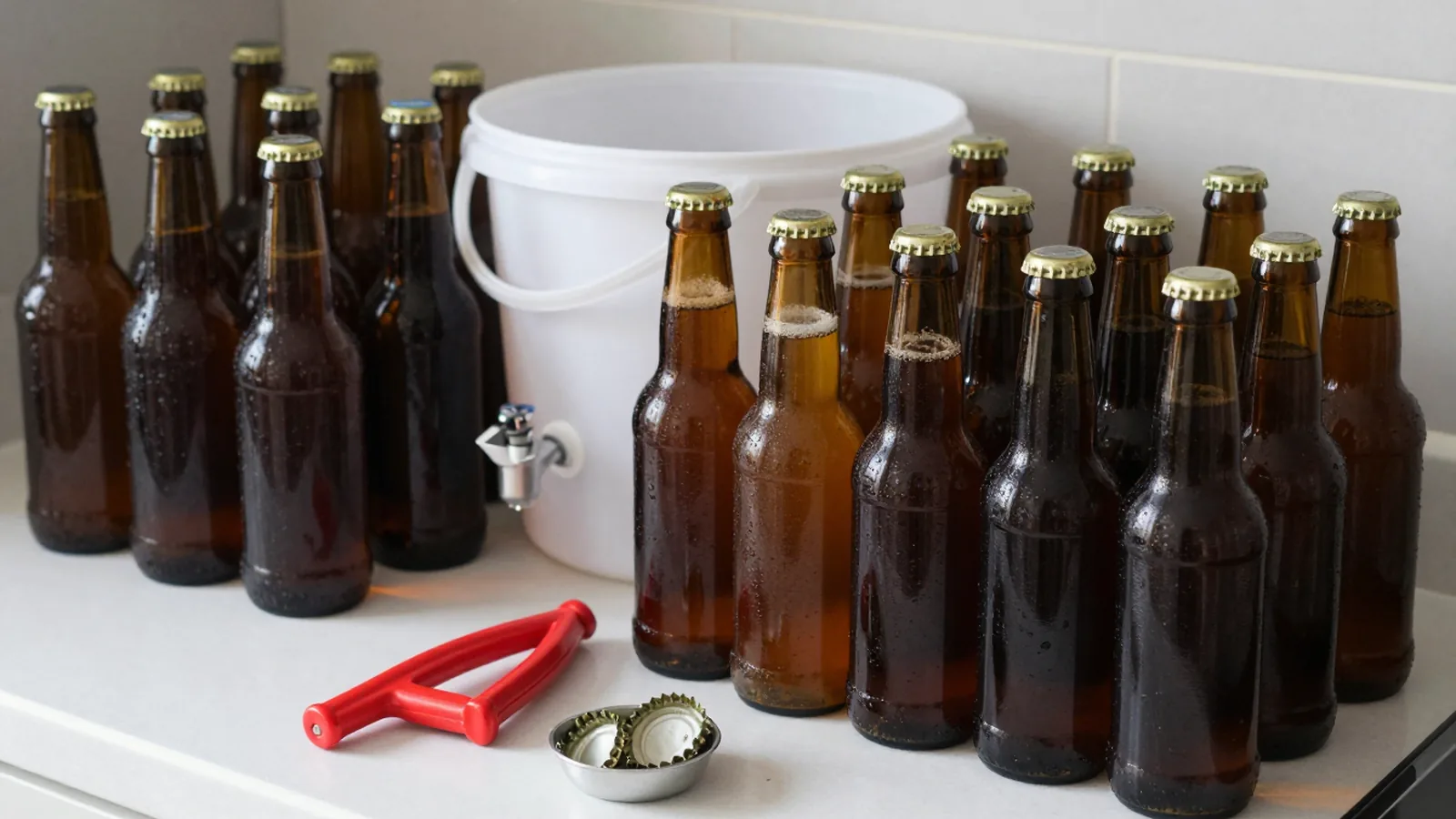
Bottle conditioning carbonates beer inside the sealed bottle. You add a small, measured amount of fermentable sugar to finished beer at bottling; the yeast still in suspension ferments it, and the CO2 it makes has nowhere to go but into the beer. It is how most homebrewers package, and how many Belgian and British breweries still do. Use it when you do not own kegging gear, when you want beer that keeps and travels at room temperature, or when you want to cellar strong beers. The usual dose is about 3/4 cup or 4 oz (113 g) of corn sugar per 5 gal, which Palmer puts at about 2.5 volumes of CO2. 3 oz (85 g) gives about 2.0 volumes and 5 oz (142 g) about 3.0. Table sugar works as well; Palmer's current advice is to just use it. The costs are time and sediment. Conditioning takes 2-4 weeks at 68-80°F (20-27°C), and each bottle ends up with a thin yeast layer that you leave behind when you pour. Carbonation depends on the beer being fully fermented before you prime: leftover sugar plus priming sugar makes over-carbonated bottles that can burst. Kegging is faster and gives exact carbonation, but it costs more and the beer has to stay cold.
At a Glance
Equipment
- Bottling bucket with spigot, 6 gal (23 L)
- Bottle filler wand
- Auto-siphon and tubing
- About 50 brown 12 oz pry-off bottles
- New crown caps
- Bench or wing capper
- Bottle brush and no-rinse sanitizer
- Kitchen scale
- Small saucepan
- Hydrometer
Steps
- 1
Confirm fermentation is finished
Wait 2-3 weeks from pitching for ales, then take two gravity readings a few days apart. They should match.
Priming beer that is still fermenting is the main cause of bottle bombs.
- 2
Clean and sanitize
Scrub new or used bottles with a brush, then sanitize bottles, caps, bucket, siphon, filler and spoon.
Do not boil or bake caps; heat can ruin the liners.
- 3
Weigh and dissolve the sugar
Weigh about 4 oz (113 g) of corn sugar for 5 gal, or adjust with a priming calculator for your target volumes and beer temperature. Boil it in 2 cups of water and let it cool.
Weigh the sugar. Cup measures of sugar vary too much to trust.
- 4
Combine in the bottling bucket
Pour the cooled priming solution into the bucket, then siphon the beer in with the outlet below the liquid surface so it mixes gently.
Keep the siphon intake an inch above the yeast cake to leave sediment behind.
- 5
Fill the bottles
Push the filler wand to the bottom of each bottle and fill to the top. Removing the wand leaves about 3/4 inch (2 cm) of headspace.
Keep the tube under the beer to avoid splashing in oxygen.
- 6
Cap on foam
Set a sanitized cap on each bottle and crimp it, ideally while foam fills the neck to push out air.
Check every crimp. A loose cap means a flat bottle.
- 7
Condition warm
Store the bottles upright, out of light, at 68-80°F (20-27°C) for 2-4 weeks.
Cold basements slow conditioning. Move the case somewhere warmer if bottles are flat at two weeks.
- 8
Test and chill
Open one bottle at two weeks and then weekly. Once it is carbonated, refrigerate the batch.
Cold storage keeps beer fresh longer. Palmer reports beer stored warm begins to stale after about a month.
- 9
Pour off the yeast
Pour slowly in one motion and leave the last 1/4 inch (6 mm) of beer and yeast in the bottle.
The yeast layer is harmless but adds a bitter, yeasty taste.
Tips
- Scale the sugar to the batch: for 6 gal use 6/5 of the 5 gal dose.
- Account for beer temperature when calculating priming sugar. Beer that fermented warm holds less leftover CO2 than beer that fermented cold.
- After a cold lagering of more than two months, add fresh yeast (one package or about 1/4 cup of slurry per 5 gal) with the priming sugar.
- Use brown bottles. Clear and green glass let light skunk the beer.
- Swap 4 oz of corn sugar for about 1 1/4 cups of DME if you want an all-malt beer; it ferments less completely.
- Label or mark caps by batch with the bottling date.
Common Mistakes to Avoid
- Bottling before fermentation is complete, which over-carbonates and can burst bottles.
- Adding sugar to each bottle by the teaspoon, which carbonates unevenly.
- Measuring priming sugar by volume instead of weight.
- Splashing beer into the bucket or bottles and oxidizing it.
- Using twist-off bottles, which do not take a crown cap reliably and break more often.
- Chilling bottles before they carbonate. Cold yeast stops working.