Extract Brewing: A Homebrewer's Guide
Dissolve about 6.6 lb (3 kg) of liquid malt extract in 3 gal (11.4 L) of water, boil it with hops for 60 minutes, then chill the wort to 64-70°F (18-21°C) and top up to 5 gal (19 L) in the fermenter. Aerate, pitch yeast, and leave it in primary for 2-3 weeks before bottling.
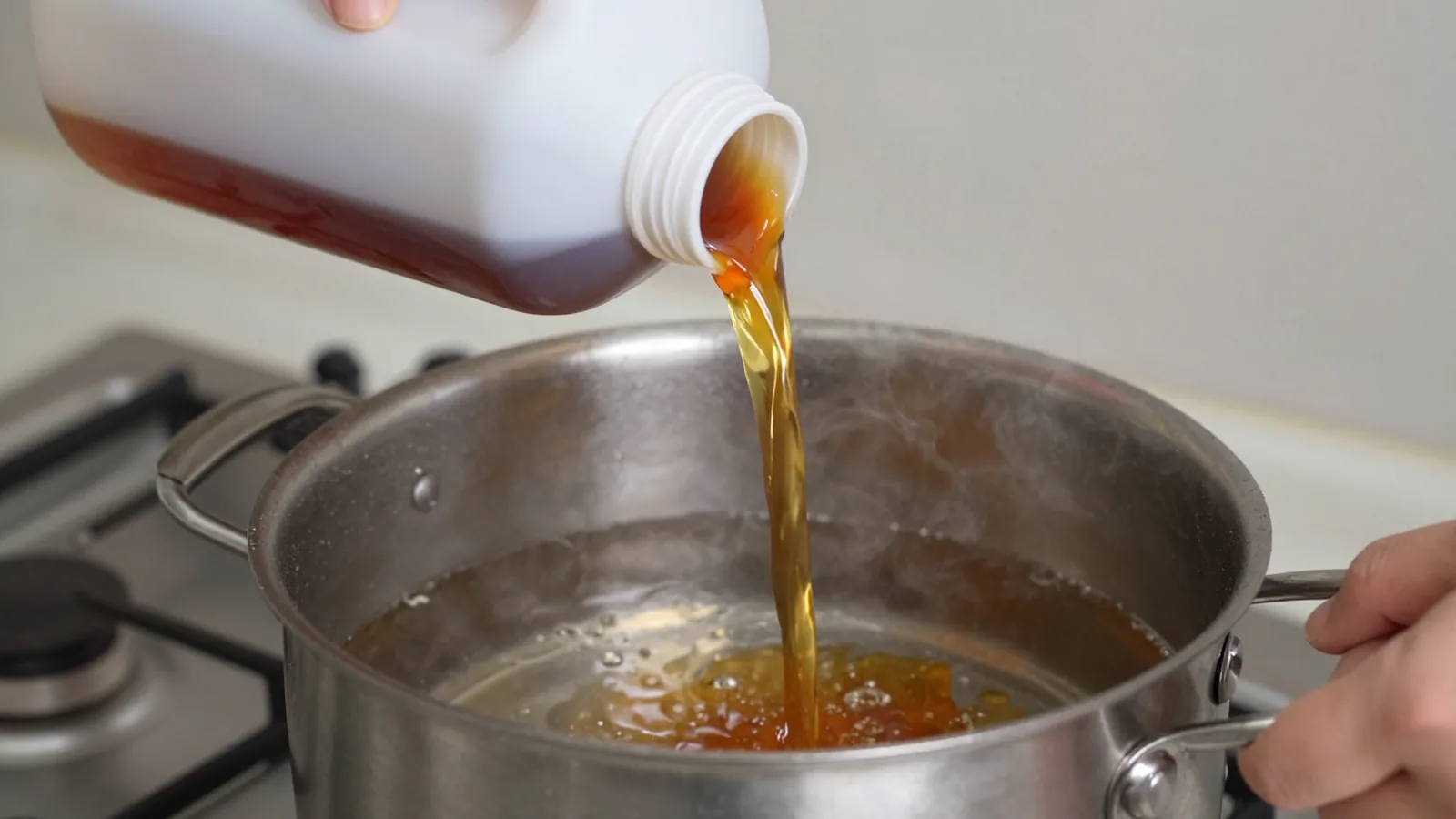
Extract brewing replaces the mash with malt extract: wort that a maltster has already mashed, then concentrated into syrup (LME) or dried into powder (DME). You dissolve it in hot water, boil it with hops, cool it, and ferment it. A pound of LME gives 1.034-1.038 gravity in one gallon of water; a pound of DME gives about 1.040-1.043. That predictability is the point. Your gravity comes out of a can, not out of your mash technique. Use it for your first batches, for brewing in a small kitchen, and any time you want to test a hop or yeast without changing five other variables. Most homebrewers boil a concentrated 3 gal (11.4 L) on the stove and add cold water in the fermenter, so you need a 5 gal pot, not a burner and a 10 gal kettle. Steeping a pound or so of crushed specialty grain at 150-170°F (66-77°C) for 30 minutes before you add the extract gives you color and caramel or roast flavors that plain extract lacks. The trade-off is control and cost. You cannot pick your mash temperature, so you cannot tune body and fermentability the way all-grain brewers do, and extract costs more per batch than grain. Darker extracts are less fermentable than pale ones and finish sweeter. If you want more control without new equipment, step up to a partial mash. If you want full control, go all-grain or brew in a bag.
At a Glance
Equipment
- Stockpot, 5 gal (19 L) or larger, stainless or aluminum
- 6 gal (23 L) food-grade fermenting bucket with lid
- Airlock and stopper
- No-rinse sanitizer
- Long stirring spoon
- Thermometer
- Hydrometer and test jar
- Mesh grain bag (if steeping specialty grain)
- Wort chiller, or a sink full of ice water
- Siphon or auto-siphon
Steps
- 1
Clean and sanitize
Wash everything that will touch the cooled wort with unscented detergent and rinse. Then soak the fermenter, lid, airlock, spoon, and thermometer in no-rinse sanitizer for the label's contact time.
Anything that touches the wort after the boil must be sanitized. Anything before the boil only needs to be clean.
- 2
Steep specialty grain (optional)
Heat about 1 gal (3.8 L) of water to 160°F (71°C), give or take 10°F. Submerge the crushed specialty grain in a mesh bag for 30 minutes, then lift it out and let it drain. Keep the ratio under 1 gal of water per pound of grain.
Do not squeeze or over-heat the bag. Water above 170°F (77°C) or alkaline water pulls harsh tannins from the husks.
- 3
Dissolve the extract
Bring the pot up to about 3 gal (11.4 L) total. Take it off the heat and stir in the malt extract until no syrup sticks to the bottom, then return it to the burner.
Pulling the pot off the flame while you stir prevents scorched extract on the pot floor.
- 4
Bring to a boil and watch for the hot break
Heat to a rolling boil. Foam rises as proteins coagulate; this hot break can take 5-20 minutes. Lower the heat or spray the foam with water if it climbs toward the rim.
Leave the lid off or partly off. Sulfur compounds need to escape or they become cooked-corn DMS in the beer.
- 5
Add hops on schedule
With unhopped extract, add bittering hops at the start of a 60-minute boil and finishing hops in the last 15 minutes. With hopped extract and no added hops, 5-10 minutes of boiling is enough to pasteurize.
Stir each addition in so all the hops are wetted, and expect a brief surge of foam.
- 6
Late extract addition (optional)
Hold back half the extract and stir it in at the end of the boil. Keep the wort hot for 10 minutes total to pasteurize it before chilling.
Boiling less extract keeps the boil gravity lower, which gives a lighter color than boiling it all for an hour.
- 7
Chill the wort
Cool the wort to 64-70°F (18-21°C) with an immersion chiller or by setting the covered pot in an ice-water bath. Do not pitch until it is in range.
Fast cooling reduces DMS and drops out cold break, so the beer clears better.
- 8
Transfer, top up and aerate
Pour the cooled wort into the sanitized fermenter with plenty of splashing. Add cold water to reach 5 gal (19 L). Pour back and forth between bucket and pot two or three times.
This is the only point in the process where you want oxygen in the beer. Every later transfer should be quiet.
- 9
Measure gravity and pitch
Take a hydrometer reading and correct it for temperature. Sprinkle or pour in the yeast, seal the lid, and fit the airlock. Ale yeast usually ferments out about 75% of the gravity points, so 1.050 lands near 1.012.
Write the original gravity down. You need it to calculate ABV later.
- 10
Ferment and wait
Keep the fermenter in a dark spot within the yeast's temperature range. Primary activity lasts 2-6 days for ales; leave the beer on the yeast for 2-3 weeks in total before bottling.
Bottling at one week traps green-apple and buttery flavors that the yeast would have cleaned up with more time.
Tips
- Plan gravity from the extract numbers: 5 gal at 1.040 needs about 5 lb of DME (40 points per lb per gal) or 5.5 lb of LME (36 points).
- About 1 lb of LME per gallon gives a light-bodied beer; 1.5 lb per gallon gives a richer, fuller one.
- Steep a half pound of crystal malt in your first extract pale ale. It adds body and color that plain pale extract lacks.
- Boil the top-up water the night before and chill it in a sanitized container if your tap water tastes of chlorine.
- Aluminum pots are fine for boiling wort and conduct heat better than stainless.
- A one-adult US household may brew up to 100 gal of beer per year for personal use, two or more adults up to 200 gal (27 CFR 25.205).
Common Mistakes to Avoid
- Pitching yeast into warm wort above 80°F (27°C). The yeast make fusel alcohols and excess esters that conditioning cannot remove.
- Covering the pot fully during the boil, which traps DMS precursors and boils over.
- Steeping specialty grain too hot or for hours, which extracts astringent tannins.
- Splashing or aerating the beer after fermentation starts. Oxygen at that stage causes stale, cardboard flavors.
- Bottling as soon as the airlock slows instead of waiting 2-3 weeks.
- Skipping sanitation on the spoon, thermometer, or hydrometer that touches cooled wort.
Glossary Terms
Sources
- How to Brew (John Palmer), Ch. 1: Crash Course
- How to Brew (John Palmer), Ch. 3: Malt Extract
- How to Brew (John Palmer), Ch. 7: Boiling and Cooling
- How to Brew (John Palmer), Ch. 13: Steeping Specialty Grain
- How to Brew (John Palmer), Ch. 8: Fermentation
- 27 CFR 25.205: Production quantity limits for personal or family use