Dry Hopping: A Homebrewer's Guide
Add hop pellets to the fermenter near the end of fermentation or after it finishes, at 55-65°F (13-18°C), and package after about 1-3 days of contact; pellets reach near-full extraction in one to two days. Then take gravity readings a few days apart before packaging, because hop enzymes can restart fermentation (hop creep).
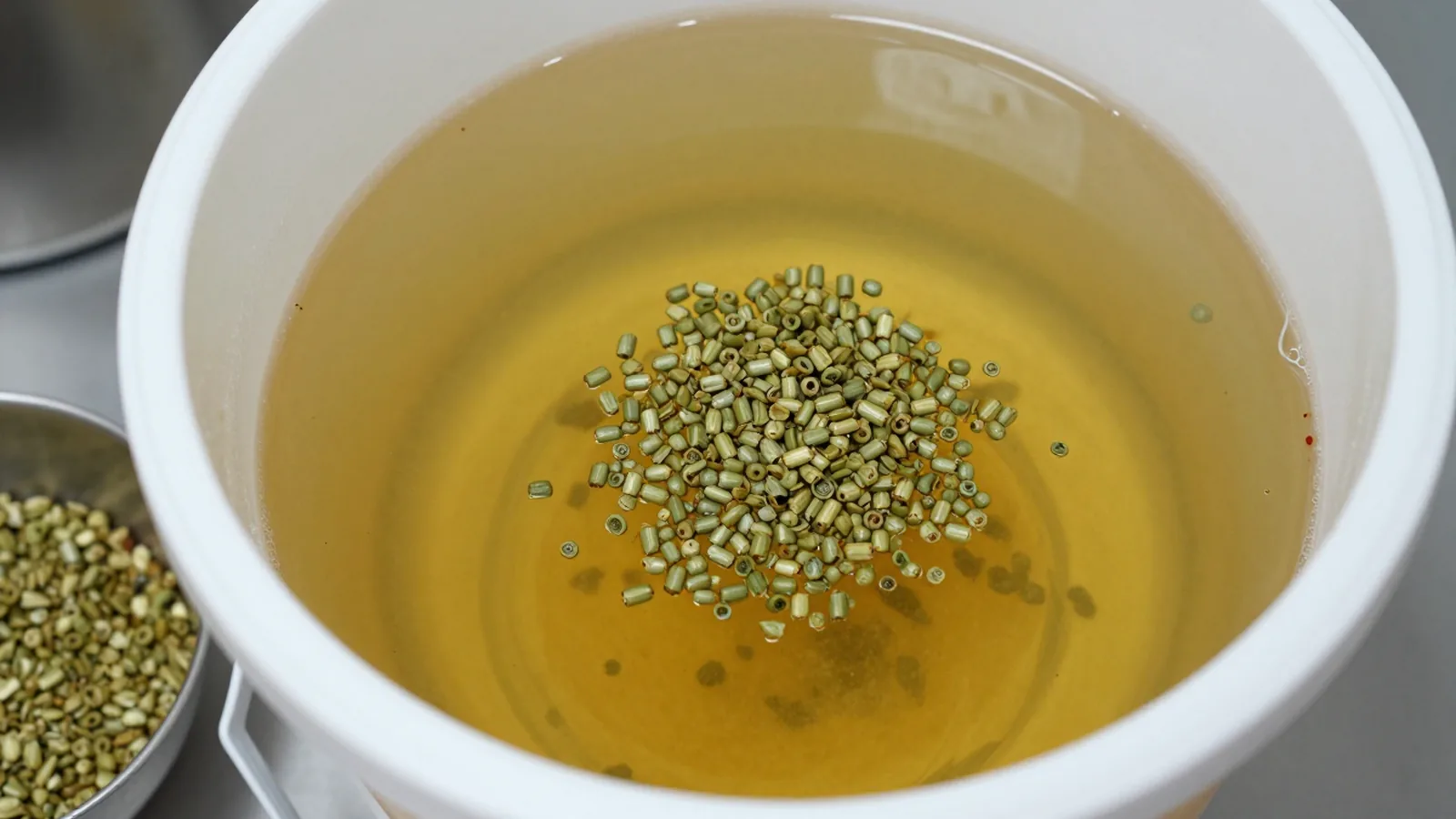
Dry hopping means adding hops after the boil, to fermenting or finished beer, so their volatile oils dissolve into the beer without being boiled off. It adds aroma and flavor with little isomerized bitterness. It defines American IPAs and hazy IPAs and turns up in pale ales, lagers and some sours. Extraction is faster than older practice assumed. A 2012 Oregon State University study found hop hydrocarbons such as myrcene peaked within 3-6 hours and terpene alcohols kept rising through 24 hours, and concluded that hop flavor can be reached with much less contact than the 4-12 days industry used to allow. Brew Your Own's summary of the research puts full extraction from pellets at one to two days without recirculation, and closer to a week for whole cones. Stirring or recirculating speeds extraction but also pulls more polyphenols and astringency. The risks are oxygen and hop creep. Opening the fermenter and adding hops introduces oxygen, which stales hop aroma fast. And hops carry enzymes that break dextrins into fermentable sugar, so live yeast resume fermenting: Brew Your Own reports Allagash seeing carbonation climb from 2.6 to 4.5 volumes in three weeks after a dry hop, and Russian River seeing diacetyl rise from 60-70 ppb to 150-250 ppb within three days. Warmer dry hopping, 68°F (20°C) versus 50°F (10°C), increases the effect.
At a Glance
Equipment
- Hop pellets in oxygen-barrier packaging
- Sanitized stainless hop canister or fine mesh bag with a sanitized weight (optional)
- CO2 tank or a closed-transfer setup for purging (optional)
- Sanitizer spray
- Scale
- Hydrometer or refractometer
- Fermenter with a wide opening or a dry-hop port
Steps
- 1
Pick the timing
For aroma retention, add hops after the main fermentation slows or finishes. For biotransformation-driven hazy styles, some brewers add a charge during active fermentation.
Hops added during vigorous fermentation lose some aroma to escaping CO2.
- 2
Set the temperature
Bring the beer to 55-65°F (13-18°C). Cooler extracts a bit more slowly; warmer drives more hop creep.
One BYO example recipe conditions at 45°F (7°C), then raises the beer to 55-60°F (13-16°C) to dry hop.
- 3
Weigh the hops
Weigh the charge. Published 5 gal IPA clone recipes range around 3-4 oz (85-113 g), with some double IPAs going higher.
Start lower. More hops means more beer lost to absorption and more vegetal flavor.
- 4
Add with minimum oxygen
Open the fermenter briefly, add the pellets loose or in a sanitized bag, and close it. Purge the headspace with CO2 if you can.
Loose pellets extract faster than a packed bag. If you use a bag, give it room to swell.
- 5
Wait one to three days
Pellets give up most of their aroma within 24-48 hours. Gently rouse the hops once if they float in a raft.
Long contact at warm temperatures adds grassy, vegetal notes rather than more aroma.
- 6
Check gravity for hop creep
Take a gravity reading after the dry hop and again two or three days later. Package only when the readings match.
Packaging during hop creep makes over-carbonated bottles and buttery beer.
- 7
Cold crash and package
Drop the temperature to settle the hops, then package with as little oxygen exposure as possible.
Keg-to-keg or closed transfers protect hop aroma far better than siphoning through open air.
Tips
- Buy hops in nitrogen-flushed foil packs and store them cold. Old, oxidized hops give cheesy aroma.
- One charge is usually enough at homebrew scale; in BYO's brewer survey, only 2 of 7 pros used staged additions, and staging showed little benefit in flat-bottomed fermenters.
- Allow a few extra days before packaging when you dry hop on active yeast, so diacetyl from hop creep gets cleaned up.
- BYO lists Cryo pellets, T45 pellets and hop extracts as ways to limit hop creep compared with whole cones.
- Cold dry hopping, near 50°F (10°C), reduces hop creep at the cost of slightly slower extraction.
- Record dose, timing, temperature and contact time each batch so you can repeat a good result.
Common Mistakes to Avoid
- Leaving hops in for two weeks expecting more aroma. Most aroma is extracted in days.
- Splashing or opening the fermenter repeatedly, which oxidizes the beer and fades hop aroma.
- Packaging immediately after dry hopping without checking gravity, then finding gushing bottles.
- Packing pellets tightly into a small bag so beer cannot reach them.
- Using old or poorly stored hops.
- Dry hopping a beer that has not fermented out, then crashing it cold and trapping diacetyl.