How to Make Hard Cider
Start with apple juice that has no sorbate preservatives. If it is unpasteurized, add 1 crushed Campden tablet per gallon (3.8 L) and wait 24-36 hours, then pitch a wine or cider yeast such as Lalvin EC-1118 and ferment at 60-75°F (15-24°C). A 6% ABV cider ferments out in 2-3 weeks and clears in another 2-4 months.
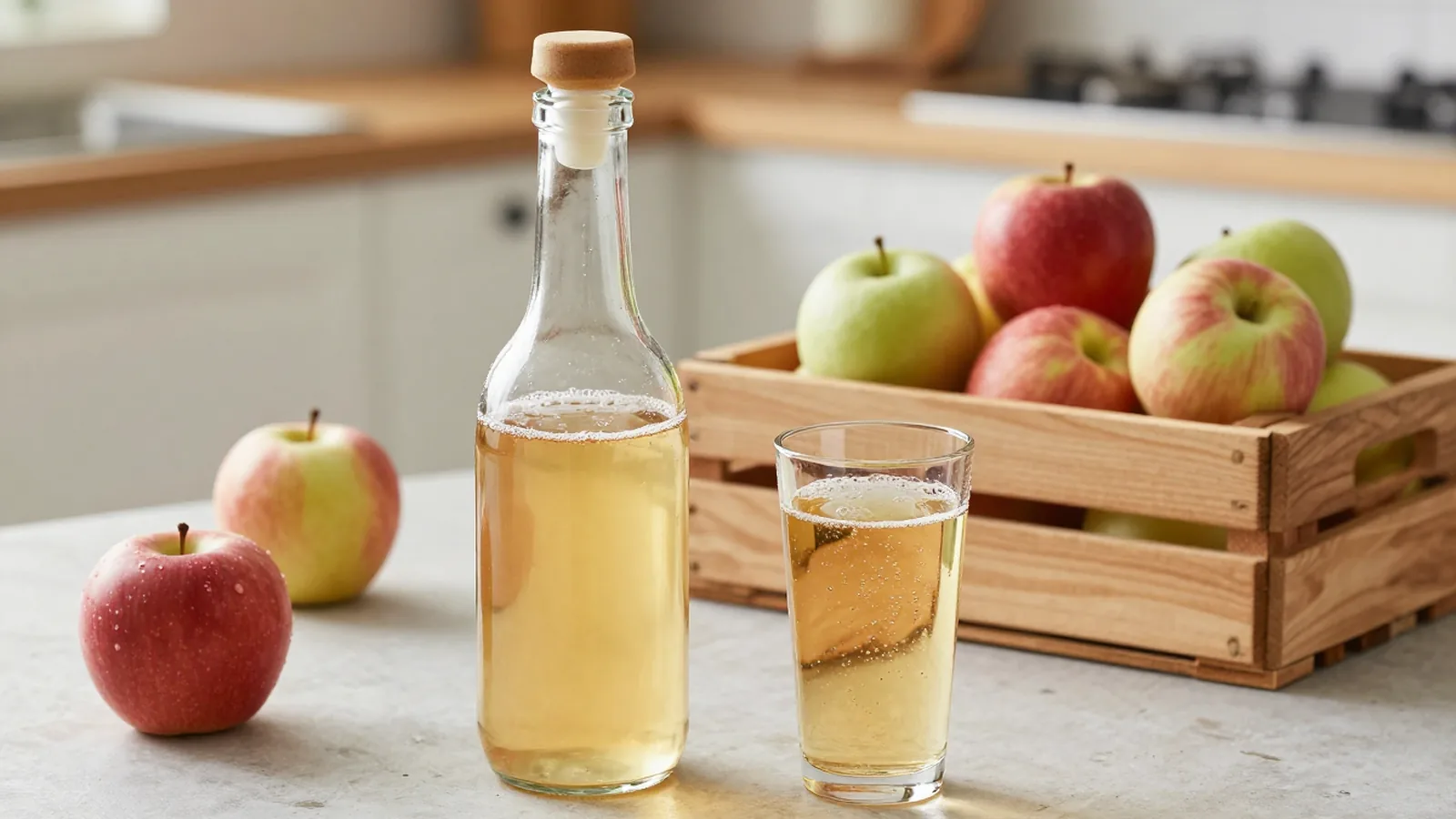
Hard cider is fermented apple juice. Apple juice is mostly simple sugars, so yeast converts nearly all of it to alcohol; cider routinely finishes dry, and BYO reports final gravities as low as 0.995. Supermarket apples give juice of about 12-14 °Brix (1.048-1.057 SG); cider varieties reach 15 °Brix (1.061) and some reach 20 °Brix (1.083). It is the easiest fermented drink to make with homebrewing gear: no mash, no boil. Use pasteurized juice and you can skip sulfite entirely. The one hard rule is no sorbate: potassium sorbate is added to some store juice to stop fermentation, and it will stop yours too. The choices that matter are the juice and the yeast. Champagne yeast (EC-1118) ferments clean and very dry across a wide temperature range; ale yeasts work for ciders under 10% ABV and add their own fruit character; wild fermentation of raw juice is possible but unpredictable. Compared with beer, cider takes less time on brew day and more time clearing in the fermenter.
At a Glance
Equipment
- Food-grade fermenter (bucket or glass carboy) with airlock
- Hydrometer and test jar
- Campden tablets (for unpasteurized juice)
- Wine or cider yeast (Lalvin EC-1118 or similar)
- Yeast nutrient
- Pectic enzyme (optional, for clarity)
- Auto-siphon and tubing
- Sanitizer
- Bottles and caps, or a keg
Steps
- 1
Choose the juice
Use fresh-pressed or store juice with no sorbate or benzoate on the label. Pasteurized juice is fine. Blends that include tart or tannic cider apples make a more complex cider than sweet eating apples alone.
Read the ingredient list, not just the front label. Sorbate is the batch killer.
- 2
Sulfite raw juice
For unpasteurized juice, crush 1 Campden tablet per gallon (3.8 L), stir it in and wait 24-36 hours before pitching. The sulfite suppresses wild yeast and bacteria. Pasteurized juice needs no sulfite.
If the juice is cold from the press, wait until it warms to about 60°F (15°C) before pitching.
- 3
Measure the gravity
Take a hydrometer reading and use the potential alcohol scale. Cider ferments nearly completely, so the starting gravity predicts the final strength well. BYO's author reports most of his ciders test at 5-6.5% ABV.
Adding sugar raises alcohol and can add color and flavor. For ciders over 10% ABV, use a wine or mead yeast.
- 4
Add nutrient and enzyme
Stir in yeast nutrient (BYO uses 2-3 teaspoons per 5 gal for ciders above 10% ABV; it does no harm in lighter ciders) and, if you want a clear cider, pectic enzyme.
Apple pectin causes haze. BYO adds pectic enzyme with the nutrient before pitching.
- 5
Pitch the yeast
Pitch a wine or cider yeast. Lalvin EC-1118 is a common choice: it ferments at 50-86°F (10-30°C), tolerates up to 18% alcohol and gives a neutral profile. Ale yeast is fine for ciders under 10%.
Rehydrate dry wine yeast per the packet for a faster, healthier start.
- 6
Ferment
Seal with an airlock and hold at 60-75°F (15-24°C). A 6% cider usually finishes in 2-3 weeks. Confirm with two identical hydrometer readings a few days apart.
EC-1118 tolerates cool temperatures, so an unheated basement works.
- 7
Rack and clear
Siphon off the yeast into a clean vessel and let the cider clear under an airlock. Expect 2-4 months for a 6% cider; stronger ciders take longer.
Keep headspace small during aging to limit oxidation.
- 8
Package
Bottle still, or carbonate. For light carbonation BYO primes 5 gal (19 L) with 1/3-1/2 cup of corn sugar. Kegging and force carbonating also works.
Never bottle cider that has been back-sweetened with fermentable sugar without stabilizing or pasteurizing it first. Live yeast will ferment it and over-pressurize the bottles.
Tips
- Champagne yeast makes a very dry, sometimes thin cider from sweet eating apples. Try an ale or white-wine yeast if you want more body and fruit.
- Track gravity, not airlock bubbles. Cider can ferment quietly.
- Tart apples need no added acid; bland store juice can benefit from tart fruit such as dried cherries or cranberries.
- A 1 gal (3.8 L) jug batch is a cheap way to test yeasts side by side.
- Cider keeps well: BYO puts a 6% cider at its best for a year or two.
- Treat cider as wine for record-keeping: log juice source, starting gravity, yeast and dates.
Common Mistakes to Avoid
- Using juice with potassium sorbate or sodium benzoate, which prevents fermentation.
- Pitching yeast immediately after adding Campden tablets instead of waiting 24-36 hours.
- Bottling before fermentation is finished and creating bottle bombs.
- Back-sweetening with sugar or juice in the bottle without stabilizing.
- Expecting a sweet cider from champagne yeast, which ferments to dryness.
- Racking with lots of splashing and oxidizing the cider during long aging.