How to Make Mead
Dissolve about 15 lb (6.8 kg) of honey in water to make 5 gal (19 L) of must at roughly 1.108 OG, pitch rehydrated wine yeast such as Lalvin 71B, and ferment at 60-70°F (15.5-21°C). Add yeast nutrient in stages over the first three days, rack off the lees after about a month, and bulk age about three months before bottling.
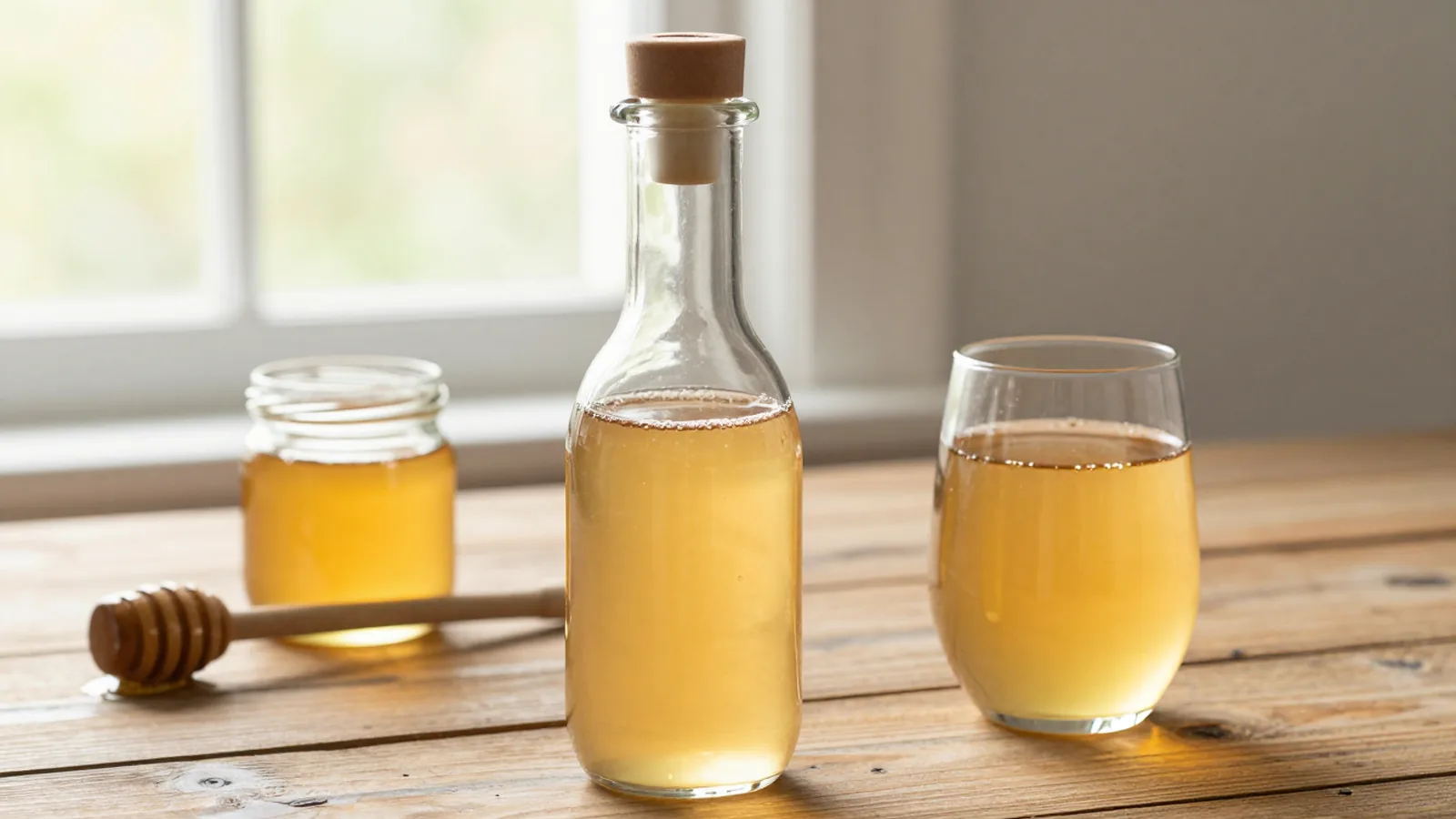
Mead is fermented honey and water. A traditional mead has nothing else; melomels add fruit, metheglins add spice, and cysers use apple juice in place of some water. Honey is almost entirely fermentable sugar, but it is very low in the nitrogen and minerals yeast needs, which is why nutrient management decides whether a mead tastes clean or harsh. No grain, no boil and little equipment make mead a natural second project for a homebrewer. The work is in fermentation: rehydrating the yeast properly, feeding it in stages, and holding a moderate temperature. The BJCP mead guidelines classify meads by sweetness (dry, semi-sweet, sweet), strength and carbonation, and you choose those up front through honey quantity, yeast and whether you stabilize and back-sweeten. Compared with beer, mead asks for more patience. Primary fermentation takes about three weeks, and meads usually spend months bulk aging to clear and smooth out. Compared with cider, a mead's starting gravity is much higher, so yeast health matters more and stuck fermentations are more common when nutrients are skipped.
At a Glance
Equipment
- 6 gal (23 L) food-grade fermenter with airlock
- Secondary carboy for aging
- Hydrometer and test jar
- Wine yeast (Lalvin 71B or similar)
- Yeast rehydration nutrient (Go-Ferm)
- Yeast nutrient (Fermaid O, Fermaid K or a DAP blend)
- Long spoon or drill-mounted degassing wand
- Thermometer
- Auto-siphon and tubing
- Potassium metabisulfite and potassium sorbate (only if back-sweetening)
- Bottles and corks or caps
Steps
- 1
Sanitize everything
Sanitize the fermenter, lid, airlock, funnel, spoon and the yeast packet and scissors. Mead ferments slowly at first, which gives spoilage organisms time to start.
No boil means sanitation is your only kill step.
- 2
Make the must
Warm the honey containers in a water bath so the honey pours. Fill the fermenter partly with room-temperature water, add the honey and stir or shake until fully dissolved, then top up to 5 gal (19 L). The AHA's dry traditional mead uses 15 lb (6.8 kg) honey for an OG of about 1.108.
Rinse each honey container with warm water (about 110°F (43°C)) to get the last of the honey out.
- 3
Check the gravity
Take a hydrometer reading. Honey stratifies, so if readings vary, keep mixing. For a sweeter finish, BYO's sweet-mead approach is to start above 1.120 and let the yeast stop at its alcohol limit, or to ferment dry and back-sweeten later.
About 12 lb (5.4 kg) of honey takes up about 1 gal (3.8 L) of volume. Account for it when topping up.
- 4
Rehydrate the yeast
Mix the rehydration nutrient (BYO's recipe uses 4.5 teaspoons of Go-Ferm for 5 gal) into a little warm water, cool to 104°F (40°C), add the dry yeast and let it stand 20 minutes. Temper the slurry with small amounts of must, keeping the gap between slurry and must under 18°F (10°C).
Skipping rehydration on a high-gravity must is a common cause of slow starts.
- 5
Pitch and hold temperature
Pitch the yeast, seal with an airlock and hold the must at 60-70°F (15.5-21°C). Lalvin 71B's working range is 59-86°F (15-30°C), but warm fermentation makes hot fusel alcohols.
Pick a spot with steady temperature. Fermentation heat can push the must several degrees above room temperature.
- 6
Feed nutrients in stages
Add yeast nutrient in small doses rather than all at once. BYO's homebrew procedure adds 3/4 teaspoon of energizer/nutrient blend at 24, 48 and 72 hours after fermentation starts. Before each addition, stir gently to release dissolved CO2.
Stir slowly. Nutrient dropped into CO2-saturated mead can foam out of the fermenter.
- 7
Let primary finish
Expect primary fermentation to be nearly complete in about three weeks. Confirm with stable hydrometer readings over several days.
Judge the end of fermentation by stable readings, not the calendar.
- 8
Rack and age
Siphon off the lees into a clean carboy, ideally within about a month, and leave it to clear. Plan on at least three months of bulk aging; some meadmakers age a year or longer.
Top up headspace or use a smaller vessel to limit oxidation during aging.
- 9
Stabilize and back-sweeten (optional)
For a sweeter mead, stabilize first: BYO's recipe dissolves 1/4 teaspoon potassium metabisulfite and 3.75 teaspoons potassium sorbate per 5 gal (19 L), then adds honey about 1 lb (0.45 kg) at a time, tasting between additions.
Never back-sweeten without stabilizing. Live yeast will restart and pressurize bottles.
- 10
Bottle
Bottle still in wine bottles, or carbonate in bottles or a keg if you want a sparkling mead. Many meads keep improving in the bottle for years.
Label each bottle with the honey, yeast, OG, FG and date.
Tips
- Honey varietal matters: orange blossom, wildflower and clover give very different meads.
- Staggered nutrients are the biggest single quality improvement most new meadmakers can make.
- Champagne yeast can strip a mead very dry and thin; many meadmakers prefer 71B or D47 for traditional meads.
- The AHA recipe does not boil the honey. Dissolving it in water with sanitized equipment is enough.
- Ferment at the cool end of the yeast's range to limit fusel alcohols.
- Write down the starting gravity before you pitch. It is impossible to recover later.
Common Mistakes to Avoid
- Skipping yeast nutrient and getting a stuck fermentation or sulfur and harsh flavors.
- Adding all nutrient at once at pitch instead of staging it.
- Fermenting warm and producing hot, solvent-like fusel alcohols.
- Bottling too early, before the mead has cleared and gravity is stable.
- Back-sweetening without potassium sorbate and metabisulfite.
- Stirring in nutrient fast and foaming mead out of the fermenter.