Kettle Souring: A Homebrewer's Guide
Make wort with no hops, boil it briefly, cool it to your bacteria's range (86-104°F (30-40°C) for WildBrew Sour Pitch) and drop the pH to about 4.5 with lactic acid. Pitch Lactobacillus, hold the temperature for 24-48 hours until the pH reaches 3.2-3.5, then boil with hops to kill the bacteria and ferment with clean ale yeast.
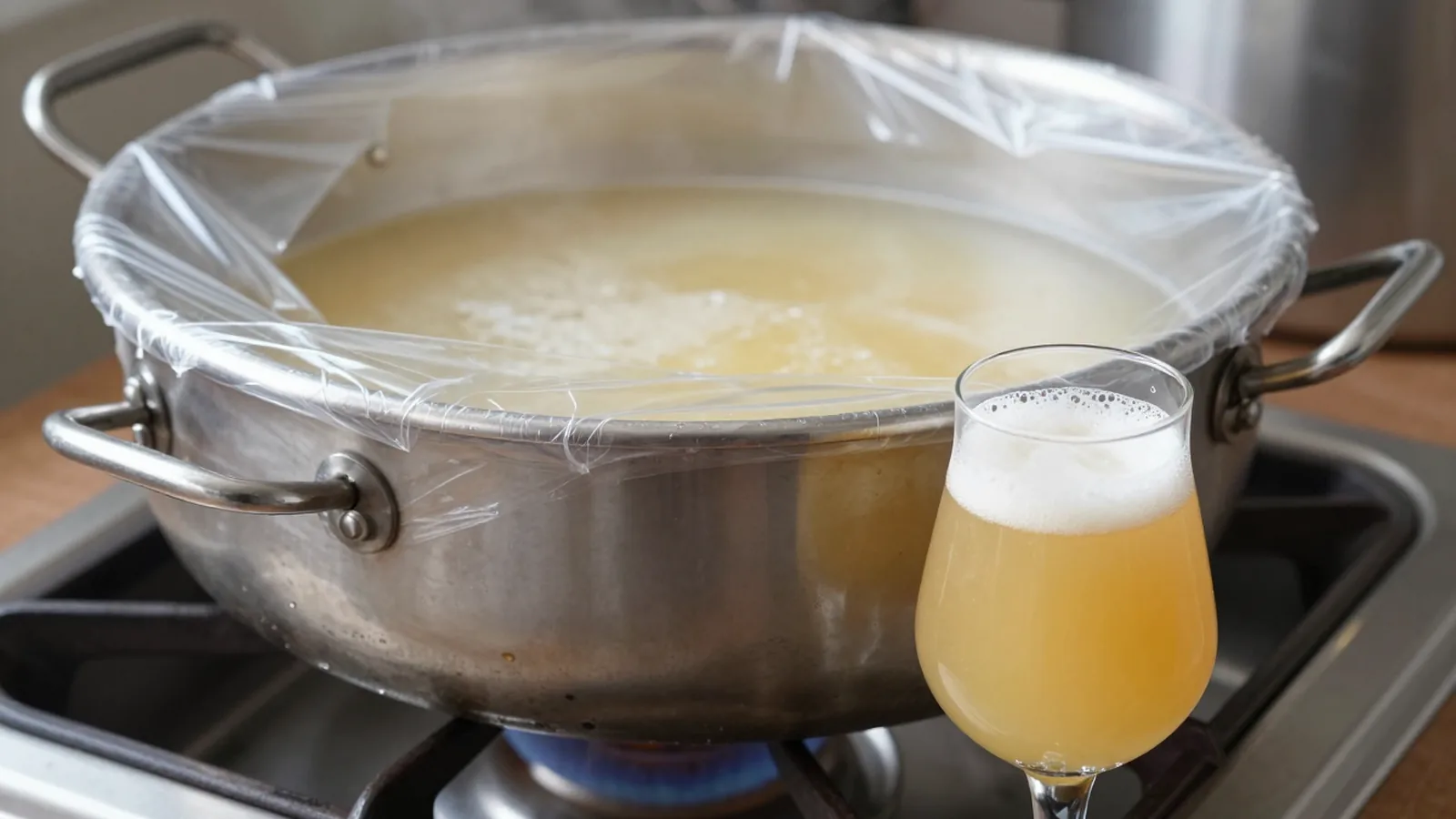
Kettle souring makes a sour beer in days instead of the months or years that barrel-aged sours take. Lactic acid bacteria, usually a Lactobacillus or Lactiplantibacillus strain, ferment sugars in unhopped wort to lactic acid. Once the wort tastes and measures sour enough, a full boil kills the bacteria, and the soured wort is hopped, chilled and fermented with ordinary brewing yeast. Use it for Berliner weisse, gose, fruited sours and sour IPAs: clean, tart beers without funk. Because the bacteria die in the second boil, nothing live goes into your fermenter, which keeps plastic gear and other batches safe. The cost is a longer brew day split across two sessions, and a pH meter is close to mandatory. The alternatives trade control for complexity. Fermenter souring (souring in the fermenter, then pitching yeast) skips the second boil but leaves live bacteria in your fermentation equipment. Mixed-culture and spontaneous fermentation give depth that kettle souring cannot, at the price of months of aging and a real risk of off-flavors.
Kettle souring adds its acidity after the mash, not in it: step 1 still mashes and lauters as usual, so the wort has to convert inside the 5.2-5.6 window the mash pH guide sets out, and a lauter that climbs past about 6.0 drags husk tannins into the kettle that Lactobacillus will not clean up.
At a Glance
Equipment
- Stainless steel kettle (not aluminum, which is unstable at low pH)
- Digital pH meter with calibration buffers
- Food-grade lactic acid (88%) or phosphoric acid
- Lactobacillus culture (for example WildBrew Sour Pitch)
- Kettle insulation jacket, heat wrap or controller-driven element to hold temperature
- Thermometer
- Kettle lid and food-grade plastic wrap
- Wort chiller
- Fermenter and clean ale yeast
- Hops for the second boil
Steps
- 1
Brew unhopped wort
Mash and lauter as usual but add no hops. Bacteria are hop-sensitive: Lallemand lists the hop tolerance of WildBrew Sour Pitch at 4 ppm alpha acids (IBU). Keep the gravity modest; many kettle sours are session-strength beers.
Check that no hop residue is left in the kettle or plumbing from an earlier batch.
- 2
Boil briefly to sanitize
Bring the wort to a boil for 2-5 minutes with no hops. This kills wild microbes that ride in on the grain, so the culture you pitch starts with a clean field.
A short boil also drives off some oxygen, which helps a clean souring.
- 3
Cool and pre-acidify
Chill the wort to the bacteria's range, 86-104°F (30-40°C) for WildBrew Sour Pitch. Add lactic acid in small doses, stirring and measuring, until the wort reads about pH 4.5. The lower starting pH inhibits enteric bacteria and slows the protein-degrading enzyme that can damage head retention.
Record how much acid it took. Next time with the same grist you will be close on the first dose.
- 4
Pitch the bacteria
Add the culture at the rate on its datasheet. For WildBrew Sour Pitch that is 10 g/hL (1 g per 10 L), so about 2 g for 5 gal (19 L). Rehydrating it in a 50/50 mix of unhopped wort and water at about 86°F (30°C) improves distribution.
Lactobacillus tolerates some oxygen, but keep the lid on to limit headspace and keep out stray microbes.
- 5
Hold temperature and monitor pH
Keep the wort inside the culture's range and measure pH every 8-12 hours. Lallemand reports Sour Pitch can complete its pH drop in 1-2 days in standard wort. Stop when the pH reaches your target, typically 3.2-3.5.
Mid-to-upper 3s gives a gentle tartness; low 3s is sharply sour. Taste each sample along with the reading.
- 6
Boil to kill the bacteria
Once the target pH is reached, bring the wort up to a full boil. Heating past about 170°F (77°C) kills the bacteria; a normal 60-minute boil with hops does it with room to spare.
Your kettle now holds no live bacteria, so the rest of the process uses your regular clean equipment.
- 7
Hop and chill
Add bittering and aroma hops during the boil as your recipe calls for, then chill to your yeast's fermentation temperature.
Keep bitterness low. Acidity and hop bitterness compound and can turn harsh.
- 8
Ferment with clean yeast
Pitch a healthy ale yeast and ferment to full attenuation. Low pH is a hard environment for yeast, so pitch a generous amount.
Add fruit or dry hops after primary for fruited or sour IPA versions.
- 9
Package
Keg or bottle as usual. Measure the final pH and log it with your tasting notes so you can repeat or adjust the sourness.
Glass and stainless are fine; acidic beer does not harm them.
Tips
- Calibrate the pH meter with fresh buffers before every souring session. A drifted meter makes every decision wrong.
- Pre-acidifying to about 4.5 is the single best defense against cheesy or vomit-like off-flavors from enteric bacteria.
- Pick the culture first and build the temperature plan around it. Strains differ: Lallemand sours Helveticus Pitch at 104°F (40°C), while Sour Pitch works from 86°F (30°C).
- Use a stainless kettle. Aluminum is not stable at low pH.
- Lactobacillus is aerotolerant, so you do not need a CO2 purge for a pure culture, but a covered kettle still keeps stray organisms out.
- If the pH stalls, check temperature first. Wort that drifts below the culture's range slows sharply.
Common Mistakes to Avoid
- Adding hops before souring, which stops hop-sensitive bacteria.
- Skipping pre-acidification and getting enteric off-flavors from wild bacteria.
- Letting the wort cool overnight below the culture's working range.
- Judging sourness by taste alone and overshooting the target pH.
- Forgetting the second boil, which leaves live bacteria in the fermenter and every piece of gear it touches.
- Underpitching the brewing yeast into low-pH wort and getting a sluggish fermentation.