Lagering: A Homebrewer's Guide
Pitch a large dose of lager yeast (110-170 billion cells for 5 gal under 1.055 OG) into wort already chilled to 50-55°F (10-13°C). When fermentation slows, raise the beer at least 5°F (3°C) for a 24-48 hour diacetyl rest, then chill it slowly and hold it near 33°F (1°C) for about two weeks to clear.
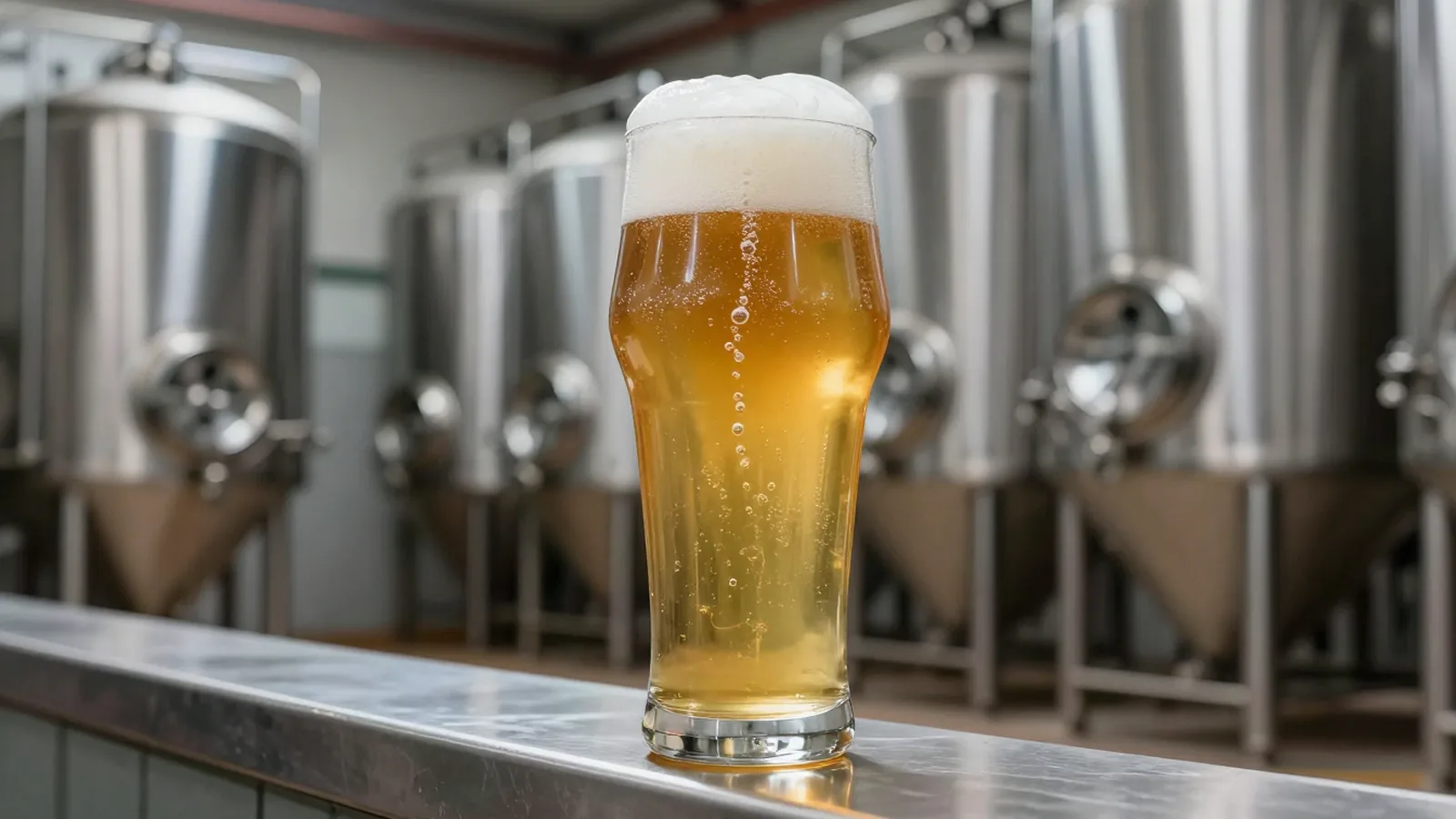
Lagering is cold storage. Lager yeast ferments at 45-55°F (7-13°C), where it makes fewer fruity esters than ale yeast, and the beer then sits near freezing so yeast, haze-forming proteins and tannins settle out. The result is the clean malt and hop character that defines a pilsner, helles or Vienna lager. Use this process for any beer fermented with lager yeast. It needs a fridge or chest freezer with a temperature controller, a bigger yeast pitch than an ale, and patience. Primary fermentation for a lager usually runs 3-7 days versus 2-5 for an ale, and cold conditioning adds weeks. John Palmer's 2025 notes in How to Brew describe the modern shortcut: finish maturation warm with a diacetyl rest, then lager about two weeks for clarity only. The traditional route is a long, slow, cold maturation of 3-8 weeks depending on temperature. The trade-off is time and equipment against flavor control. Lager yeast throws sulfur during primary and leaves diacetyl and acetaldehyde if it is rushed or underpitched, and a lager has nowhere to hide those faults. An ale yeast fermented cool is faster but will not give the same profile. If you cannot hold temperature within a few degrees for a month, brew an ale first.
At a Glance
Equipment
- Fermenter (glass carboy, plastic bucket or stainless conical)
- Chest freezer or spare refrigerator
- Plug-in temperature controller with probe (Inkbird, Johnson Controls or similar)
- Heat wrap or heating pad for the diacetyl rest
- Yeast starter flask and stir plate, or 2-3 packs of dry lager yeast
- Oxygen wand and regulator, or a clean aeration method
- Hydrometer or refractometer
- Airlock or blow-off tube
- Keg or bottling bucket for packaging
Steps
- 1
Size the yeast pitch
Lagers need about 1.5 billion cells per liter per degree Plato, roughly 50% more than an ale. For 5 gal (19 L) under 1.055 OG that is 110-170 billion cells; 1.055-1.065 needs 170-225 billion. Build a starter or use multiple packs of dry yeast such as SafLager W-34/70.
Ferment a starter no more than 5°F (3°C) above your planned fermentation temperature, chill it overnight, and pitch only the settled slurry.
- 2
Chill the wort before pitching
Cool the wort all the way to fermentation temperature, 50-55°F (10-13°C) for a strain like WLP830, before the yeast goes in. Most byproducts form in the first two days of growth, so a warm start leaves more for the yeast to clean up later.
If your chiller cannot reach 50°F, park the wort in the fermentation chamber overnight and pitch the next morning.
- 3
Aerate and pitch
Oxygenate the wort, then pitch the yeast. Do not overdo pure oxygen: Palmer notes a tank can reach 40 ppm in half an hour, which drives excess growth and more diacetyl and fusel alcohols.
Short bursts of pure oxygen through a sanitized stone are enough for a normal-gravity lager.
- 4
Hold primary temperature
Keep the beer at a steady 50-55°F (10-13°C), or at the range on your yeast package. Expect primary activity for 3-7 days. A rotten-egg sulfur smell in this phase is normal for lager yeast and fades during conditioning.
Tape the controller probe to the fermenter wall under a piece of insulation so it reads beer temperature, not air.
- 5
Run the diacetyl rest
When airlock activity slows and the krausen starts to fall, often day 3 or 4, raise the temperature at least 5°F (3°C). Palmer's current guidance is 60-65°F (15-18°C) for at least 24-48 hours. The warmer, active yeast reabsorbs diacetyl and acetaldehyde before it drops out.
A longer rest does no harm. Palmer reports leaving beers a full week at the raised temperature.
- 6
Confirm fermentation is done
Take hydrometer readings on two or three days. Warm a sample in your hand and smell it for butter or butterscotch (diacetyl) and green apple (acetaldehyde). If either is present, extend the rest.
Do not start the cold phase until gravity is stable and the sample smells clean.
- 7
Chill slowly to lagering temperature
Drop the temperature gradually. For the traditional cold-maturation path Palmer recommends no faster than 5°F (3°C) every 12 hours, holding near 41°F (5°C) before going lower.
Set the controller above 32°F (0°C). Beer freezes a few degrees below water, but a frozen fermenter means stressed yeast and possible re-pitching.
- 8
Lager until clear
Hold the beer near 33°F (1°C). After a warm diacetyl rest, about two weeks clears most beers. On the traditional schedule, plan 3-4 weeks at 45°F (7°C), 5-6 weeks at 40°F (4°C) or 7-8 weeks at 35°F (2°C).
Lagering can happen in the primary fermenter. Racking adds oxygen exposure, which can form more diacetyl.
- 9
Package
Transfer to a keg and force carbonate, or to a bottling bucket for priming. Move the beer gently and keep oxygen pickup low; a clean lager shows staling quickly.
If you bottle after a long, very cold lagering, consider adding a small amount of fresh yeast of the same strain so the bottles carbonate.
Tips
- Pitch more yeast than you think you need. Low pitch rates mean more cell growth and more diacetyl, acetaldehyde and fusel alcohols.
- Lager yeast is slower than ale yeast at every stage. Judge readiness by gravity and smell, not the calendar.
- A chest freezer with an external controller holds temperature better than a kitchen fridge's built-in thermostat.
- Calcium chloride usually suits pale lagers better than gypsum, which pushes a sharper bitterness.
- Keep notes on temperature, dates and gravity for every lager. Strain behavior repeats, and the notes cut weeks off the next batch.
- If you lack a fridge, an insulated cooler with swapped ice blocks can hold lagering temperature for a few days at a time.
Common Mistakes to Avoid
- Pitching into warm wort and letting the fermenter cool down over a day or two, which front-loads off-flavors.
- Underpitching a single liquid yeast pack into a full batch of lager wort.
- Dumping a batch because of sulfur smell during primary. It is expected and vents during conditioning.
- Skipping the diacetyl rest and chilling while diacetyl precursors are still in the beer.
- Crashing the temperature too fast, which can stall the yeast before it finishes cleaning up.
- Letting the controller drop below freezing and freezing the beer.
- Splashing the beer during racking, which adds oxygen and drives diacetyl formation.