A 12 oz regular beer has about 153 calories and 12.6 g of carbs in USDA data; a light beer has about 103 calories and 5.8 g. Most beer calories come from alcohol, not carbs: ethanol carries 7 kcal per gram against 4 for carbohydrate, so each 1% of ABV adds about 19.6 calories to a 12 oz pour.
Calories and carbs per 12 oz: the USDA numbers
USDA FoodData Central lists beer per 100 g. We converted each entry to a 12 fl oz serving using the portion weight USDA gives on the same page, and converted grams of ethanol to ABV with ethanol's density of 0.7893 g/mL (PubChem).
| USDA entry | ABV | Calories | Carbs (g) | Alcohol (g) |
|---|---|---|---|---|
| Regular beer (USDA average) | 5.0% | 153 | 12.6 | 13.9 |
| Budweiser | 5.0% | 146 | 10.6 | 13.9 |
| Light beer (USDA average) | 3.9% | 103 | 5.8 | 11.0 |
| Bud Light | 4.2% | 103 | 4.6 | 11.7 |
| Budweiser Select | 4.3% | 99 | 3.1 | 12.1 |
| Light beer, low carb | 4.2% | 96 | 2.6 | 11.7 |
| Light beer, higher alcohol | 7.6% | 164 | 2.7 | 21.4 |
| Beer, higher alcohol | 9.8% | 206 | 1.0 | 27.3 |
| Malt beverage / NA beer | 0.4% | 131 | 28.6 | 1.1 |
What stands out:
- Regular beer: 153 calories. NIAAA's alcohol calorie calculator uses the same figure, 153, and 103 for light beer. USDA's regular-beer average covers "ales, lagers, porters, premium beers and stouts", so it is a blend, not one style.
- Carbs in regular beer are not sugar. USDA measured 0 g of total sugars and 0 g of starch in the regular-beer entry. Its 12.6 g of carbohydrate is calculated "by difference", the solids left after water, protein, fat, ash and alcohol.
- Strong beer is mostly alcohol. The "higher alcohol" entry works out to 9.8% ABV and 206 calories, with only 1.0 g of carbs. That entry rests on 1 analytical sample, so treat it as one data point.
- Non-alcoholic beer has the most carbs. USDA's malt beverage entry (which includes non-alcoholic beer) has 28.6 g of carbs per 12 oz, 2.3 times regular beer, and 131 calories. Our non-alcoholic beer guide covers why.
USDA's SR Legacy data was last released in April 2018 and is no longer updated. Use it for the pattern, and use the brand's own label for a specific beer.
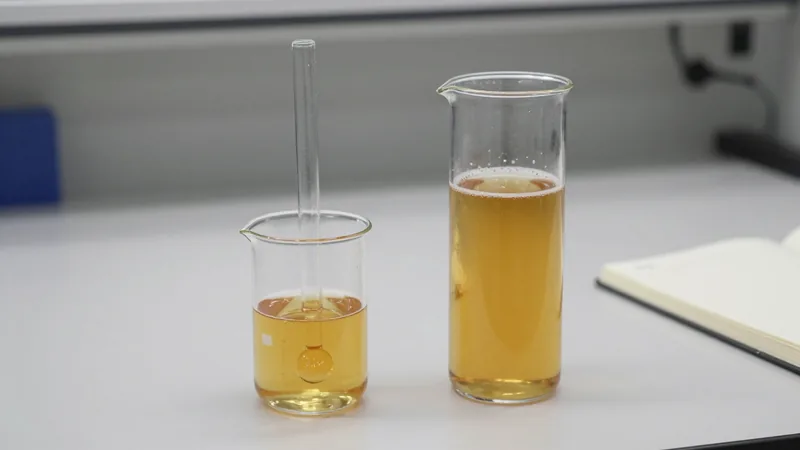
Get beer science and style notes
How beer gets its bitterness, color and aroma, explained with numbers and sources. Free, unsubscribe from any email.
No fixed schedule. Unsubscribe from any email. 21+ only.
Where beer calories come from
Food energy is calculated, not measured on each can. The FAO describes the Atwater general factors:
| Component | kcal per gram |
|---|---|
| Alcohol (ethanol) | 7 |
| Carbohydrate | 4 |
| Protein | 4 |
So a beer's calories are roughly:
calories = alcohol grams x 7 + carb grams x 4 + protein grams x 4
Alcohol grams come from ABV: 12 fl oz x 29.57353 mL x ABV x 0.7893 g/mL (NIST for the fluid ounce). That makes every 1% of ABV worth about 19.6 calories in a 12 oz pour. A 5% beer carries about 98 calories from alcohol before counting any carbs. A 16 oz can at 9% carries about 235 from alcohol alone.
In USDA's regular-beer entry, 63% of the energy is alcohol. In the low-carb light entry it is 87%, and in the higher-alcohol entry 92%.
One caveat from the FAO report: the 7 kcal/g figure is metabolizable energy. On a net metabolizable energy basis alcohol is 6.3 kcal/g, about 10% lower, which the FAO attributes to heat produced after drinking. Labels and USDA use the higher, standard factor.
Calories track ABV more than style
Plot calories against ABV and the points line up. The line below is calories from alcohol alone; the height of each point above the line is carbs plus protein.
Brand labels we checked on October 1, 2026 (per 12 fl oz):
| Beer | ABV | Calories | Carbs (g) |
|---|---|---|---|
| Heineken Original | 5.0% | 142 | 11 |
| Heineken Light | 3.3% | 90 | 6 |
| Heineken Silver | 4.0% | 95 | 2.9 |
| Heineken 0.0 | 0.0% | 69 | 16 |
| Guinness Draught | 4.2% | 125 | 9.4 |
| Guinness Extra Stout | 5.6% | 180 | 11 |
| Guinness Foreign Extra Stout | 7.5% | 194 | 15 |
| Guinness Baltimore Blonde | 5.0% | 167 | 14 |
| Fat Tire | 5.2% | 140 | not stated |
Three patterns:
- Dark is not heavy. Guinness Draught, a stout, has 125 calories, fewer than Heineken Original at 142. It is 4.2% ABV against 5.0%.
- Stronger versions of the same beer climb in step with ABV. Guinness runs from 125 calories at 4.2% to 180 at 5.6% to 194 at 7.5%.
- Zero alcohol is not zero calories. Heineken 0.0 has 69 calories, all from 16 g of carbs, more carbs than Heineken Original.
For typical ABV by style, see ABV explained and our style pages.
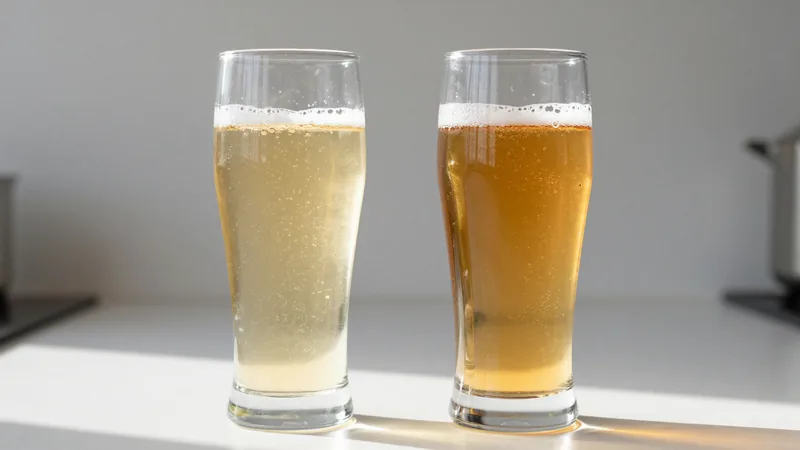
Light beer: less alcohol and fewer carbs
USDA's regular beer has 50 more calories per 12 oz than its light beer average. Split the gap by component:
- 2.9 g more alcohol, worth about 20 calories
- 6.8 g more carbohydrate, worth about 27 calories
Light beer saves calories by being weaker and drier at the same time, and in USDA's averages the missing carbs account for slightly more of the gap than the missing alcohol. Heineken shows it within one brand: Light at 3.3% is 90 calories; Silver at 4.0% has only 2.9 g of carbs and 95 calories, because its extra alcohol offsets the carbs it dropped.
Estimate any beer from ABV and carbs
Enter a beer's ABV and carbs per 12 oz (from the label or the presets) and a pour size. The tool applies the 7 and 4 kcal/g factors and shows how much comes from alcohol.
How close is it? We ran the estimator against all 8 brand labels in the table above. The median gap was 5 calories and 5 of 8 landed within 10. The largest gap was 26 calories (Guinness Extra Stout: estimate 154, label 180). Heineken Original matched almost exactly: estimate 142, label 142. Gaps come from protein (ignored here), label rounding, and the ABV tolerance on labels.
What the label rules say
Nutrition labels are optional on US beer. TTB Ruling 2004-1 sets the rules for any brewer who does make a calorie or carb claim:
- Any calorie or carb claim needs a "statement of average analysis": calories, carbohydrate, protein and fat per serving.
- The beer serving is 12 fl oz.
- "Low carb" means no more than 7 g of carbohydrate per 12 fl oz, with the full statement on the label.
- "Net carbs" and "effective carbs" are banned as misleading.
- No weight-loss framing. TTB treats ads that imply low-carb beer is a healthy part of a weight plan, or that you can drink more of it, as misleading.
Miller Lite prints its analysis in the required format: "96 cals, 3.2g carbs, < 1g protein, 0g fat" per 12 fl oz. By USDA's numbers, every light beer entry in the table above is under the 7 g line; so is Heineken Silver at 2.9 g.
NIAAA's calculator puts it plainly: "Alcohol beverages supply calories but few nutrients." Fewer calories per can is not a reason to drink more cans.
Frequently Asked Questions
How many calories are in a 12 oz beer?
About 153 for regular beer and 103 for light beer by USDA averages, which match NIAAA's 153 and 103. Strong beers run higher: Guinness Foreign Extra Stout at 7.5% is 194.
Do calories in beer come from carbs or alcohol?
Mostly alcohol. In USDA's regular beer, 63% of the energy is from ethanol at 7 kcal/g. Each 1% ABV adds about 19.6 calories to 12 oz.
Is dark beer higher in calories?
Not by color. Guinness Draught is 125 calories at 4.2%, below Heineken Original's 142 at 5.0%. ABV and residual carbs set calories.
How many carbs are in light beer?
USDA's light beer average is 5.8 g per 12 oz and its low-carb entry 2.6 g. A US label may say "low carb" only at 7 g or less per 12 oz.
Does non-alcoholic beer have fewer calories?
Usually fewer calories, but more carbs. USDA's malt beverage entry (which also covers sweet malt drinks) is 131 calories with 28.6 g of carbs per 12 oz; Heineken 0.0 is 69 calories with 16 g.
What does "low carb" mean on a beer label?
Under TTB Ruling 2004-1, no more than 7 g of carbohydrate per 12 fl oz, and the label must show calories, carbs, protein and fat.
Sources
- USDA FoodData Central, Alcoholic beverage, beer, regular, all (FDC ID 168746, SR Legacy), checked October 1, 2026.
- USDA FoodData Central, Alcoholic beverage, beer, regular, BUDWEISER (FDC ID 168747, SR Legacy), checked October 1, 2026.
- USDA FoodData Central, Alcoholic beverage, beer, light (FDC ID 168749, SR Legacy), checked October 1, 2026.
- USDA FoodData Central, Alcoholic beverage, beer, light, BUD LIGHT (FDC ID 169572, SR Legacy), checked October 1, 2026.
- USDA FoodData Central, Alcoholic beverage, beer, light, BUDWEISER SELECT (FDC ID 168748, SR Legacy), checked October 1, 2026.
- USDA FoodData Central, Alcoholic beverage, beer, light, low carb (FDC ID 169575, SR Legacy), checked October 1, 2026.
- USDA FoodData Central, Alcoholic beverage, beer, light, higher alcohol (FDC ID 174145, SR Legacy), checked October 1, 2026.
- USDA FoodData Central, Alcoholic beverages, beer, higher alcohol (FDC ID 171906, SR Legacy), checked October 1, 2026.
- USDA FoodData Central, Malt beverage, includes non-alcoholic beer (FDC ID 174863, SR Legacy), checked October 1, 2026.
- FAO, Food energy: methods of analysis and conversion factors, Chapter 3 (FAO Food and Nutrition Paper 77), checked October 1, 2026.
- PubChem, NIH, Ethanol (CID 702): Density, checked October 1, 2026.
- NIST, NIST Guide to the SI, Appendix B.9: Factors for units listed by kind of quantity, checked October 1, 2026.
- NIAAA Rethinking Drinking, Alcohol Calorie Calculator, checked October 1, 2026.
- Alcohol and Tobacco Tax and Trade Bureau, TTB Ruling 2004-1: Caloric and Carbohydrate Representations in the Labeling and Advertising of Wine, Distilled Spirits and Malt Beverages, checked October 1, 2026.
- Heineken USA, Heineken Original: nutritional values, checked October 1, 2026.
- Guinness (US), Guinness Draught: alcohol, calories and carbs, checked October 1, 2026.
- Guinness (US), Guinness Extra Stout: alcohol, calories and carbs, checked October 1, 2026.
- Guinness (US), Guinness Foreign Extra Stout: alcohol, calories and carbs, checked October 1, 2026.
- Guinness (US), Guinness Baltimore Blonde: alcohol, calories and carbs, checked October 1, 2026.
- Miller Brewing Co., Miller Lite: average analysis, checked October 1, 2026.
- New Belgium Brewing, Fat Tire: ABV, IBU, calories, checked October 1, 2026.