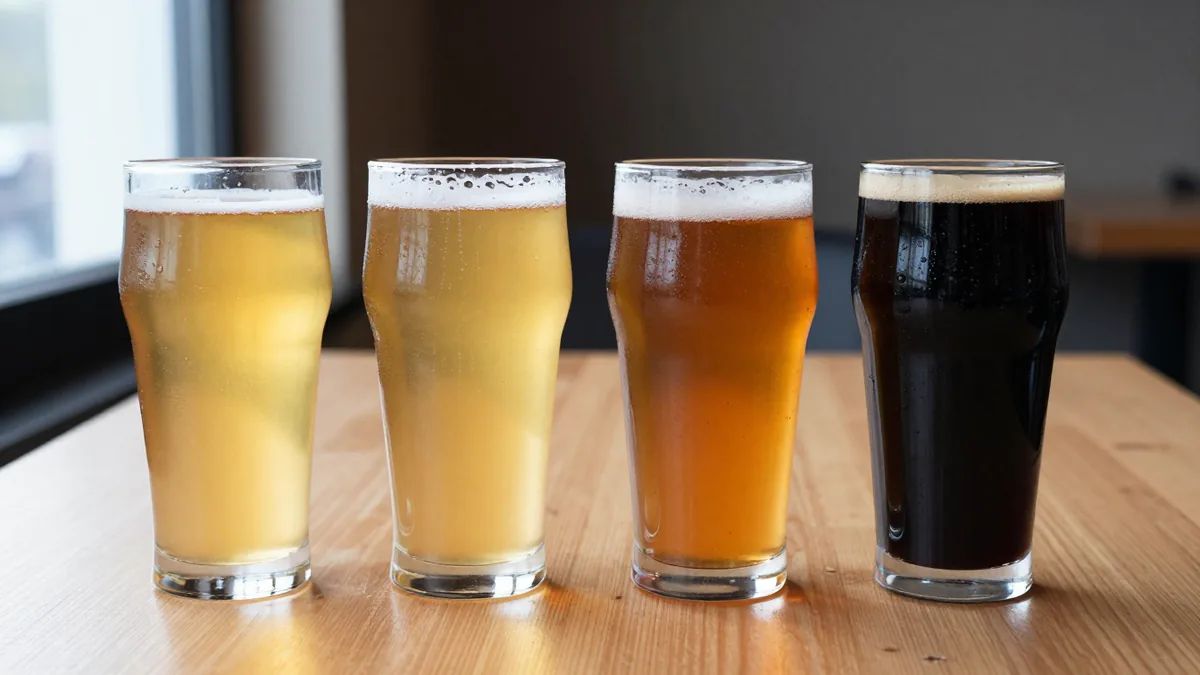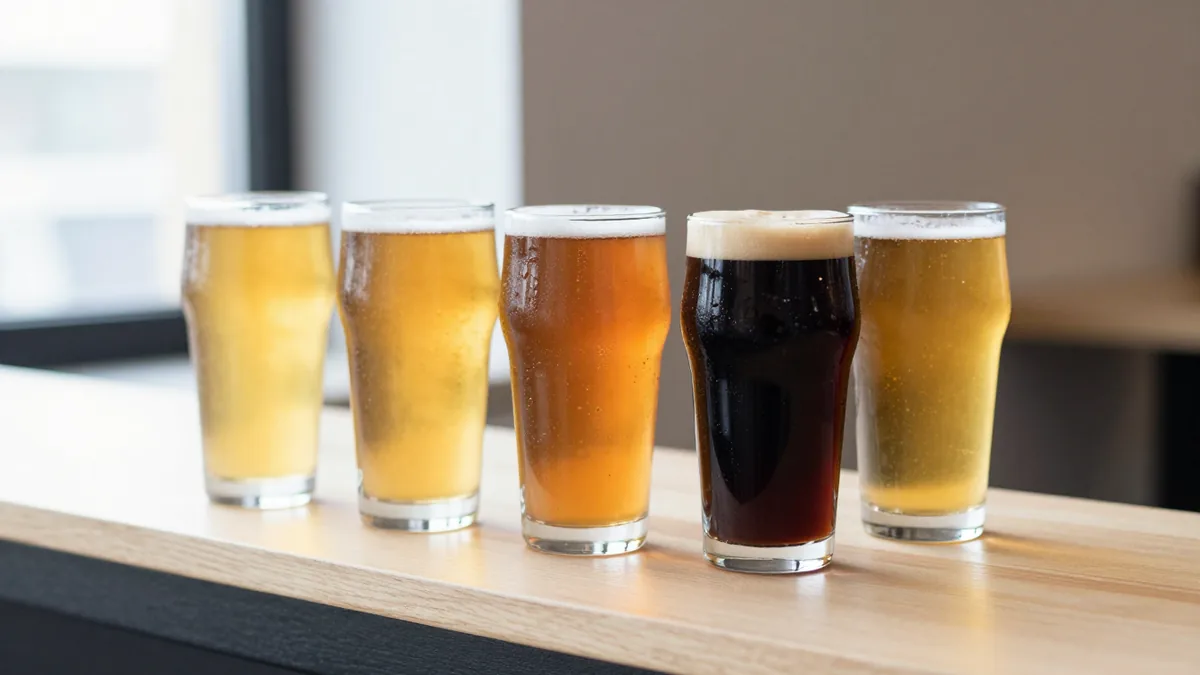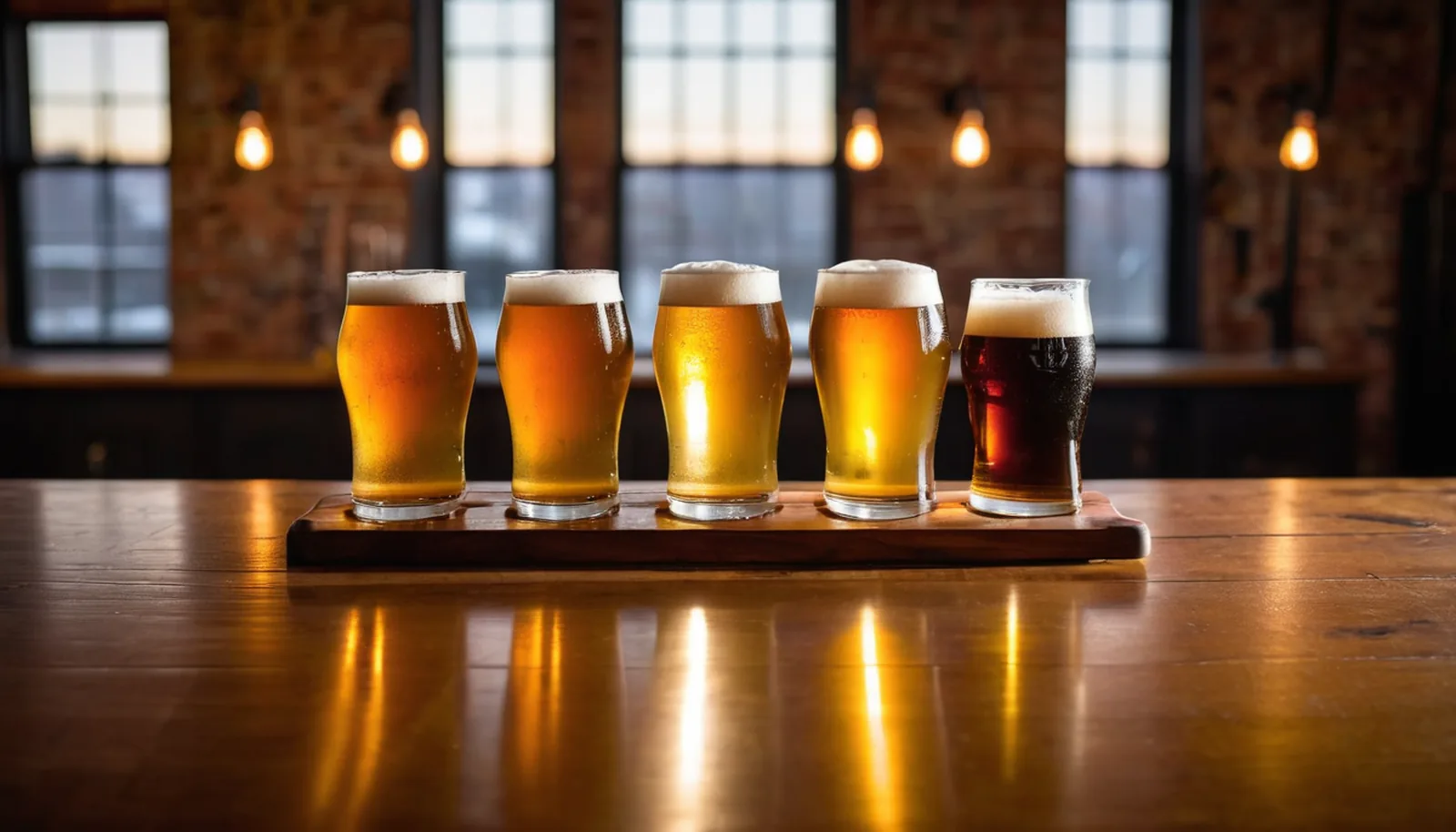
Hard cider is fermented apple or pear juice and is legally a wine; beer is brewed from malt. The federal tax on a 12 oz cider is 2.12 cents at the full TTB rate, against 5.44 cents for beer at the general rate. A 12 oz regular beer has 153 calories and 12.6 g of carbs per USDA; a hard cider has 202 calories and 21.3 g of carbs, all of it sugar. Those USDA rows assume a 12 oz pour at ordinary strength; the beer calorie calculator reruns the estimate from any ABV and carbohydrate count, so a stronger cider or a smaller glass lands somewhere else. Cider made only from apples has no gluten-containing grain.
Cider vs beer at a glance
| Hard cider | Beer | |
|---|---|---|
| Made from | Apples or pears (26 U.S.C. 5041) | Malt or malt substitutes (27 CFR 25.11) |
| Federal tax class | Wine | Beer |
| Federal tax, full rate | $0.226 per wine gallon | $18.00 per 31-gal barrel ($0.581/gal) |
| Tax per 12 oz, full rate | 2.12¢ | 5.44¢ |
| Calories per 12 oz (USDA) | 202 | 153 regular, 103 light |
| Carbs per 12 oz (USDA) | 21.3 g | 12.6 g regular, 5.8 g light |
| Gluten-containing grain | None if made only from apples | Barley malt in most beer |
| Typical ABV (BJCP common styles) | 4.5–8% (Common Cider) | 4.2–5.3% (American Lager) |
The rest of this page shows where each number comes from.
Get beer science and style notes
How beer gets its bitterness, color and aroma, explained with numbers and sources. Free, unsubscribe from any email.
No fixed schedule. Unsubscribe from any email. 21+ only.
Cider is wine under federal law
Federal law defines beer by its grain: 27 CFR 25.11 covers fermented beverages of 0.5% ABV or more "brewed or produced from malt, wholly or in part, or from any substitute for malt." Cider has no malt. The TTB Cider FAQs say cider and hard cider "refer to wine fermented from apples."
To get the low hard cider tax rate, a cider must meet all four tests in 26 U.S.C. 5041(b)(6):
- No more than 0.64 g of CO2 per 100 mL.
- Made primarily from apples or pears, or their juice concentrate and water.
- No fruit or fruit flavoring other than apple or pear.
- At least 0.5% and less than 8.5% ABV.
Fail any one and the cider is taxed as another class of wine. A cider at 8.5% ABV or higher is "not eligible for the hard cider tax rate", per TTB, and pays the still wine rate of $1.07 per gallon: 4.7x the hard cider rate. A cider with cherry juice fails test 3.
The CO2 cap is generous. Using the UF/IFAS conversion of 1.96 g/L per volume, 0.64 g per 100 mL is 3.27 volumes of CO2. The Brewers Association puts most lagers and ales at 2.3–2.8 volumes, so a cider can be as fizzy as most beer and keep the cider rate. Below 0.392 g per 100 mL (2.0 volumes) it is "still hard cider" under 27 CFR 24.10.
Federal tax per serving
Both taxes are per gallon of product, not per gram of alcohol. Beer rates are per 31-gallon barrel; cider rates are per wine gallon, which 27 CFR 24.10 defines as a standard US gallon of 231 cubic inches. We converted each to cents per 12 oz serving (128 fl oz per gallon).
| Rate | Per gallon | Per 12 oz |
|---|---|---|
| Hard cider, full rate | $0.226 | 2.12¢ |
| Hard cider, first 30,000 gal (with credit) | $0.164 | 1.54¢ |
| Beer, general rate | $0.581 | 5.44¢ |
| Beer, small brewer's first 60,000 bbl | $0.113 | 1.06¢ |
| Cider at 8.5% ABV or more (still wine) | $1.07 | 10.03¢ |
Source: TTB tax rate table. The cider credits work like beer's reduced rates: a producer gets the lowest effective rate on its first 30,000 wine gallons of the year, a smaller credit on the next 100,000 and a smaller one again up to 750,000 gallons. At full rates beer pays 2.6x the federal tax of cider per serving: 33¢ per six-pack against 13¢. The exception is a small brewer's first 60,000 barrels, which at 1.06¢ per 12 oz is the cheapest rate in the table. State excise is extra; see beer tax by state.
Use the picker below to compare tax and calories for any two drinks.
Calories and carbs per serving
USDA FoodData Central lists hard cider at 56 kcal and 5.92 g carbohydrate per 100 g (FDC 2710621). A 12 oz serving weighs 360 g, so:
- Hard cider: 202 kcal, 21.3 g carbs, all of it sugar (21.3 g), 14.4 g alcohol (about 5.1% ABV).
- Regular beer: 153 kcal, 12.6 g carbs, 13.9 g alcohol (FDC 168746). USDA lists 0 g total sugars.
- Light beer: 103 kcal, 5.8 g carbs (FDC 168749).
- Higher-alcohol beer: 206 kcal, 1.0 g carbs, 27.3 g alcohol (FDC 171906).
The USDA cider has 49 more calories and 1.7x the carbs of a regular beer at a similar ABV. Alcohol supplies about half of the cider's energy: 101 kcal at 7 kcal/g (FAO Atwater factors) and 85 kcal from sugar at 4 kcal/g. The USDA entry is built from one amber cider ("Beverages, AMBER, hard cider"), so a drier cider with less residual sugar has fewer carbs and calories than this. ABV comes from ethanol weight using a density of 0.7893 g/mL (PubChem) and 29.57353 mL per fl oz (NIST).
Cider under 7% ABV must carry FDA "ingredient labeling, nutrient labeling, and allergen labeling," per TTB, so its label lists calories (more below). For beer by style, see beer calories and carbs by style.
Labels: TTB or FDA
Who writes the label rules depends on ABV, not just on cider vs beer:
| Product | Label rules | Nutrition facts |
|---|---|---|
| Cider under 7% ABV | FDA food labeling | Required (with ingredients and allergens) |
| Cider 7% ABV and up | TTB, 27 CFR part 4, label approval (COLA) | Voluntary |
| Malt beer | TTB | Voluntary |
Every cider and beer at 0.5% ABV or more carries the government health warning, per the TTB Cider FAQs. On TTB-labeled drinks, TTB Ruling 2013-2 treats a "Serving Facts" panel with calories and carbs as voluntary. That split is why a 5% cider shows a Nutrition Facts panel and a 5% beer is not required to.
Gluten
FDA's gluten rule, 21 CFR 101.91, names three gluten-containing grains: wheat, rye and barley, plus crossbreeds like triticale. Apples and pears are not on it. TTB's standard for "cider" says it "must be derived wholly (except for sugar, water, or added alcohol) from apples."
So a cider made only from fruit has no gluten-containing ingredient. Flavored ciders can add other ingredients, which is why the allergen label matters. Most beer is brewed from barley malt; beer labeled gluten-free is brewed from grains like sorghum or rice. Our gluten-reduced vs gluten-free beer article covers the test data.
ABV: style ranges
The BJCP 2025 cider guidelines and the BJCP 2021 beer guidelines (e.g. American Light Lager, American Lager, American Pale Ale, American IPA, Double IPA) list typical ranges:
- Common Cider: 4.5–8%. French Cider: 3–6%. English Cider: 6–9%.
- Applewine: 9–12%. Ice Cider: 7–13%.
- American Lager: 4.2–5.3%. American IPA: 5.5–7.5%.
Common Cider's 4.5–8% covers all of American Pale Ale (4.5–6.2%) and most of American Lager. 6 of the 10 cider styles charted reach 8.5% or more at the top of their range, which puts those versions in the higher wine tax class. BJCP notes its vital statistics "are general guidelines, not absolutes." For how ABV is measured, see ABV explained.
Dry is the default because apple juice is almost all fermentable sugar: supermarket fruit gives 12–14 °Brix (1.048–1.057 SG), and BYO reports ciders finishing as low as 0.995, which is why how to make hard cider plans on 2–4 months of clearing for a 6% batch.
Frequently Asked Questions
Is cider a type of beer?
No. Beer is brewed from malt or a malt substitute; cider is fermented apple or pear juice and is taxed and regulated as wine by TTB.
Does cider have more calories than beer?
Per USDA, yes: 202 kcal per 12 oz for hard cider against 153 for regular beer and 103 for light beer. The difference is sugar: 21.3 g of carbs against 12.6 g.
Is hard cider gluten-free?
Cider made only from apples or pears contains none of the grains FDA defines as gluten-containing (wheat, rye, barley). Check the allergen label on flavored ciders.
Why is cider taxed less than beer?
Congress set hard cider at 22.6 cents per wine gallon in 26 U.S.C. 5041. Beer's general rate works out to $0.581 per gallon. Small brewers pay $3.50 per barrel on their first 60,000 barrels, which is lower than the cider rate per serving.
Is sparkling cider still hard cider?
Yes, up to 0.64 g of CO2 per 100 mL. Under 27 CFR 24.10, "sparkling hard cider" has more than 0.392 g and no more than 0.64 g, from secondary fermentation in a closed container. Above 0.64 g it moves to a sparkling or carbonated wine tax class.
What ABV can hard cider be?
To be taxed as hard cider: at least 0.5% and less than 8.5% ABV. Stronger cider is legal but taxed as wine.
Sources
- Cornell LII, 26 U.S. Code § 5041, checked 2026-10-01.
- eCFR, 27 CFR 24.10 and 27 CFR 25.11, checked 2026-10-01.
- TTB, Tax and Fee Rates and Cider FAQs, checked 2026-10-01.
- eCFR, 21 CFR 101.91, checked 2026-10-01.
- USDA FoodData Central, Hard cider, FDC 2710621, beer, regular, FDC 168746, beer, light, FDC 168749, beer, higher alcohol, FDC 171906, checked 2026-10-01.
- FAO, Food energy: methods of analysis and conversion factors; PubChem, ethanol; NIST SP 811 Appendix B.9, checked 2026-10-01.
- BJCP, Cider Style Guidelines, 2025 Edition (PDF) and 2021 beer style pages linked above, checked 2026-10-01.
- UF/IFAS, FS379; Brewers Association, Facts About Draught Beer Carbonation, checked 2026-10-01.