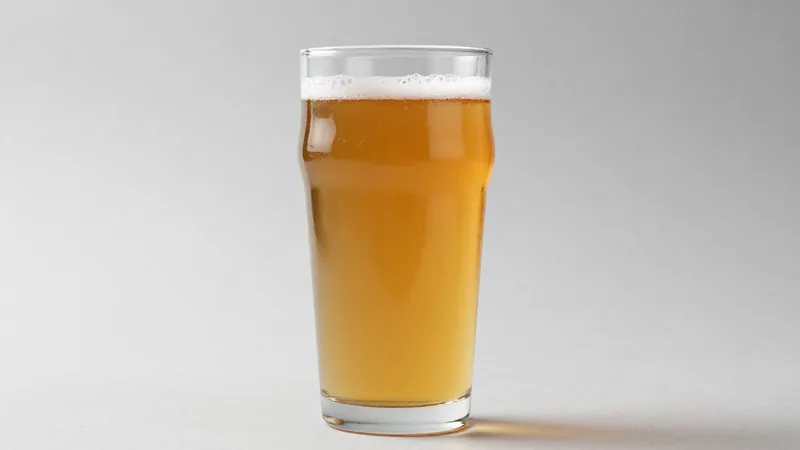
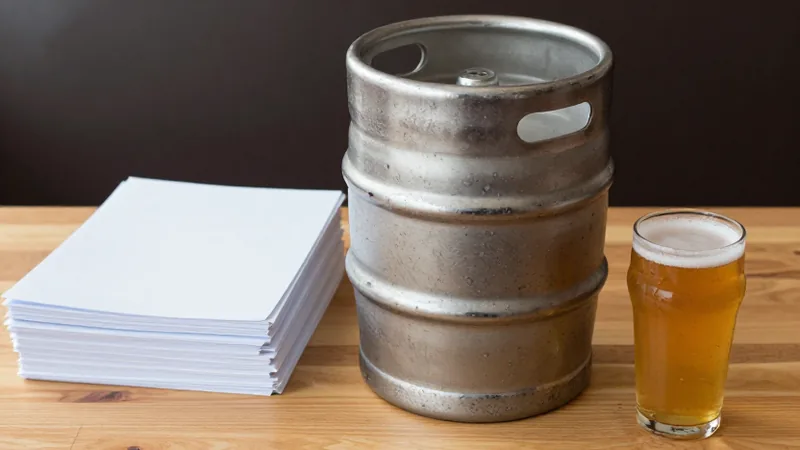
US liquid volume is a ladder, not a single glass. NIST Handbook 44 (2023), Appendix C, states the customary steps in its units-of-liquid-volume table: 4 gills equal 1 pint, 2 pints equal 1 quart, and 4 quarts equal 1 gallon. The gallon line also states 231 cubic inches, 8 pints, and 32 gills. National Institute of Standards and Technology is that handbook. A later table in the same appendix states the metric side: one gill is 118.2941 milliliters, one liquid pint is 473.1765 milliliters, one liquid quart is 946.3529 milliliters, and one gallon is 3785.411784 milliliters. This page is those units. It is not a serving suggestion and it is not the imperial ladder used in the United Kingdom.
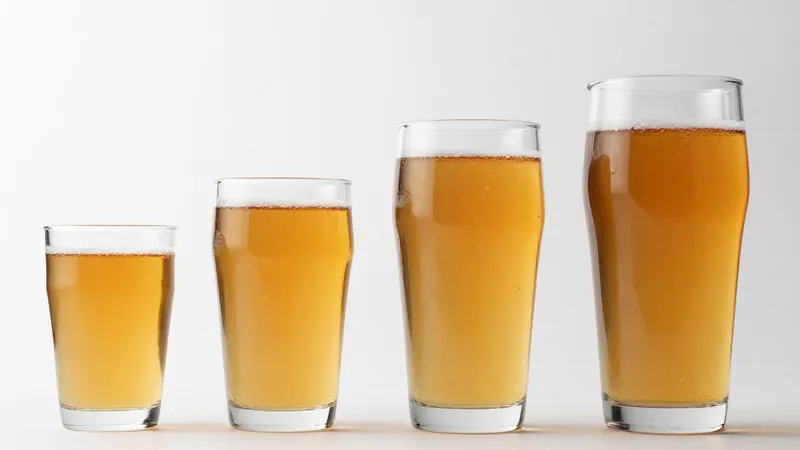
Read the count table and the metric table as two statements of one system. 2 times 4 is 8 pints in a gallon. The gallon line already says 8 pints. Those two agree. 4 times 8 is 32 gills in a gallon. The gallon line already says 32 gills. Those two agree as well. When a count derived from the small steps matches the count printed on the gallon line, you are on the same table. The pint article stays on the single pint of 473.1765 milliliters. This page is the steps around it.
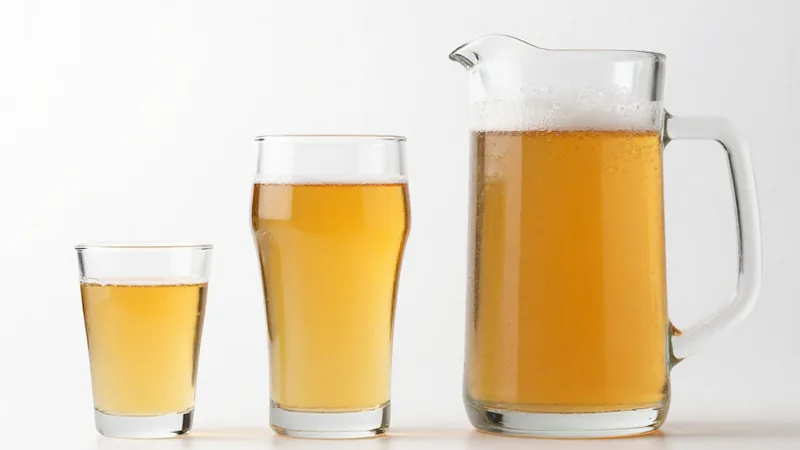
The metric column is where rounding shows up. 4 times 118.2941 milliliters is 473.1764 milliliters, rounded to four decimals. The handbook's direct pint row is 473.1765 milliliters. 2 times 473.1765 is 946.353 milliliters, and the direct quart row is 946.3529. 4 times 946.3529 is 3785.4116 milliliters, and the direct gallon row is 3785.411784. The gaps are rounding across rows, not a second gallon. Cite the direct row for the unit you mean. Use the multiplied row only as a check that you are still in Handbook 44.
Which pint the table means
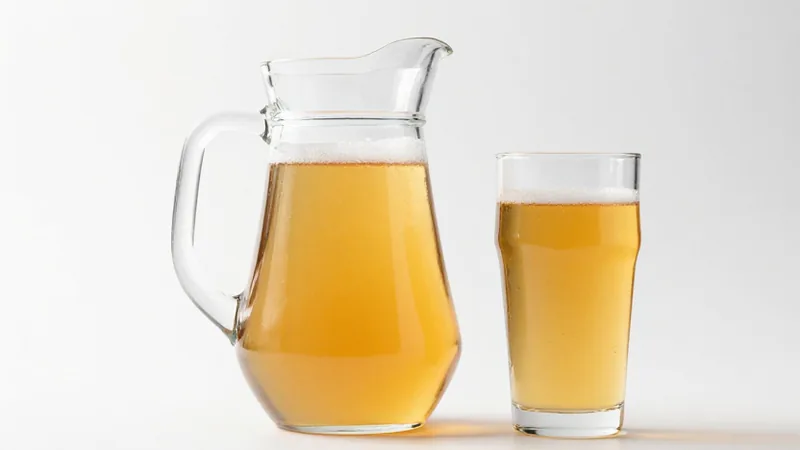
Footnote 6 in the appendix says to use the word liquid, or the abbreviation liq, when you need to distinguish a liquid pint or quart from a dry pint or quart. The metric rows used here are labeled liquid pint and liquid quart. The dry volume table is a different block, with a dry quart defined from dry pints, and this article does not copy those cubic-inch figures. Beer in a glass is liquid measure. Grain in a basket is not this ladder. If a form says pint and does not say dry, a US weights-and-measures reading of Handbook 44 is the liquid pint on this page.
Get the beer data notes
Brewers Association and TTB figures as they are published, with the source for every number. Free, unsubscribe from any email.
No fixed schedule. Unsubscribe from any email. 21+ only.
Cubic inches and the beer barrel
The gallon line gives 231 cubic inches. 27 CFR 25.11 uses the same cubic-inch gallon for beer tax measurement, which the barrel article cites from the regulation. This page does not restate the barrel as a handbook unit. The handbook unit is the gallon of 231 cubic inches and 3785.411784 milliliters, containing 8 pints. Federal beer tax then counts those gallons in a barrel defined by the regulation, not by Appendix C. Keep the citation on the sentence you are using.
A kitchen conversion that stays honest
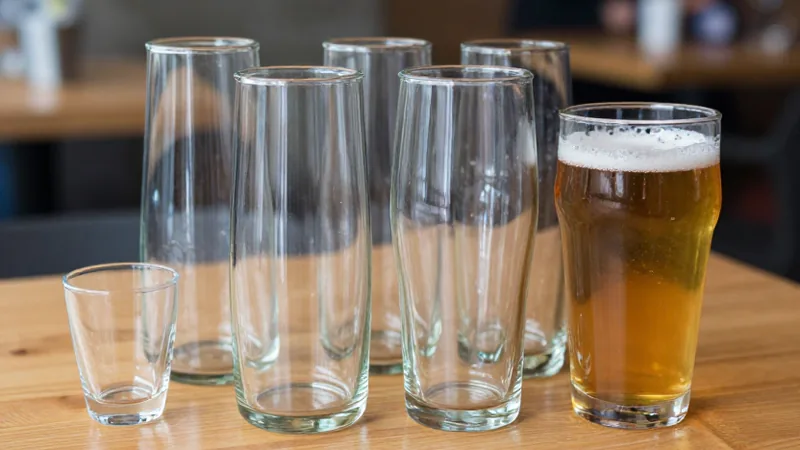
If you need milliliters, take them from the direct row. One gill is 118.2941. One liquid pint is 473.1765. One liquid quart is 946.3529. One gallon is 3785.411784. Multiplying 118.2941 by 4 is a check, and the check landed on 473.1764, next to the direct pint of 473.1765. Do not publish the check as if the handbook had printed it in the pint row. Do not replace 3785.411784 with 3785.4116 in a citation. Say which row you used.
The chart draws the four direct milliliter figures so the ladder is visible: gill, pint, quart, gallon. The bars are far apart because a gallon is many gills, which is what 32 already says. The tool multiplies one selected row by a quantity. That product is volume arithmetic. It is not a number of drinks, and it is not a production plan. Multiplying the gallon row does not tell anyone to brew. The home production limits live on their own page and they are a legal cap, not a target.
Apothecaries fluid ounces, briefly
The same appendix has an apothecaries liquid table in which 16 fluid ounces equal 1 pint and the gallon line reaches 128 fluid ounces. The pint article quotes that ounce pint and gives the milliliters per fluid ounce. This page does not repeat the ounce-to-milliliter division. What it adds is the gill below the pint and the quart and gallon above it. If you only needed the pint, stop at that article. If a recipe jumps from gills to gallons, the counts are 4, 2, 4, and the gallon totals 8 pints, 32 gills, and 128 fluid ounces.
Using the ladder on a brew sheet
A brew sheet that says "one gallon of water" and then lists a milliliter figure should be using 3785.411784, or it should say it rounded. A sheet that says "one quart of starter wort" should be using 946.3529. A sheet that says "one gill" is uncommon in US beer recipes and, when it appears, means 118.2941 milliliters and 4 of them to a pint. None of those lines is a production allowance. The federal cap on beer produced at home for personal use is a different section, 27 CFR 25.205, and the home production article is the one that states it. This ladder does not raise that cap and does not suggest brewing up to it. A gallon in a recipe is 231 cubic inches. A gallon on a tax return is the same cubic-inch gallon, then counted into barrels of 231 cubic inches each only after you leave this page for the barrel definition.
Write the unit name next to the figure. "Pint" alone is ambiguous when a dry pint could be meant, which is why footnote 6 wants the word liquid. "Gill" is ambiguous if a reader thinks it is a brand of glass. In this table a gill is one quarter of a liquid pint, because 4 gills make the pint, and it is 118.2941 milliliters. "Quart" in a beer context is the liquid quart of 946.3529 milliliters, not the dry quart in the next table. If you convert a published recipe and the numbers land far from 473.1765, 946.3529, or 3785.411784, the recipe is either imperial, rounded hard, or using a different unit that happens to share the name. Ask which before you scale it with this tool.
The tool's multiply box is for questions such as how many milliliters are in several quarts. Select the quart row, 946.3529, and multiply. Do not select the gill row and multiply by 32 expecting a new official gallon. That product is your arithmetic. The official gallon milliliters are 3785.411784. The check 3785.4116 is already the careful version of four quart-rows, and it still does not replace 3785.411784. Keep the official row in the citation and the product in the margin.
One more distinction belongs on the sheet. The cubic-inch side and the milliliter side are both official, and they are not invitations to invent a beer-specific gallon. A keg, a case, and a glass are packages. Their volumes are whatever the package holds, checked against the unit you claim. If the claim is a gallon, the unit is 3785.411784 milliliters or 231 cubic inches. If the claim is a pint, the unit is 473.1765 milliliters. The package does not get its own row in Appendix C.
Checked on 2026-10-27 against National Institute of Standards and Technology. The fact sheet keeps the spaced digits the handbook prints in the metric column, such as the gill figure broken by a space, while the stored values are the ordinary decimals. A spreadsheet that wants Handbook 44 should store 118.2941, 473.1765, 946.3529, and 3785.411784. If you round to a whole milliliter, label the cell as rounded. The count facts are exact relations in the liquid-volume table: 4, 2, 4, 8, 32, 16, and 128. The derived checks 8 and 32 match the printed gallon totals. The derived milliliter checks sit beside the direct rows and do not replace them.
How to use each figure
118.2941 milliliters is one gill on the metric table. 4 of those gills are one pint in the count table. The multiplied check is 473.1764 milliliters. The direct pint row is 473.1765. Quote 473.1765 when you cite the pint.
3785.411784 milliliters and 231 cubic inches are the same gallon in two columns. 8 pints and 32 gills are the count side of that gallon. 3785.4116 is 4 times the quart row, rounded, and it is a check on 3785.411784, not a rival gallon.
Frequently Asked Questions
How many gills are in a US liquid pint?
- Handbook 44 says 4 gills equal 1 pint. Source: National Institute of Standards and Technology.
How many pints are in a US gallon?
- The gallon line also says 231 cubic inches and 32 gills.
How many milliliters is a US gallon?
3785.411784, from the handbook metric column. The quart is 946.3529 and the pint is 473.1765.
Do the multiplied rows replace the direct rows?
No. 473.1764 milliliters is a check beside the direct pint of 473.1765. Cite the direct row.
Sources
- NIST Handbook 44 (2023), Appendix C. National Institute of Standards and Technology.