Brewing Water Chemistry Basics: A Homebrewer's Guide
Get your water report, remove chlorine and chloramine with one Campden tablet (it treats up to 20 gal), then match minerals to the beer. Keep calcium at 50-150 ppm, use sulfate (50-150 ppm, up to 350 for very bitter beers) to sharpen hops or chloride to round out malt, and keep alkalinity low for pale beers and higher for dark ones.
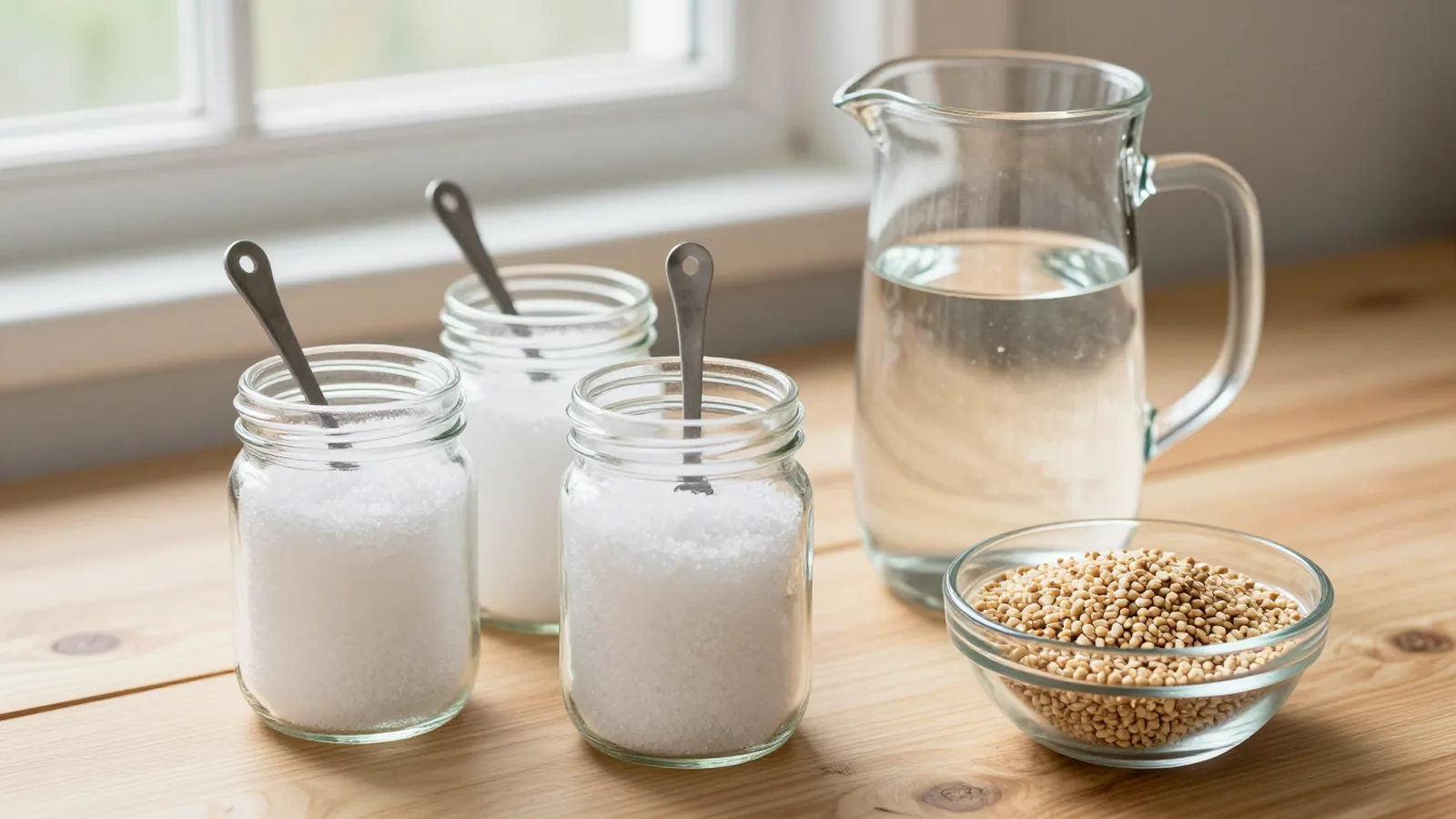
Beer is mostly water, and the ions in that water change how the mash behaves and how the finished beer tastes. Six matter most: calcium, magnesium and bicarbonate set hardness and alkalinity, which drive mash pH; sodium, chloride and sulfate mostly shape flavor. Chlorine and chloramine from city treatment are a separate problem because they form medicinal chlorophenols. Extract brewers mostly need to dechlorinate and avoid very alkaline or softened water, since the extract already carries the minerals from the original mash. All-grain brewers get the most from water work: the same tap water that makes a good amber ale can make a harsh pilsner or an acrid stout, because the grist's acidity and the water's alkalinity have to balance. There are two ways in. Start from your tap report and add salts or acid, which is cheap but limited by what is already in the water. Or start from reverse osmosis or distilled water and build each profile from zero, which costs more per batch but gives the same result every time. Either way, measure mash pH to confirm the math, and change one variable per batch.
At a Glance
Equipment
- Current water quality report from your utility, or a lab water test
- Campden tablets (potassium or sodium metabisulfite)
- Gram scale with 0.1 g resolution
- Gypsum (calcium sulfate)
- Calcium chloride
- Lactic acid (88%) or phosphoric acid (10%)
- Reverse osmosis or distilled water for dilution
- Calibrated pH meter
- Brewing water software or spreadsheet (Bru'n Water, BeerSmith or Palmer's Brewing Water Adjustment sheet)
Steps
- 1
Get the numbers
Find calcium, magnesium, sodium, chloride, sulfate and alkalinity (as CaCO3) or bicarbonate on your water report. If the utility switches sources by season, get the report for the season you brew in.
If the report gives bicarbonate only, alkalinity as CaCO3 is bicarbonate x 50/61.
- 2
Remove chlorine and chloramine
Crush one Campden tablet into the water and stir. One tablet treats 20 gal; using one for 5 gal does no harm. Chlorine and chloramine drop to insignificant levels within a couple of minutes.
Boiling removes chlorine but not chloramine, and most cities use chloramine.
- 3
Never mash with softened water
Ion-exchange softeners swap calcium for sodium. You lose the calcium the mash needs and gain sodium, which tastes salty above about 200 ppm.
Draw brewing water from a tap upstream of the softener, or buy RO water.
- 4
Set the calcium
Aim for 50-150 ppm calcium. It supports enzymes, yeast health and clarity, and it reacts with malt to lower mash pH. Magnesium belongs at 10-30 ppm; above 50 ppm it tastes sour-bitter.
Most malt supplies enough magnesium. You rarely need to add it.
- 5
Choose the flavor balance
Sulfate (50-150 ppm for normal beers, 150-350 for very bitter beers) makes hop bitterness drier and sharper. Chloride rounds and fills out malt. Above 400 ppm sulfate turns astringent. For hazy IPAs, BYO suggests starting near a 2:3 sulfate-to-chloride ratio and keeping each under 200 ppm.
Raw amounts matter as much as the ratio: 10:30 and 100:300 are both 1:3 and taste different.
- 6
Match alkalinity to color
Pale, base-malt beers want low bicarbonate (0-50 ppm); amber beers 50-150 ppm; dark roasted beers 150-250 ppm. Dark malts are acidic and need some alkalinity to keep mash pH from falling too far.
To cut alkalinity, dilute with RO or distilled water or acidify with lactic or phosphoric acid.
- 7
Calculate and weigh the salts
Enter your report and grist into brewing water software, then weigh additions on a gram scale. Gypsum at 1 g per gallon adds about 61.5 ppm calcium; about 4 g fit in a teaspoon.
Split the calcium between gypsum and calcium chloride so neither sulfate nor chloride runs away.
- 8
Verify with mash pH
Mash in, pull a sample, cool it to room temperature and read pH. The target is 5.2-5.6. Adjust the next batch's plan from what you measure, not from what the spreadsheet predicted.
Log the water profile, additions and measured pH on every recipe sheet.
Tips
- Calcium chloride is usually the better calcium source for pale lagers; gypsum suits hoppy pale ales and IPAs.
- Sodium and high sulfate together give a harsh bitterness. Keep at least one of them low.
- Carbon filters remove most chlorine and chloramine, but a Campden tablet is more effective and cheaper.
- A vitamin C (ascorbic acid) tablet also removes chlorine: about 1 g treats 100 L.
- Starting from RO water makes recipes repeatable across houses, cities and seasons.
- Add salts in small steps. You can always add more next batch; you cannot take minerals out.
Common Mistakes to Avoid
- Brewing with water from an ion-exchange softener.
- Boiling water to remove chloramine, which does not work.
- Copying a famous city's water profile without checking whether the published numbers balance.
- Adding gypsum to every beer and ending up with minerally, harsh lagers.
- Adjusting the water's own pH instead of measuring the mash pH that the water and grist produce together.
- Using teaspoon measures for salts instead of a gram scale.