Most packaged beer keeps its intended flavor for about 150 days (five months) if it stays cold, per Sierra Nevada. Heat cuts that fast: the brewer rule of thumb called 3-30-300 says 3 days at 90°F does the same oxidation damage as 30 days at 72°F or 300 days at 38°F. Hoppy beers fade first. Old beer is safe to drink; it just tastes stale.
How long beer lasts, by situation
Beer does not spoil like milk. It goes stale: hop aroma fades, a papery or wet-cardboard flavor appears, and carbonation drops. How fast depends on temperature, light, oxygen and style.
| Situation | Freshness window | Source |
|---|---|---|
| Growler filled at a taproom | 24–72 hours | Brewers Association |
| Keg once tapped | about 45 days | Brewers Association |
| Most packaged beer, kept cold | up to 150 days | Sierra Nevada Brewing Co. |
| Non-alcoholic beer | 3–6 months | Sierra Nevada Brewing Co. |
| Strong or dark beer for aging | can improve with age if kept under 55°F and out of light | Sierra Nevada Brewing Co. |
Sierra Nevada recommends storing beer at 38–50°F. The Brewers Association's draught manual sets a tighter 34–38°F for kegs.
Get beer science and style notes
How beer gets its bitterness, color and aroma, explained with numbers and sources. Free, unsubscribe from any email.
No fixed schedule. Unsubscribe from any email. 21+ only.
Temperature: why warm storage ages beer 10x to 100x faster
The cleanest way to see the temperature effect is the 3-30-300 rule. Creature Comforts Brewing states it on its freshness page: beer stored 3 days at 90°, 30 days at 72°, or 300 days at 38° sees "the same level of oxidation".
Read it as an exchange rate:
- 1 day at 72°F = 10 days in the fridge.
- 1 day at 90°F = 100 days in the fridge.
So a case left in a 90°F car trunk for a weekend has used up about 200 fridge-days of life. That is more than Sierra Nevada's whole 150-day cold window.
The rule is a brewer's rounded heuristic, not a measured rate constant. Lab data point the same way. Researchers speed up aging on purpose by holding beer warm: in a study summarized in an International Journal of Molecular Sciences review, beer held at 37°C (99°F) reached 200 µg/L of furfural, a staling marker, after 14 days and about 800 µg/L after 90 days. Beer aged naturally at room temperature for six months reached up to 244 µg/L. The same review names 4°C as the ideal storage temperature for limiting staling aldehydes.
What stale beer tastes like
Oxygen that gets into the package reacts slowly with beer compounds. The result is a family of aldehydes. The best known is trans-2-nonenal, the "cardboard" or "papery" note. A 2025 Foods review of beer aroma compounds lists its flavor threshold at 30 nanograms per liter, which is why a tiny amount of oxidation is enough to taste. That is oxidation rather than the skunky note light makes: the oxidation entry sets out the whole chain, from long-chain fatty acids breaking down into trans-2-nonenal, which tastes of wet cardboard and smells of old paper, to hop aroma fading as the beer ages.
Sierra Nevada describes the same process from the brewery side: trace oxygen "sneaks" into packaged beer and, over time, flattens carbonation, creates wet-cardboard flavors and weakens hop character.
What you notice in a stale pale beer:
- Hop aroma gets duller and less fruity.
- Bitterness softens.
- Carbonation drops.
- A papery, wet-cardboard finish.
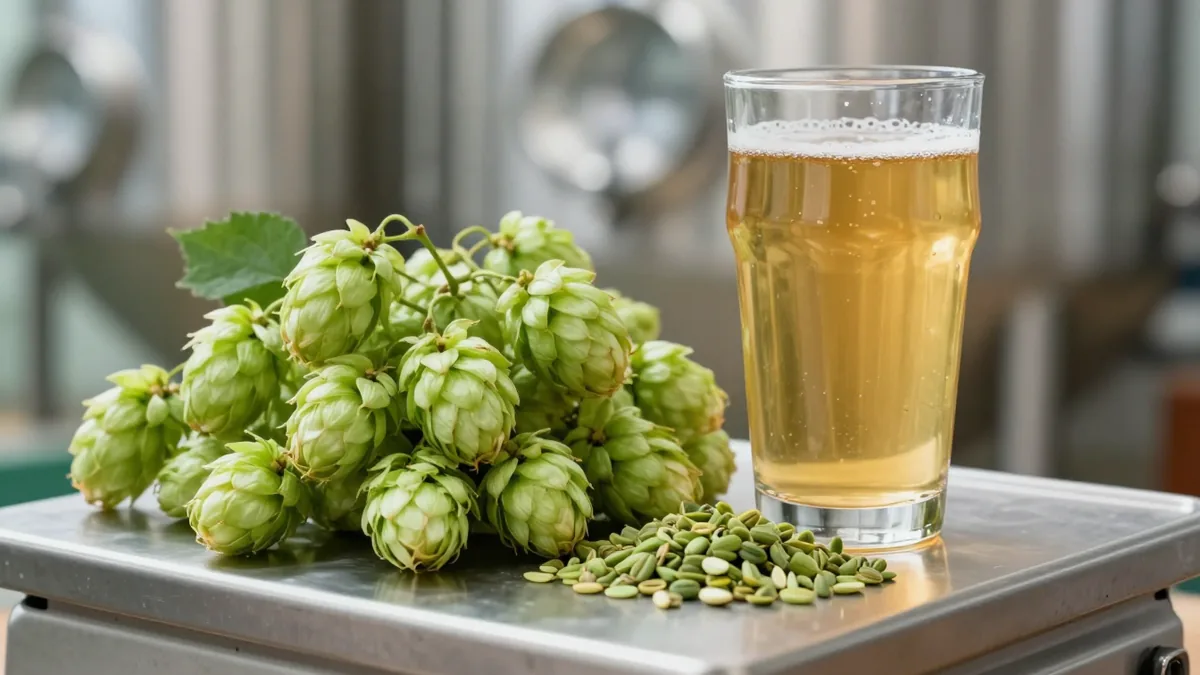
Hoppy beers fade first
Hop aroma compounds are fragile. A 2023 Molecules review of dry-hopping research summarizes a storage study that held dry-hopped beers at different temperatures for up to 10 months:
- β-myrcene, a main hop aroma compound, dropped 87% at 20°C (68°F) and 60% at 3°C (37°F).
- Losses of myrcene, humulene and caryophyllene reached up to 80% within the first 3 months.
- In a separate two-year study at 20°C, humulones fell 91% and humulinones 73%. Both are hop bitterness compounds, so an old IPA can taste less bitter than its label says. Our IBU explainer covers what that number measures.
Cold storage slows the loss but does not stop it. In another study in the same review, after 90 days tasters rated beers kept at 4°C better than beers kept at 28°C (82°F). The review's advice is to store dry-hopped beer at 4°C (39°F).
That is why some breweries print an "enjoy by" date instead of a packaging date (Sierra Nevada notes you will see both), and why a hazy IPA is the worst candidate for the back of the closet.
Check your beer
Enter the date on the can or bottle, how it was stored and what kind of beer it is. The tool converts the time to fridge-equivalent days with the 3-30-300 exchange rate, then compares that with a window:
- Hoppy beers: 90 fridge-days, the 3-month point by which the study above measured up to 80% loss of key hop aroma compounds. This is our threshold, not a brewery's.
- Most other beers: 150 fridge-days, Sierra Nevada's cold-storage guidance.
- Strong or dark beers: no fixed window. They can age if kept under 55°F. The quiz’s Roast and Dark Devotee result is the dark-beer profile that would use that window, listing imperial stout beside Irish stout, oatmeal stout and American porter, served at 50–55°F (10–13°C) and a little warmer for the imperial.
At the warm end, the serving temperature chart lists an Irish-style dry stout, an English-style oatmeal stout and a robust porter at 50–55°F (10–13°C), so a cellar held just under the 55°F ceiling serves those styles inside the range the chart gives them.
The result is a flavor estimate, not a safety call. If you do not know how a beer was stored, assume room temperature.
Light: why beer gets skunky
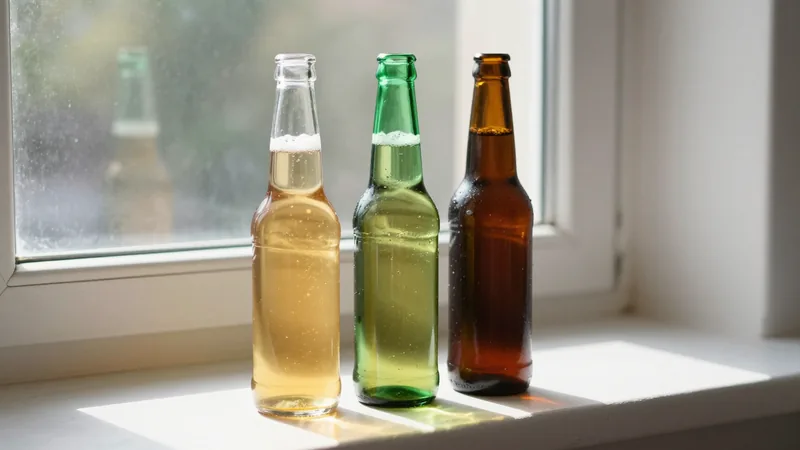
Skunky beer is a light reaction, not an age reaction. When light hits beer, hop-derived iso-alpha acids react with sulfur-containing compounds, with riboflavin in the beer acting as a sensitizer, to form 3-methyl-2-butene-1-thiol (MBT). The Foods review puts its flavor threshold at 1–7 nanograms per liter and calls that very low for a threshold. The off-flavor troubleshooting reference lists a wider 4–30 ng/L detection range for lightstruck MBT (3-methyl-2-butene-1-thiol) from the Cicerone flavor-standard card, and either end of that range is still nanograms per litre. The lightstruck entry names the photosensitizer behind that reaction: riboflavin absorbs the light and passes the energy to the iso-alpha acids, and because the damaging wavelengths are blue and ultraviolet, brown glass — which screens most of them out — protects a beer that green and clear glass leave exposed.
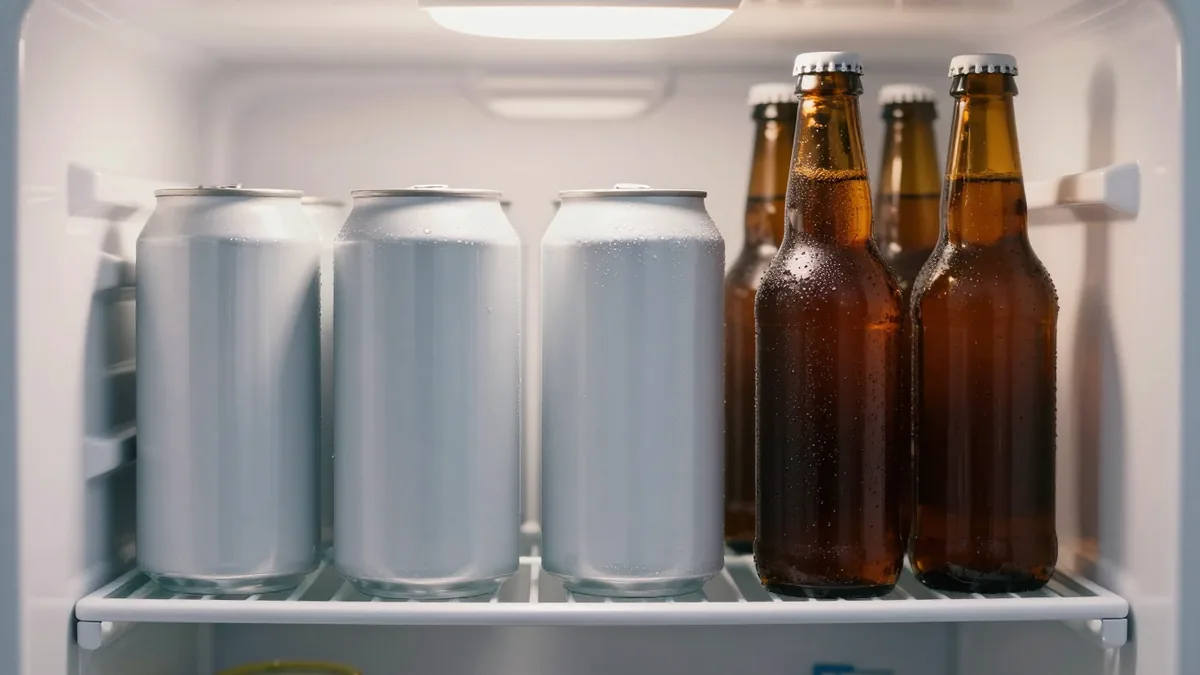
Packaging decides how much light gets in:
| Package | Light protection |
|---|---|
| Can | Opaque, blocks light |
| Brown (amber) glass | Blocks most sun and store light |
| Green glass | Little protection |
| Clear glass | Little protection |
The Foods review states that sunlight and the fluorescent tubes used in stores "easily penetrate all glass except dark brown or amber". Sierra Nevada gives the same advice: keep beer, and bottles especially, out of direct sun.
Draft beer and growlers
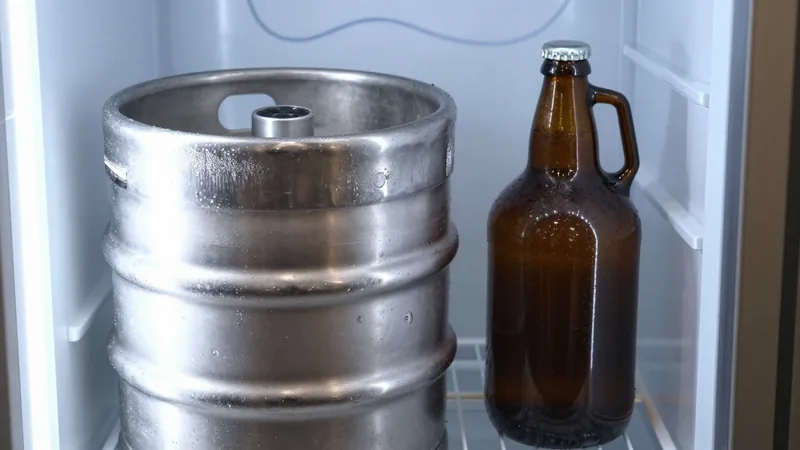
Draft beer has the shortest windows once a keg is tapped or a growler is filled. The Brewers Association's Draught Beer Quality Manual gives these numbers:
- Kegs should be stored at 34–38°F.
- Beer in a keg on tap longer than 45 days "may have changed compared to the intended flavor".
- A filled growler should be finished within 24–72 hours, and within hours once opened.
The manual compares draught beer to bread, "best when enjoyed fresh", and tells retailers to make sure a pre-filled growler was filled that day. For taproom beer sold to go, the 12 listings in our Bellingham guide include Stemma's Moore Street brewery. Our 12-listing Charlotte guide includes Birdsong's pints and growlers; the availability of a fill is not a guarantee of freshness after taking it home.
Which beers can age
Some styles improve or at least change in interesting ways. Sierra Nevada names high-alcohol and roasty beers, such as barleywine and imperial stout, as styles that take oxygen "in stride" and pick up sherry or port notes. For aging, it advises storing away from light, keeping the temperature under 55°F, and standing bottles upright to slow oxidation.
Good aging candidates are high in alcohol or roasted malt and do not depend on fresh hop aroma. Our ABV guide lists typical strengths by style, and the style index has full profiles. A fresh lager or IPA does not get better with time.
How to read the date on the package
There are two common systems:
- Packaged-on ("born on") date. Sierra Nevada stamps the actual packaging date plus a letter for the brewery, C for Chico or M for Mills River. You do the math.
- Enjoy-by or best-by date. The brewery has already added its own window. Past that date the beer is safe but past its intended flavor.
Creature Comforts, for example, stamps the package date on the bottom of its cans and on the left side of its can boxes. Check the bottom of the can, the neck or label of the bottle, and the side of the case.
Frequently Asked Questions
Can you drink expired beer?
Yes. Sierra Nevada states that expired beer is not a food safety problem; it just tastes stale. Pour it out if the first sips taste like cardboard or have lost their hop aroma.
Does beer go bad if it gets cold, then warm, then cold again?
The 3-30-300 rule counts total time spent warm. Each day at 72°F costs about 10 fridge-days, so a few warm days in transit add up.
How long does beer last in the fridge?
Most beer keeps its intended flavor for up to 150 days cold, per Sierra Nevada. Hop-forward beers lose aroma faster; drink them within a few months of the package date.
How long does non-alcoholic beer last?
Sierra Nevada puts it at 3–6 months, with pasteurized versions at the long end and unpasteurized ones best within 2–3 months if kept cold.
Why does my beer taste skunky after one afternoon outside?
Light, not age. Sunlight forms MBT, which you can smell at 1–7 ng/L. Cans and brown bottles prevent most of it.
Sources
- Creature Comforts Brewing, Fresh Year, Fresh Beer: Why Freshness Matters, checked 2026-10-01.
- Sierra Nevada Brewing Co., Does Beer Expire? Lifespan & Storage Tips, published February 23, 2022, checked 2026-10-01 (read from the Internet Archive copy; the live page blocks automated readers).
- Brewers Association, Draught Beer Quality Manual, Fourth Edition, 2019, checked 2026-10-01.
- Klimczak, Cioch-Skoneczny and Duda-Chodak via PubMed Central, Effects of Dry-Hopping on Beer Chemistry and Sensory Properties: A Review (Molecules, 2023), checked 2026-10-01.
- Șutea et al. via PubMed Central, Beer Aroma Compounds: Key Odorants, Off-Flavour Compounds and Improvement Proposals (Foods, 2025), checked 2026-10-01.
- Moreira et al. via PubMed Central, Aldehyde Accumulation in Aged Alcoholic Beer (International Journal of Molecular Sciences, 2022), checked 2026-10-01.
- Cicerone/Aroxa, Off-Flavor Reference: lightstruck 3-methyl-2-butene-1-thiol card, 4–30 ng/L detection threshold, checked 2026-10-31.