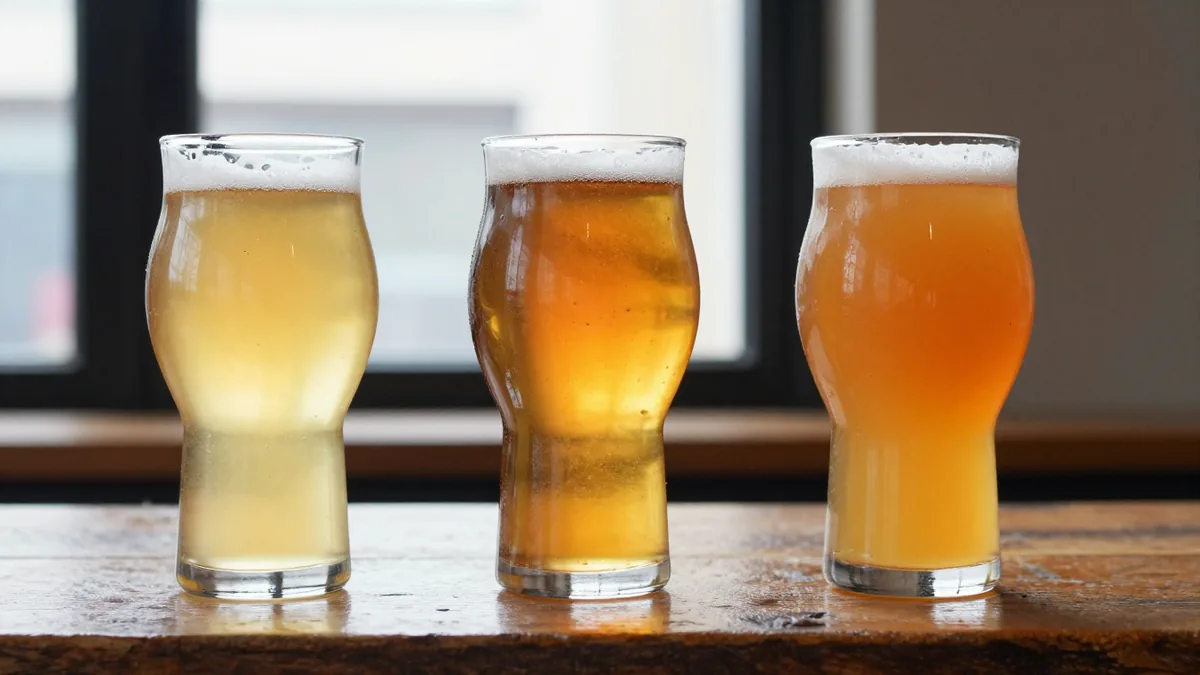
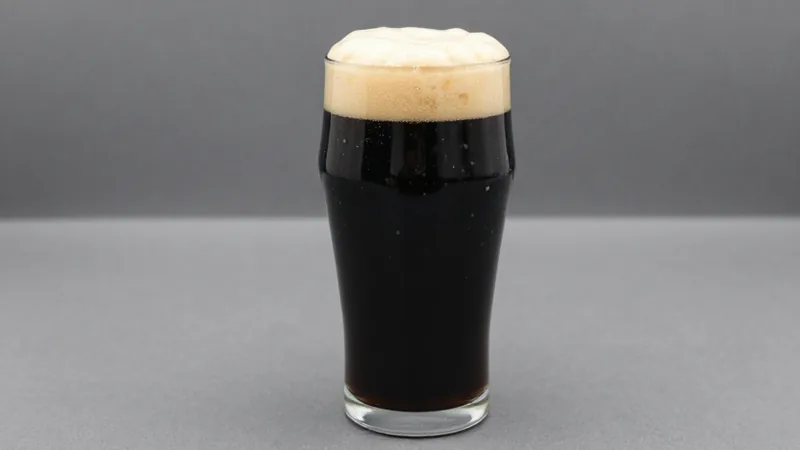
Pair beer and food by matching intensity, then use one of three interactions: complement (shared flavors), contrast (flavors that calm or heighten each other) and cut (bitterness, carbonation or acidity that clears fat). The Brewers Association pairing guide maps 11 food groups to 21 styles: crisp pilsner with grain dishes, saison or hefeweizen with shellfish, dry stout with grilled vegetables, barley wine or fruit lambic with creamy desserts.
The three interactions: complement, contrast, cut
CraftBeer.com, the Brewers Association's consumer site, defines the working vocabulary in its pairing guide:
- Complement: "When one item from a craft beer or food complements the other during pairing." Look for flavor bridges: "a porter with hints of vanilla and chocolate can complement a brown sugar caramel cake."
- Contrast: "When elements interact and either heighten or calm each other's intensities. Malty sweetness counters the sugar sweet of a food and lessens the sweetness."
- Cut: "The bitterness of hops cut and lessen the impact of fat, richness and oil in food." It adds: "Cutting also occurs from carbonation and acidity."
The same page lists four taste rules:
| Rule | Example given |
|---|---|
| Bitter calms sweet | An IPA's bitterness against carrot cake icing |
| Acidic calms salt | Ceviche and tortilla chips |
| Sweet calms sweet | Stout and vanilla ice cream floats |
| Umami complements umami | An aged old ale and holiday fruitcake |
A pairing that fails is a "train wreck": "the whole tastes less desirable than the individual parts."
Get beer science and style notes
How beer gets its bitterness, color and aroma, explained with numbers and sources. Free, unsubscribe from any email.
No fixed schedule. Unsubscribe from any email. 21+ only.
Start with intensity
The first filter is weight. CraftBeer.com: "pairings are most successful when the intensity of the beer matches that of the dish. You don't want the craft beer to outweigh the food and vice versa." Its cheese guide gives the failure cases: "a light Pilsner will be dominated by a beef stew and an imperial stout will overpower a summer salad." Seven of the 13 listings in our Albuquerque guide are brewpubs, including Nexus with its New Mexican soul food and Quarter Celtic with Celtic pub fare. Our nine-listing Charleston-area guide includes Frothy Beard, whose bar pies, wings and burgers offer a starting point for applying those pairing contrasts.
ABV and bitterness are a rough proxy for a beer's weight. The chart shows the BJCP 2021 ABV and IBU range of each style in the Brewers Association guide, sorted by strength, with the food group it is paired with. The four strongest styles (Baltic porter, tripel, imperial IPA, barley wine) go with braised meats, cheese, pork and creamy desserts; grain dishes, beans and shellfish get pilsner, amber lager, brown ale, hefeweizen and saison. American Brett and American Black Ale are left off: the BJCP lists their statistics as variable. IBU is a lab number and does not equal perceived bitterness; see what is IBU. For alcohol, see ABV explained.
The Brewers Association pairing chart
The Craft Beer & Food Pairing Guide is a one-page chart. Each row names a food group, the beer flavor family that suits it, two example styles, the interaction, and a dish. We reproduce it whole; each style links to its BJCP 2021 entry. Where the BA name has no BJCP style of the same name we linked the closest one: American amber lager to 2B International Amber Lager, Bohemian pilsner to 3B Czech Premium Pale Lager, English pale ale to 11C Strong Bitter, German bock to 6C Dunkles Bock, American black ale to the Black IPA in 21B Specialty IPA.
| Food | Beer flavors | Styles | Why it works (BA's words) | Example dish |
|---|---|---|---|---|
| Grain | Clean & Crisp | American Amber Lager / Bohemian-Style Pilsner | "Complementary grain flavors balance hops while remaining light on the palate." | Creamy Risotto |
| Beans & Legumes | Malty & Sweet | English-Style Brown Ale / German-Style Hefeweizen | "Food adds richness to the beer while balancing salt and acidity." | Grilled Halibut with Pole Beans |
| Shellfish | Fruity & Spicy | Belgian-Style Saison / German-Style Hefeweizen | "Beer brings out salinity and natural sweetness while cleansing the palate." | Mussels with Garlic, Parsley and Butter |
| Rich Meats & Root Vegetables | Sour, Tart & Funky | American Brett / Belgian-Style Flanders | "Combining these flavors brings out umami and adds earthy notes that rest on the center of the palate." | Grilled Ribeye and Root Vegetables |
| Game Birds & Grains | Hoppy & Bitter | American Pale Ale / American Brown Ale | "Complements roastiness (Maillard reaction) while fat coats to neutralize hop bitterness." | Roasted Quail with Farrotto |
| Fats | Hoppy & Bitter or Dark & Roasty | American Black Ale / English-Style Brown Porter | "Beer cuts through, balances strong flavors and allows for a complex finish." | Cashew Butter and Red Pepper Jelly on Toast |
| Vegetables (Grilled) | Dark & Roasty | Irish-Style Dry Stout / German-Style Schwarzbier | "Brings out umami and balances sweetness and richness." | Green Chili-Stuffed Portobello |
| Cheese | Varies | Belgian-Style Tripel / English-Style Pale Ale | "Beer complements the natural flavors and textures while cutting through fat, cleansing the palate." | Brie and Fruit |
| Braised Meats & Chocolate | Malty & Sweet or Dark & Roasty | German-Style Bock / Baltic-Style Porter | "Highlights the roasted character (Maillard reaction)." | Milk Chocolate Bread Pudding |
| Pork | Hoppy & Bitter or Fruity & Sweet | Imperial India Pale Ale / Belgian-Style Dubbel | "The intensity of the pork fat stands up to the strong beer characteristics." | Pork Chops and Apple Relish |
| Creamy Desserts | Varies | British-Style Barley Wine / Belgian-Style Fruit Lambic | "Balances richness on the palate so the dessert doesn’t finish cloyingly." | Butterscotch Mousse with Dark Chocolate |
For cheese the guide matches each cheese to a flavor family: "Brie (Fruity & Spicy), Gouda (Malty & Sweet), Aged Cheddar (Hoppy & Bitter), Blue (Dark & Roasty), Mozzarella (Clean & Crisp)." Chocolate splits by cacao: under 50% with malty and sweet beers, over 55% with dark and roasty ones.
Find a pairing
Pick a food group to see the guide's two styles, their BJCP ABV and IBU ranges and the reason given. Or pick a style to see every food group it is listed for. The finder only returns pairings from the chart.
Cut: carbonation, bitterness and acidity against fat
The cheese guide spells out the mechanics: "Bitterness in our beer can effectively cut through the fatty cream and neutralize it. Carbonation uses scrubbing bubbles to cleanse the palate." Acidity "can also join the team to refresh the palate."
There is lab support for the general idea. A Monell Chemical Senses Center study (Peyrot des Gachons et al., 2012) found that "weakly astringent stimuli can elicit strong sensations after repeated sampling," and that "Repeatedly alternating samples of astringent beverages with fatty foods yielded ratings of fattiness and astringency that were lower than if rinsing with water." The test used a mild astringent solution that the authors liken to wine or tea, not beer. Hop polyphenols are astringent, but we found no study that repeats the test with beer.
In the chart, the fat-heavy rows use the cut: the Fats row pairs American Black Ale and English-Style Brown Porter, and the Pork row an imperial IPA (60–100 IBU) because "The intensity of the pork fat stands up to the strong beer characteristics."
Spicy food: what the research says
Nolden and colleagues picked beer for their test because it is "frequently consumed with spicy foods." The research is less flattering:
- Carbonation did not help much. Nolden, Lenart and Hayes (2019) had 72 people drink 40 mL of a beverage after spicy tomato juice. "All beverages significantly reduced the burn," but "the three carbonated beverages - seltzer, cola, and non-alcoholic beer - were generally less effective." The best were "whole milk, skim milk, and Kool-Aid."
- The beer was non-alcoholic. The authors note a beer "containing 4 to 6% ethanol" might perform differently, and whether ethanol increases or decreases the burn "remains an open question."
- Ethanol acts on the chili receptor. In cell and animal experiments, Trevisani et al. (2002) found ethanol "potentiated the response of VR1 to capsaicin" and lowered the receptor's heat threshold from about 42 °C to about 34 °C. That is a mechanism, not a tasting result. For local food-and-brewery options, our Nashville brewery guide lists 10 breweries, including 3 brewpubs that serve pizza.
The CraftBeer.com cheese guide reaches the same caution from the kitchen side: "The spicy bite of alcohol and the bitter hops can potentiate the spiciness in the cheese." Its rule of thumb is that "sweetness counters acidity, spiciness and bitterness." Following those two lines, a malty, lower-IBU, lower-ABV beer is the safer pick with hot food than a strong, bitter IPA, and milk or a non-alcoholic option does more for the burn. See non-alcoholic beer explained.
How to use the chart
- Match weight first: light dish, light beer; rich dish, fuller beer.
- Pick one interaction to aim for: a shared flavor, a contrast, or a cut through fat.
- Taste and adjust. The cheese guide's rule: "If it tastes good, then continue on with it. If it tastes bad, stop and choose another."
Pairing is about flavor, not volume: a small pour per course is enough to judge a match. Style details are in the beer styles guide, and sour pairings are covered in sour beer explained.
Frequently Asked Questions
What are the basic rules of beer and food pairing?
Match intensity, then complement, contrast or cut. CraftBeer.com: hop bitterness, carbonation and acidity "cut and lessen the impact of fat, richness and oil in food."
What beer goes with cheese?
The Brewers Association chart lists Belgian-Style Tripel (7.5–9.5% ABV) and English-Style Pale Ale for cheese, and matches brie to fruity and spicy beers, gouda to malty and sweet, aged cheddar to hoppy and bitter, blue to dark and roasty, mozzarella to clean and crisp. Tripel for cheese and dubbel for pork are two of the chart’s Belgian rows; a drinker who orders either for the yeast rather than the hops is the profile the quiz’s Belgian Explorer result describes, with saison, tripel, dubbel and Belgian golden strong ale served in a tulip or goblet at 45–55°F (7–13°C).
What beer goes with seafood?
For shellfish, the chart lists Belgian-style saison and German-style hefeweizen: "Beer brings out salinity and natural sweetness while cleansing the palate." Its example dish is mussels with garlic, parsley and butter.
Does beer help with spicy food?
Less than milk. In a 72-person study, non-alcoholic beer, seltzer and cola were "generally less effective" than milk or sweet fruit punch at reducing chili burn. Alcohol's effect on the burn is unresolved.
What beer goes with dessert?
For creamy desserts the chart lists British-Style Barley Wine (8–12% ABV) and Belgian-Style Fruit Lambic (5–7%), which "Balances richness on the palate so the dessert doesn't finish cloyingly." For chocolate over 55% cacao it points to dark and roasty beers.
Does a high-IBU beer pair with everything rich?
No. Bitterness cuts fat, but intensity has to match. The chart uses IPA-style bitterness for game birds, fats and pork, and lower-bitterness styles such as German-Style Hefeweizen (8–15 IBU) for lighter dishes.
Sources
- Brewers Association (CraftBeer.com), Craft Beer & Food Pairing Guide (PDF), checked October 1, 2026.
- CraftBeer.com (Brewers Association), Unscrambling Your Senses: Interpreting Craft Beer and Food Pairings, checked October 1, 2026.
- CraftBeer.com (Brewers Association), Pairing Beer and Cheese: Everything You Need to Know for Success, checked October 1, 2026.
- Physiology & Behavior (PMC), Putting out the fire: Efficacy of common beverages in reducing oral burn from capsaicin (Nolden, Lenart & Hayes, Physiol Behav, 2019), checked October 1, 2026.
- Nature Neuroscience (PubMed), Ethanol elicits and potentiates nociceptor responses via the vanilloid receptor-1 (Trevisani et al., Nat Neurosci, 2002; abstract read), checked October 1, 2026.
- Current Biology (PubMed), Opponency of astringent and fat sensations (Peyrot des Gachons et al., Curr Biol, 2012; abstract read), checked October 1, 2026.
- Beer Judge Certification Program, BJCP 2021 Style Guidelines: 2B International Amber Lager, checked October 1, 2026.
- Beer Judge Certification Program, BJCP 2021 Style Guidelines: 3B Czech Premium Pale Lager, checked October 1, 2026.
- Beer Judge Certification Program, BJCP 2021 Style Guidelines: 13B British Brown Ale, checked October 1, 2026.
- Beer Judge Certification Program, BJCP 2021 Style Guidelines: 10A Weissbier, checked October 1, 2026.
- Beer Judge Certification Program, BJCP 2021 Style Guidelines: 25B Saison (standard strength), checked October 1, 2026.
- Beer Judge Certification Program, BJCP 2021 Style Guidelines: 28A Brett Beer, checked October 1, 2026.
- Beer Judge Certification Program, BJCP 2021 Style Guidelines: 23B Flanders Red Ale, checked October 1, 2026.
- Beer Judge Certification Program, BJCP 2021 Style Guidelines: 18B American Pale Ale, checked October 1, 2026.
- Beer Judge Certification Program, BJCP 2021 Style Guidelines: 19C American Brown Ale, checked October 1, 2026.
- Beer Judge Certification Program, BJCP 2021 Style Guidelines: 21B Specialty IPA (Black IPA), checked October 1, 2026.
- Beer Judge Certification Program, BJCP 2021 Style Guidelines: 13C English Porter, checked October 1, 2026.
- Beer Judge Certification Program, BJCP 2021 Style Guidelines: 15B Irish Stout, checked October 1, 2026.
- Beer Judge Certification Program, BJCP 2021 Style Guidelines: 8B Schwarzbier, checked October 1, 2026.
- Beer Judge Certification Program, BJCP 2021 Style Guidelines: 26C Belgian Tripel, checked October 1, 2026.
- Beer Judge Certification Program, BJCP 2021 Style Guidelines: 11C Strong Bitter (ESB), checked October 1, 2026.
- Beer Judge Certification Program, BJCP 2021 Style Guidelines: 6C Dunkles Bock, checked October 1, 2026.
- Beer Judge Certification Program, BJCP 2021 Style Guidelines: 9C Baltic Porter, checked October 1, 2026.
- Beer Judge Certification Program, BJCP 2021 Style Guidelines: 22A Double IPA, checked October 1, 2026.
- Beer Judge Certification Program, BJCP 2021 Style Guidelines: 26B Belgian Dubbel, checked October 1, 2026.
- Beer Judge Certification Program, BJCP 2021 Style Guidelines: 17D English Barley Wine, checked October 1, 2026.
- Beer Judge Certification Program, BJCP 2021 Style Guidelines: 23F Fruit Lambic, checked October 1, 2026.