Federal beer excise tax rates and tax collection statistics. See beer-tax-by-state See how-beer-is-made
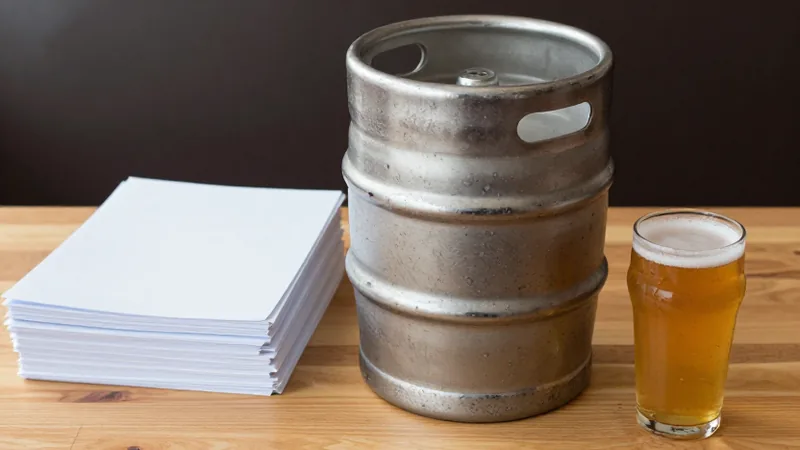
Federal beer excise tax is charged by the barrel. A reader who wants it by the pint has to divide. TTB's tax-rate page publishes three barrel rates used below: 3.5 dollars on a reduced first band, 16.0 dollars on the next published band, and 18.0 dollars as the general rate. Alcohol and Tobacco Tax and Trade Bureau is that page. A barrel, in 27 CFR 25.11, is 31 US gallons. eCFR is the section. NIST Handbook 44 puts 8 pints in a gallon. National Institute of Standards and Technology is the handbook. 31 times 8 is 248 pints in a tax barrel. The per-pint figures on this page are those rates divided by 248. They are arithmetic, not a ruling on which rate a given brewery pays.
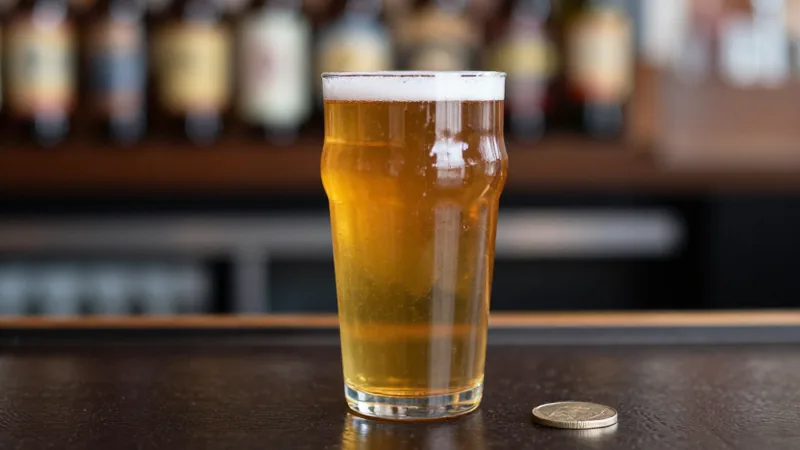
At the 3.5 dollar rate, one pint carries 0.014113 dollars, which is 1.4113 cents, rounded as the fact sheet states. At the 16.0 dollar rate, one pint carries 0.064516 dollars, or 6.4516 cents. At the 18.0 dollar rate, one pint carries 0.072581 dollars, or 7.2581 cents. The chart shows the three cent figures. They differ because the barrel rates differ, not because the pint changed size. Every row uses the same 248 pints. The rate article keeps the barrel table. The barrel article keeps the 31 gallon definition. The volume ladder keeps the 8 pints in a gallon.
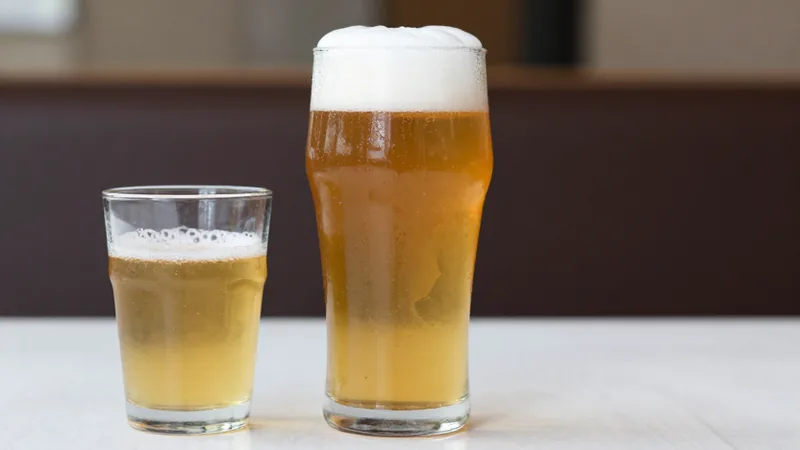
Which rate the division is describing
The 3.5 dollar figure is printed on the first 60000 barrels. The page ties the reduced rates to a domestic brewer who produces 2000000 barrels or less per calendar year. The 16.0 dollar figure is printed on barrels over that first band up to 2000000, and the page also prints 16.0 dollars on a first 6000000 barrels in the row for brewers above that production line. The 18.0 dollar figure is printed as the rate on all barrels in the general row. Controlled-group and assignment rules can limit who gets a reduced rate. This page does not compute a controlled group. If you are placing a brewery on a row, use the TTB table and a tax adviser. The only math here is rate divided by 248.
Get new brewery guides by email
New city guides, homebrewing guides and verified brewery updates. Free, unsubscribe from any email.
No fixed schedule. Unsubscribe from any email. 21+ only.
What the pint figure leaves out
It leaves out state excise tax. It leaves out sales tax. It leaves out distributor markup and the price on a menu. A menu price is not 1.4113 cents, and it is not 7.2581 cents. Those are the federal excise piece of one pint at the published barrel rates, before anyone else's charge. It also leaves out the difference between a pint poured and a pint removed. Tax is on beer removed, in barrels, under the tax rules. Dividing the barrel rate by 248 spreads that barrel evenly across pints. It does not say TTB invoices by the glass. A short pour does not change the barrel rate. It changes how the glass compares with the pint of 16 fluid ounces.

Rounding
1.4113, 6.4516, and 7.2581 are rounded to four decimal places of a cent. 0.014113, 0.064516, and 0.072581 are the same division rounded to six decimal places of a dollar. They will not always print as identical after you round one of them again. Pick one stored value and say which. Do not add the three cent figures together and call the sum a tax. A given barrel is on one rate row, not on all three. Adding 1.4113 to 7.2581 invents a rate the table does not publish. The tool multiplies one selected row. Select the row that matches the barrel rate you are asking about, then multiply by a number of pints if you want that many pints of excise at that rate.
Multiplying is still not a bill. The tool's product is 1.4113, 6.4516, or 7.2581 cents times the quantity you type, depending on the row. It ignores credits, offsets, imports, and the assignment rules the rate page flags. Imported beer is not given a new per-pint rate here. The rate page is the place to see how imports are labeled. This page only divides the three domestic-table rates it names. If a rate is not one of 3.5, 16.0, or 18.0 dollars per barrel, do not force it through 248 and cite this sheet.
A worked single pint at the general rate is the easiest to say aloud: 18.0 dollars per barrel, 248 pints in the barrel, 7.2581 cents on the pint. A worked single pint at the lowest published rate is 3.5 dollars per barrel and 1.4113 cents on the pint. The middle figure is 6.4516 cents. None of those sentences says how many pints to buy or to drink. They say how the published barrel rate looks when the barrel is split into the 8 pints Handbook 44 puts in each of the 31 gallons.
Why the gallon step is shown
Someone may try to divide the barrel rate by 31 and stop, calling that a pint. That result is a per-gallon figure, and the rate article already stores those gallon divisions. A pint is smaller than a gallon by the factor 8. Skipping that factor overstates the excise on one pint by eightfold, because the gallon figure has not been split into pints yet. The path on this page is barrel rate, then 248, which already includes both 31 and 8. Use 7.2581 cents, not the per-gallon number, when the question was a pint at the 18.0 dollar rate.
Reading a taproom question against the table
A common question is what the federal government collects on the pint in the glass. The careful answer names the rate row first. A barrel on the 3.5 dollar row contributes 1.4113 cents of federal excise per pint of that barrel. A barrel on the 16.0 dollar row contributes 6.4516 cents. A barrel on the 18.0 dollar row contributes 7.2581 cents. You cannot see the row by looking at the glass. The row depends on the brewer's production band, including the 60000 barrel first band, the 2000000 barrel production line the page uses for the reduced rates, and the 6000000 barrel band printed on the 16.0 dollar row for larger removals. Two pints that taste alike can carry different federal excise if they came off different rows. That is a tax fact, not a quality ranking.
Imports, small-producer assignments, and controlled groups are the cases most likely to make a back-of-the-envelope pint wrong. The rate page is explicit that reduced rates have conditions. This article's division assumes you already know the barrel rate is one of the three figures. If you do not know that, stop at 248 and do not pick a cent figure yet. Guessing 1.4113 because it is the smallest understates the tax when the real row is 18.0. Guessing 7.2581 because it is the largest overstates the tax when the real row is the reduced band. Neither guess belongs in a citation. The citation is the row, then the division.
The same caution applies to a flight of small glasses. A flight is not 248 pints, and it is not taxed as a flight. If you want the excise share of a five-ounce pour you are outside this sheet, because this sheet stops at the pint. Scale from 7.2581 only if you also have a sourced ounce count, and say you did. This page will not invent that pour. It will say the pint at the general rate is 7.2581 cents of federal excise, the pint at the middle rate is 6.4516 cents, and the pint at the reduced rate is 1.4113 cents.
Checked on 2026-10-27 against Alcohol and Tobacco Tax and Trade Bureau, eCFR, and National Institute of Standards and Technology. Rates move when Congress changes them. The division method does not. If the table later prints a different dollar figure, divide that figure by the same 248 only after you confirm the barrel is still 31 gallons and the gallon is still 8 pints. Until then, the three pint results to cite are 1.4113, 6.4516, and 7.2581 cents. This is not tax advice, not a determination for a controlled group, and not a reason to drink any particular number of pints.
How to use each figure
248 is 31 times 8. It is the number of US pints in one tax barrel. Every cent figure on the chart uses that same divisor.
1.4113 cents is the 3.5 dollar barrel rate on one pint. 6.4516 cents is the 16.0 dollar rate. 7.2581 cents is the 18.0 dollar rate. Pick the row the TTB table actually gives that brewery. Do not add the rows.
Frequently Asked Questions
How many US pints are in a 31-gallon beer barrel?
248, because a barrel is 31 gallons and Handbook 44 puts 8 pints in a gallon.
What is the general rate on one pint?
7.2581 cents, from 18.0 dollars per barrel divided by 248 pints. Source: Alcohol and Tobacco Tax and Trade Bureau.
What is the lowest published rate on one pint?
1.4113 cents, from 3.5 dollars per barrel. That rate is the first-band figure, not a promise that every brewery pays it.
Does this include state tax or the menu price?
No. These are federal excise figures only. A menu price is a different number.
Sources
- Tax Rates. Alcohol and Tobacco Tax and Trade Bureau.
- NIST Handbook 44 (2023), Appendix C. National Institute of Standards and Technology.